

Last updated October 17, 2026
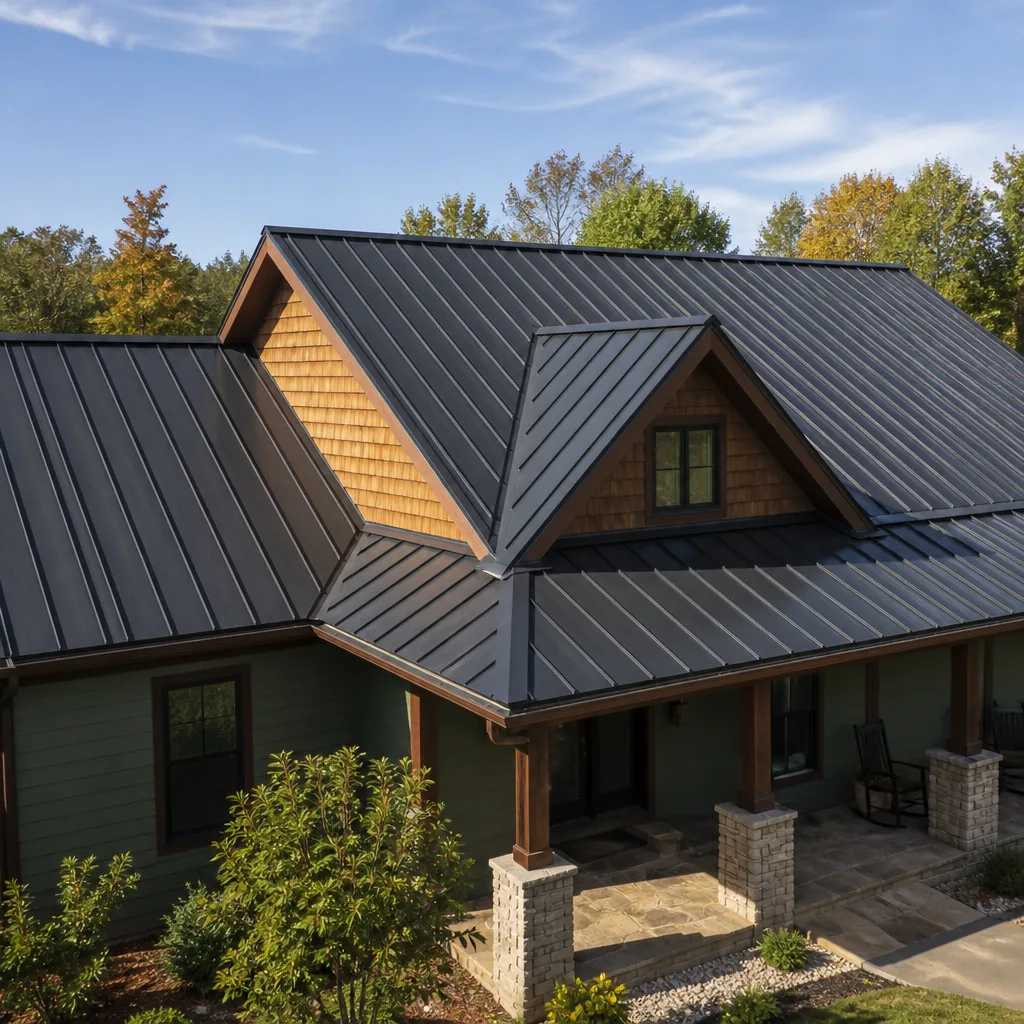 Metal roofing
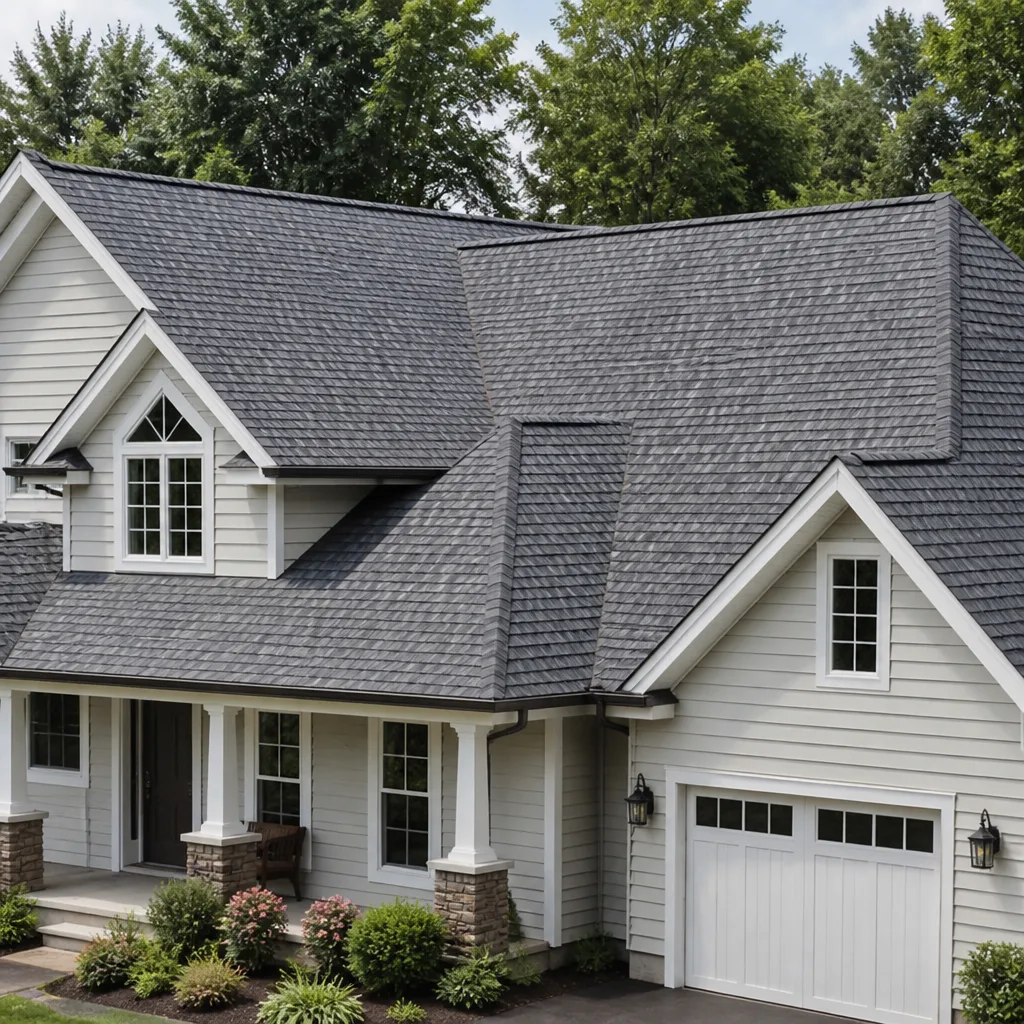 Architectural shingles
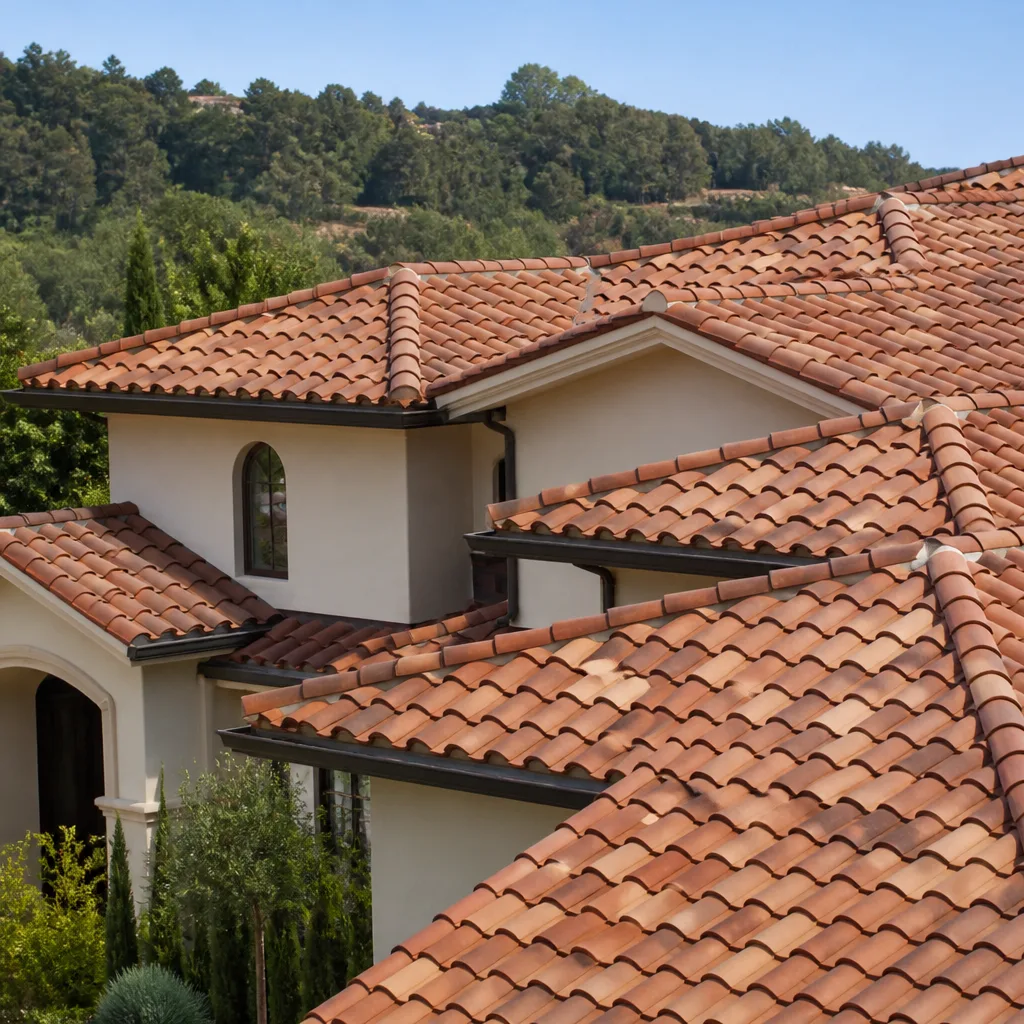 Tile roofing
 GAF
GAF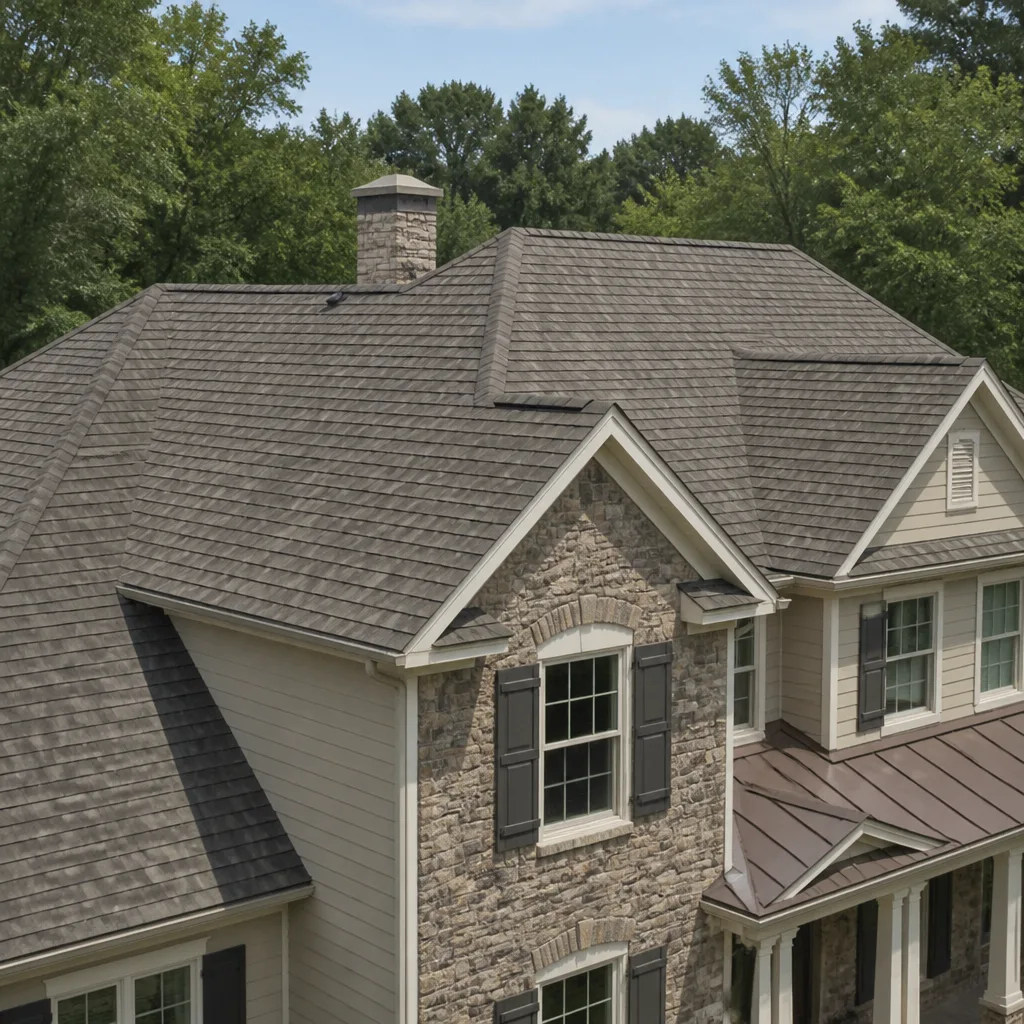 Owens Corning
 Flat & low-slope
Free roof inspection with deck photos before we talk money - GAF and Owens Corning certified installation
Roofing Cost Breakdown: The Houston Homeowner’s Reference for 2026
The lowest roofing quote you’ll get in Houston almost certainly excludes decking replacement, haul-away, and permit fees. Those three items average roughly $1,800 combined on a typical tear-off, and every legitimate contractor encounters them on most jobs. They’re not extras. They’re costs that were hidden from the estimate to make the number look smaller. This guide walks through every line item that belongs in a Houston roofing quote for 2026, what each should cost, and how to spot the omissions before you sign anything. Browse more guides & resources from our team.
Quick Answer
A full asphalt-shingle roof replacement in Houston typically runs between $11,000 and $18,000 for a 2,000-square-foot home in 2026, or roughly $5.50 to $9.00 per square foot. Basic architectural shingles with standard underlayment and no major decking repairs land on the lower end; impact-resistant shingles, full decking replacement, or a complex roof shape push toward the top. Repairs run from $350 for small shingle patches to $2,800 for larger flashing or underlayment work.
Styles & brands we work with
Table of Contents
- The Line-Item Cost Map for a Houston Roof Replacement
- Why Houston Labor Costs Run Higher Than the National Average
- Insurance-Funded Replacement vs. Paying Out of Pocket
- The Material Upgrade Math: 3-Tab to Architectural to Impact-Resistant
- How to Read a Quote for What’s Missing
- Permits, Codes, and the Houston-Specific Paperwork
- How Long a Houston Replacement Actually Takes
- Paying for It: Financing, Deductibles, and Cash Flow
The Line-Item Cost Map for a Houston Roof Replacement
A legitimate Houston roofing quote breaks into eight or nine distinct line items. When a quote shows one lump number and a single sentence, that’s a signal the contractor doesn’t want you seeing how the money is allocated. Here’s what each component should cost in 2026, based on what we see across Houston’s market, from Clear Lake up through Cypress and out to Katy.
- Tear-off and disposal: $1,800 to $3,200 for a 2,000-square-foot roof. This covers removing the old shingles, felt, and nails, plus dumpster rental and landfill fees. Houston’s waste-disposal costs rose about 8% since 2023, and that’s reflected here. Some contractors quote haul-away separately; others fold it into labor.
- Decking inspection and replacement: $0 to $2,600. The inspection should be free. Decking repairs run $2.50 to $4.00 per square foot of replaced plywood or OSB. Most Houston homes need between three and eight sheets replaced because of moisture damage around valleys, chimneys, and exhaust vents. A quote that says “decking repair if needed, billed separately” is not a complete quote.
- Underlayment: $0.35 to $0.65 per square foot for standard synthetic; $0.70 to $1.10 for high-temp or peel-and-stick materials. Synthetic underlayment is the Houston standard now, and any quote specifying 15-pound felt is cutting a corner that costs you later.
- Shingle material: $2.80 to $5.50 per square foot installed, depending on brand and grade. That range covers a standard architectural shingle from GAF, CertainTeed, or Owens Corning on the low end, up to premium architectural or designer lines from IKO or CertainTeed on the high end.
- Labor for installation: $1.80 to $3.00 per square foot. This is the line Houston contractors most often underbid, which we cover in the next section.
- Flashing and pipe boots: $450 to $1,100. This covers metal step flashing along walls and chimneys, plus new pipe boots around plumbing vents. Old flashing is the leading cause of leaks on Houston roofs that otherwise look fine.
- Drip edge and ridge cap: $300 to $700 combined. Drip edge is the metal strip along the eaves that keeps water from curling back under the shingles. Ridge cap shingles are the thicker, pre-bent shingles that seal the peak. Both are required by Houston-area building codes.
- Permits and inspections: $150 to $450, depending on the municipality. Unincorporated Harris County has different requirements than the city of Houston proper, and Pasadena, Sugar Land, and Pearland all run their own permitting shops.
Add those up for a straightforward architectural-shingle replacement on a 2,000-square-foot home with five sheets of decking replaced and you land between $11,500 and $13,500. That’s the honest number for 2026. A quote at $8,900 for that same job is not a bargain. It’s an incomplete estimate dressed up to win the first call.
If you’re starting from zero and want to understand how roof replacement fits into the bigger picture in the Houston market, start with our page on Roof Replacement in Houston, where we explain the process end to end.
Why Houston Labor Costs Run Higher Than the National Average
National roofing labor averages hover around $1.50 to $2.50 per square foot. Houston runs $1.80 to $3.00, and there are structural reasons for that gap that have nothing to do with price gouging. If a Houston quote shows labor at $1.20 per square foot, the contractor is either losing money, using underpaid and under-trained crews, or planning to make up the difference in change orders.
First, Houston’s heat. A roof surface in August runs 140 to 160 degrees. Crews can’t safely work a full eight-hour day from June through September. They rotate, take longer breaks, and start pre-dawn. That compressed productive time means more crew-days per roof, which means higher labor cost per square foot. A contractor quoting a Houston roof using Dallas or Atlanta labor rates is quoting a loss.
Second, Houston’s insurance environment. Workers’ compensation and general liability premiums for roofing contractors in the Houston metro run measurably higher than the national average, driven by storm-related claims volume and heat-related incidents. A roofing company carrying proper coverage passes that through in labor pricing. A company without proper coverage can undercut by $800 to $1,500 and still make money, and you are the one carrying that risk.
Third, the competition for skilled crews. Houston’s roofing labor pool shrinks every year as older contractors retire and younger workers enter other trades. The companies doing consistent, warrantied work pay their crews above market to keep them. That’s built into the quote.
The practical takeaway: when you compare two Houston quotes and one is $2,000 cheaper, look at the labor line before anything else. If the labor number is the difference, the cheap quote is not a deal. It’s a risk you’re being asked to finance. We see this constantly in our work as a Roofing Company in Houston, and it’s the most common source of mid-job price increases we’re called in to fix.
Insurance-Funded Replacement vs. Paying Out of Pocket
When a Houston hailstorm or wind event damages your roof, your homeowners insurance may cover a full replacement or a significant repair. How that money flows changes the scope of what gets done, and it changes what you still owe.
An insurance-funded replacement works from a scope document called a loss summary, generated by the adjuster. It lists what the insurer will pay for: square footage, material grade, labor rates, and sometimes overhead and profit. A contractor who works from that scope is agreeing to replace what the adjuster documented. Here’s what Houston homeowners still pay, even with a full claim payout:
- The deductible: typically 1% of your dwelling coverage, so $3,000 to $6,000 on a $300,000 to $600,000 home. This is your out-of-pocket amount no matter which contractor you hire.
- Code upgrades: Houston adopted current IBC and IRC standards, and if your old roof does not meet current decking spacing, nailing patterns, or ventilation requirements, the insurer may not cover the upgrade. The gap between RCV (replacement cost value) and what code requires can run $400 to $1,800.
- Upgrades you choose: if you want to move from a standard architectural shingle to an impact-resistant Class 4 shingle from a brand like Atlas or CertainTeed, the insurer pays for the base material and you cover the difference. That difference typically runs $1,500 to $3,200 depending on roof size.
One thing insurance does not change: the contractor’s obligation to give you a written price before work starts. A contractor who says “we’ll just work off the insurance check” is using the claim to avoid putting numbers in writing. That’s the exact scenario where prices change at the door. Always get the line-item quote, even when insurance is paying most of it.
For smaller issues that insurance won’t touch, like a failed pipe boot or a blown-off ridge cap, Roof Repair in Houston explains what’s involved and what typical repair scopes look like.
The Material Upgrade Math: 3-Tab to Architectural to Impact-Resistant
Houston sits in one of the most hail-prone regions in the United States, and the cost difference between shingle grades is not just an upfront expense. It’s an insurance-premium decision stretched over 15 to 30 years.
- 3-tab shingles: $2.80 to $3.50 per square foot installed. These are the flat, single-layer shingles that dominated the 1980s and 1990s. They’re rated for 60-mile-per-hour wind when installed perfectly, carry a 20- to 25-year warranty, and almost no Houston insurer offers a premium discount for them. In a hailstorm, 3-tab shingles fail faster than anything else on the market. We stopped recommending them for Houston homes years ago.
- Architectural (dimensional) shingles: $3.80 to $5.00 per square foot installed. These are the layered, textured shingles from GAF, CertainTeed, Owens Corning, and IKO that now cover most Houston roofs. They carry 30-year to lifetime limited warranties, handle 110- to 130-mile-per-hour winds, and hold up measurably better against hail because of their double-layer construction. This is the value standard for 2026.
- Impact-resistant (Class 4) shingles: $5.00 to $7.00 per square foot installed. Products like the CertainTeed Landmark IR, Owens Corning TruDefinition Duration Storm, and Atlas StormMaster Shake are tested to withstand a 2-inch steel ball dropped from 20 feet. In Houston, most major insurers including State Farm, Allstate, and Texas Farm Bureau offer premium discounts of 8% to 25% for Class 4 roofs. On a $3,500 annual premium, a 20% discount saves $700 per year, every year. The upgrade pays for itself in two to four years and then keeps paying.
For Houston specifically, the impact-resistant math is stronger than in most of the country because the hail exposure is real and the premium discounts are commonly applied. If you plan to stay in your home more than five years, the Class 4 upgrade is the best financial decision in this entire guide.
How to Read a Quote for What’s Missing
This is the section that saves Houston homeowners the most money. A roofing quote can be 20% higher not because the contractor charges more, but because the contractor included what another one left out. Here are the specific phrases we see used to exclude costs from a “complete” replacement price:
- “Decking repair as needed, billed at $X per sheet.” The contractor knows decking will be needed. They just don’t want it in the headline number. A complete quote replaces the decking estimate upfront, based on an attic inspection or at least an age-based allowance. If the language says “as needed, billed separately,” ask for a worst-case number in writing before you sign.
- “Reuse existing flashing where possible.” Flashing is the metal that seals every transition on your roof: chimneys, walls, skylights, valleys. Reusing 15-year-old flashing on a new roof is like putting a new engine in a car and reusing the old gaskets. It will leak. A correct quote includes new flashing, period.
- “Includes up to X sheets of decking.” This is actually a fair structure, but only if the allowance is generous enough to cover what Houston roofs actually need. Three to eight sheets for a 2,000-square-foot roof is typical. If the allowance is two sheets and the wording says anything beyond is extra, know that you will be paying extra.
- “Haul-away included up to one trailer load.” A full tear-off generates more than one load. Get a fixed disposal number with no load limit.
- “Permit fees are the homeowner’s responsibility.” That’s legally true in most Houston-area municipalities, but a contractor who doesn’t pull the permit is signaling something. The permit triggers the inspection, and the inspection protects you. A complete quote includes the permit fee and names which party files it.
- “Pipe boots inspected and replaced if needed.” If the roof is being fully replaced, pipe boots are replaced. They cost $60 to $120 each and most homes have two to four. This is a $500 line item that cheap quotes omit and then add later.
The way to normalize quotes is simple: take each one and write down the eight line items from the cost map above, then fill in what each quote says for each line. Missing lines are not savings. They’re deferred bills. For more on how repair pricing works versus replacement pricing, see our guide to Roof Repair in Houston.
Permits, Codes, and the Houston-Specific Paperwork
Houston’s permitting landscape is not one system. It’s a patchwork of city and county jurisdictions, and which one applies to your home changes what your quote should include. For a deeper look at requirements across Texas, see our guide on Roofing Permits, Codes & Inspections in TX: What You Need to Know.
Homes inside the city of Houston limits fall under the City of Houston Residential Building Code and require a permit through the Houston Permitting Center for any full roof replacement. The permit fee is based on project valuation and typically runs $150 to $300. An inspector verifies decking condition, nailing patterns, underlayment type, and drip-edge installation before final approval.
Homes in unincorporated Harris County follow Harris County regulations, which currently do not require a building permit for residential re-roofing in most situations. That does not mean the work is unregulated: contractors still must hold state registration and follow the Texas Department of Licensing and Regulation rules adopted in the roofing-reform legislation.
Suburban municipalities operate their own programs. Sugar Land and Pearland require permits with fees in the $200 to $350 range. Katy requires registration and inspection. Pasadena charges based on valuation. If a quote does not mention a permit for a city-of-Houston address, that’s a red flag on the quote, not a savings.
There’s also the Texas Windstorm Insurance Association consideration for homes in Galveston and parts of the coastal tier. Those homes carry TWIA policies with specific roof-certification requirements, and a roof installed without the proper windstorm certificate can jeopardize coverage. It’s a narrower issue for Houston proper but applicable in Clear Lake and Bay Area communities.
How Long a Houston Replacement Actually Takes
A standard architectural-shingle replacement on a 2,000-square-foot Houston home takes one to two working days once materials are on site. Here’s the realistic sequence from signed contract to final inspection:
- Contract and deposit (day 0): You sign a contract with a written line-item price. A deposit of 10% to 30% is standard. Anything above 50% before materials arrive is a warning sign.
- Permit filing (days 1 to 5): The contractor files the permit if one is required. City of Houston permits for re-roofing typically issue within three to five business days.
- Material delivery (days 3 to 7): Shingles, underlayment, drip edge, and flashing arrive by truck. In a storm-heavy period, manufacturer lead times can stretch to two weeks.
- Tear-off and install (days 5 to 14, one to two days on site): The crew strips the old roof, inspects and replaces decking, installs underlayment and flashing, and lays the shingles. Houston’s summer heat often splits this across two mornings rather than one long day.
- Inspection (days 7 to 16): The municipal inspector checks the work and the permit is closed.
- Final walk-through and guarantee paperwork (day 7 to 17): You walk the property with the contractor and receive the written guarantee. At Tilehurst Roofing Houston, that guarantee is in your hands before the crew leaves, not mailed later.
Unexpected rain can stretch the timeline, particularly in the spring when Gulf moisture sits over the metro area for days at a time. For tips on timing and upkeep through every season, see our Seasonal Roofing Care for Houston: Year-Round Homeowner’s Guide. A good contractor builds that into the schedule and communicates it, rather than pretending weather doesn’t exist.
Paying for It: Financing, Deductibles, and Cash Flow
Most Houston homeowners pay for a roof replacement through one of three channels: insurance claim payout, cash or home-equity funding, or contractor-arranged financing. Each has different cost implications.
Insurance-funded jobs move at the pace of the adjuster and the mortgage company. If you have a mortgage, the insurer typically issues the claim check jointly to you and the lender, and the lender releases funds in stages: initial payment, mid-job inspection, final inspection. It’s a known process, but it can add two to four weeks to the timeline, and it means your contractor carries materials cost for longer. A contractor who understands that process and documents everything properly is worth more than one who doesn’t.
Cash jobs are the simplest. You pay a deposit, you pay the balance on completion, and there’s no third party. You can negotiate more effectively because the contractor isn’t waiting on a claim check.
Third-party financing through a contractor’s lending partner is increasingly common. The rates vary by credit profile, and a 0%-for-12-months promotional offer is often available. Read the deferred-interest terms carefully: if the balance isn’t paid in the promotional window, interest accrues from day one. That can add thousands to a $15,000 roof.
Regardless of payment path, the written price should not change. That’s the whole point of a written quote. If the decking discovery during tear-off reveals more damage than the allowance, that’s a legitimate scope change and should be documented in writing with a change order that you sign before the extra work begins. A price that changes without a signed change order is a red flag, not a normal part of the process.
Common Mistakes to Avoid
- Comparing two quotes without normalizing the line items. A $12,500 quote with decking, flashing, and permits included is cheaper than a $10,200 quote that bills those separately. Normalize first, compare second.
- Choosing a contractor based on a storm-knocker’s pitch. After a Houston hailstorm, out-of-town contractors arrive by the dozens. Many do good work. Many disappear the day after the check clears. Verify the company has a Houston-area presence and a history you can confirm.
- Skipping the permit because the contractor says it’s unnecessary. If your home is in the city of Houston and the contractor won’t pull a permit, find another contractor. The permit is your only independent verification that the roof meets code.
- Reusing old flashing to save $500. We covered this above, but it belongs in the mistakes list too. Flashing failures are the number-one cause of leaks on newly replaced Houston roofs.
- Putting down more than 30% as a deposit. Anything above that, especially from a company you haven’t independently verified, is how homeowners lose money. Texas law requires contractors to disclose their registration, and you can verify through the TDLR.
- Choosing a 3-tab shingle because it’s $1,500 cheaper. In Houston’s hail zone, that $1,500 savings disappears the first time a storm hits. Architectural shingles are the floor for a Houston roof.
- Assuming your insurance policy covers everything. Deductibles, code-upgrade gaps, and material-upgrade differences are yours to pay. Budget for them before the adjuster shows up.
See the difference
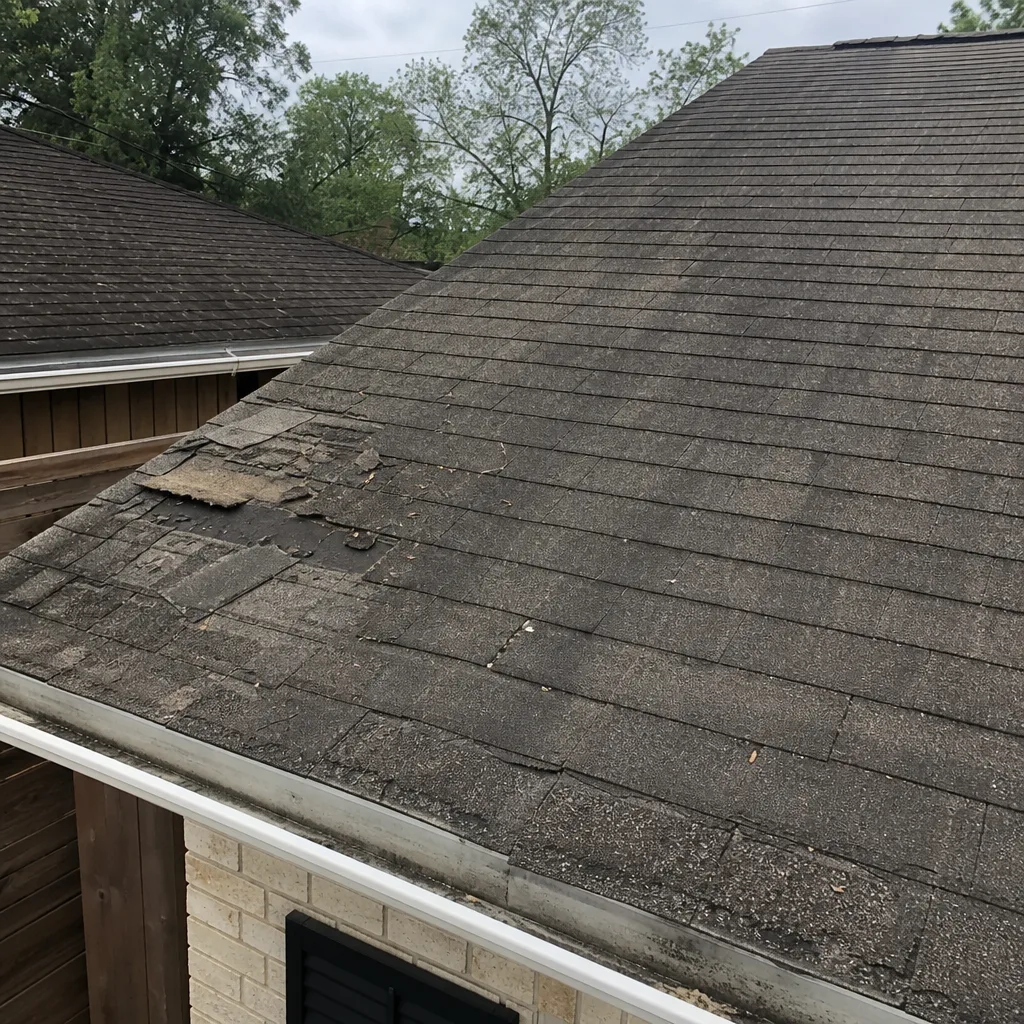 Before
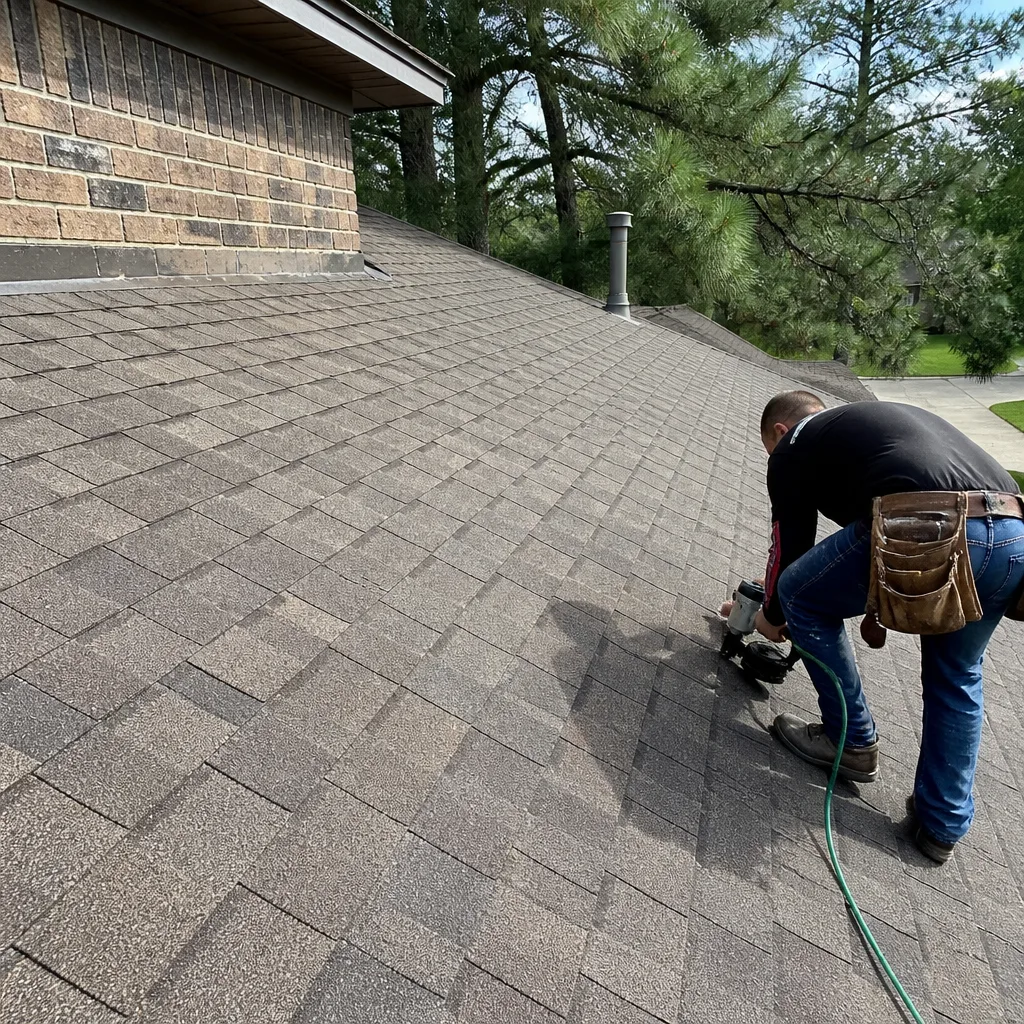 After
After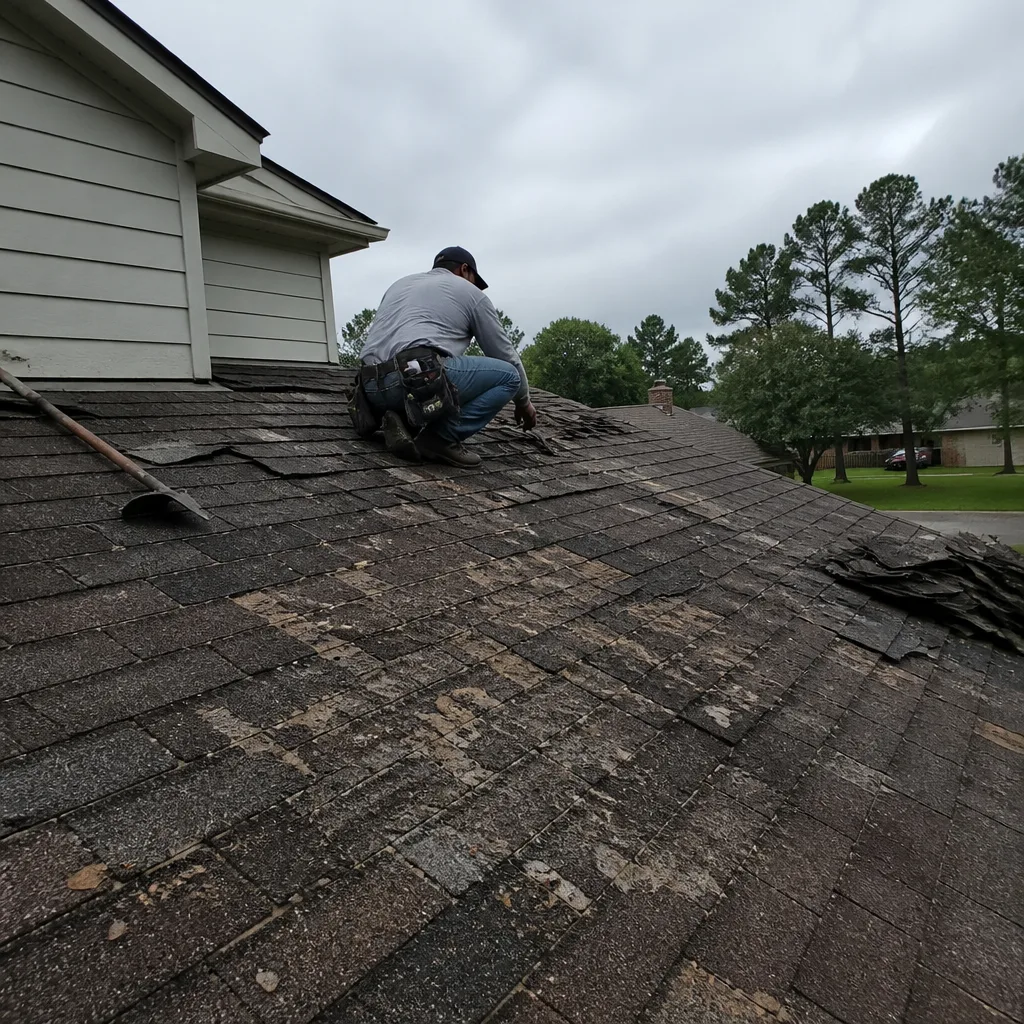 Before
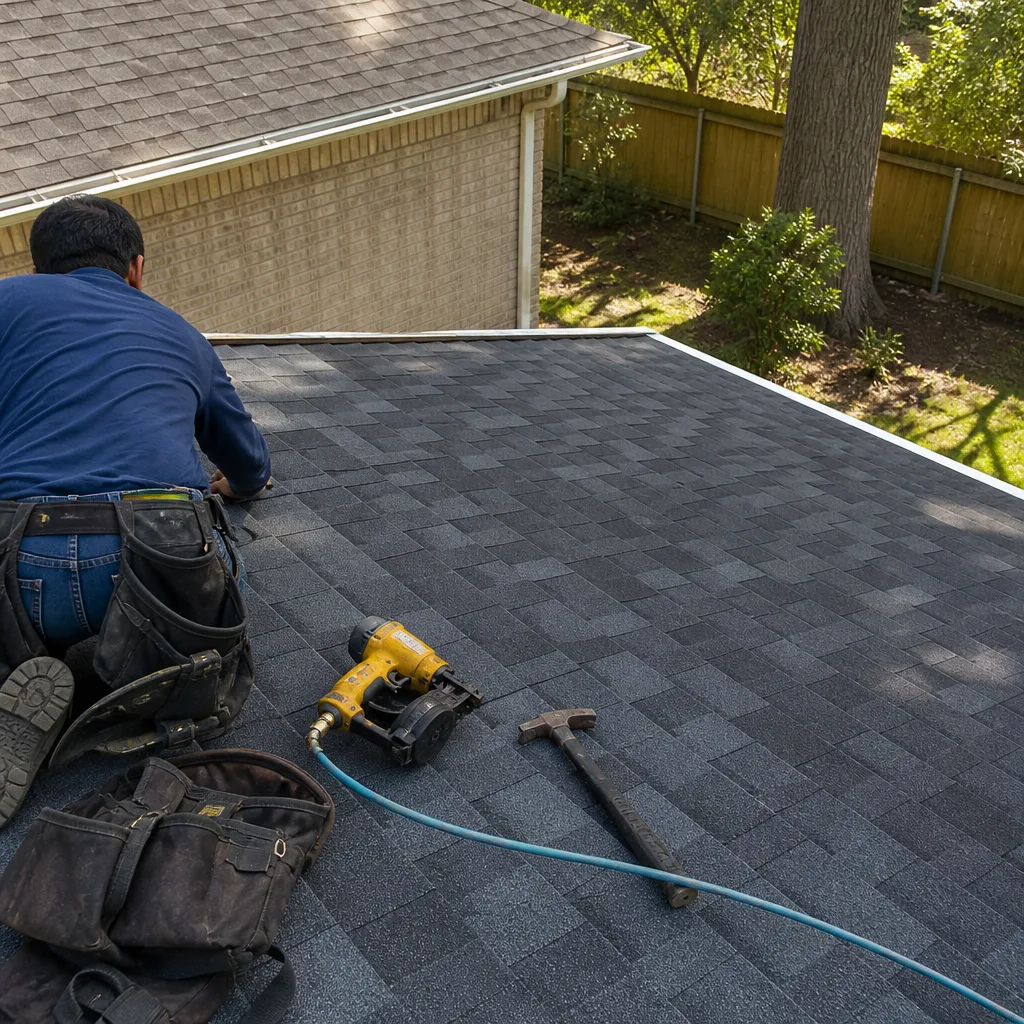 After
After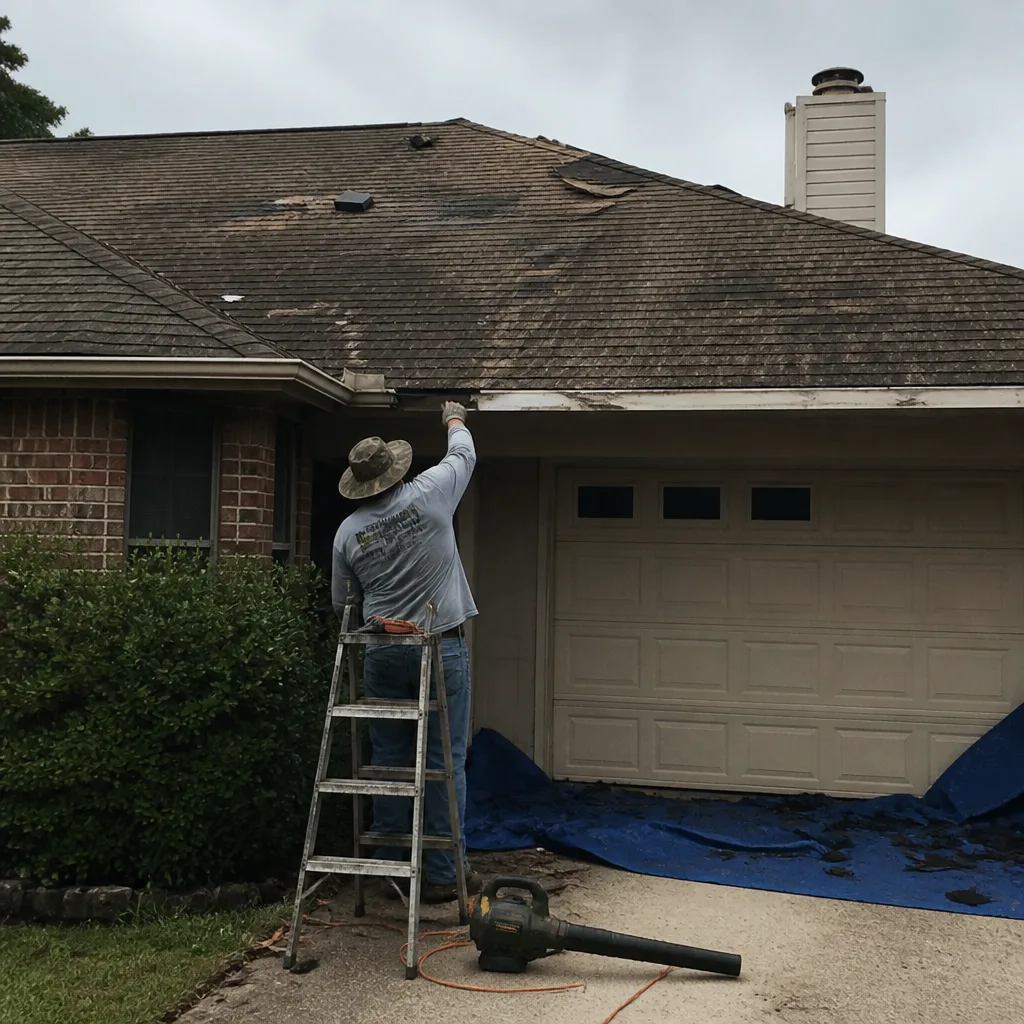 Before
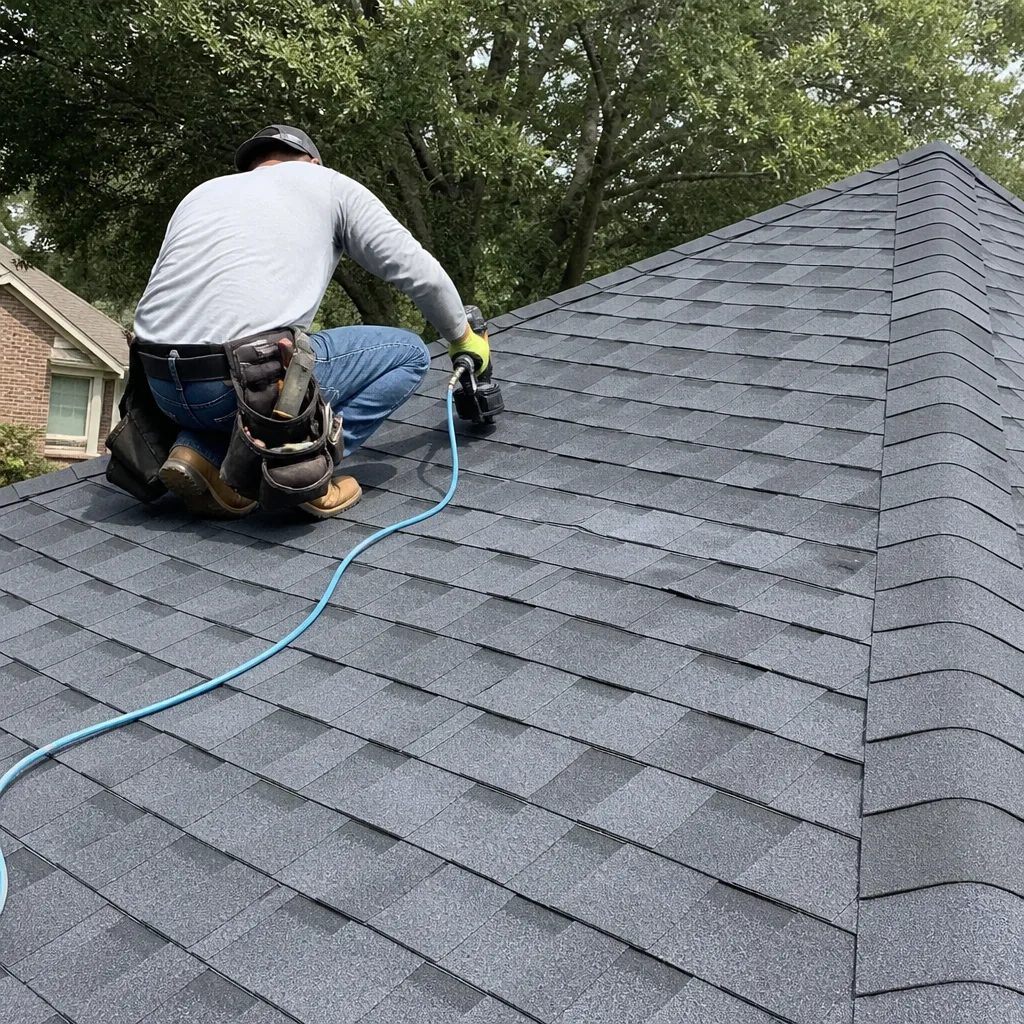 After
AfterWhen to Call a Professional
Roofing is dangerous work, full stop. Walking a Houston roof in July means surface temperatures above 140 degrees, and even a dry morning in January means a fall risk that no savings is worth. If you see water staining on a ceiling, granules collecting in gutters, shingles lifting at the edges after a wind event, or daylight visible from the attic, schedule an inspection. Our Roofing Warning Signs: A Houston Homeowner’s Reference Guide covers what to watch for in more detail. Do not climb up to check it yourself if you are not trained and properly secured, and do not attempt even a “simple” shingle patch without the right tools and fall protection. A diagnostic visit costs you nothing at most reputable companies, and it gives you a written picture of what you’re dealing with. Tilehurst Roofing Houston offers free estimates throughout the Houston metro; call (254) 566-3573 to schedule one, and a live person will answer.
Frequently Asked Questions
A full replacement on a typical 2,000-square-foot Houston home runs between $11,000 and $18,000 as of 2026, or about $5.50 to $9.00 per square foot, depending on shingle grade, decking condition, and roof complexity. Get a written line-item quote from at least two contractors before comparing numbers; call (254) 566-3573 for a free estimate from Tilehurst Roofing Houston.
Architectural asphalt shingles from brands like GAF, CertainTeed, Owens Corning, IKO, or Atlas are the least expensive option that holds up in Houston’s heat, humidity, and hail. Expect to pay $3.80 to $5.00 per square foot installed in 2026. Stepping down to 3-tab to save $1,500 is a false economy in a hail-prone market.
Most of the gap comes from scope, not pricing. One quote includes decking replacement, new flashing, permit fees, and full haul-away; another excludes all of those and prices labor below what a properly insured Houston crew can be paid. Normalize the line items and the quotes usually land within 10% to 15% of each other. Call (254) 566-3573 and we’ll walk you through reading your existing quotes line by line.
Houston roof repairs typically run $350 to $2,800 depending on the issue. A simple shingle patch is $350 to $600; a pipe boot replacement is $250 to $500; flashing repair around a chimney runs $700 to $1,500; and a larger underlayment repair with decking replacement can hit $2,800. If repairs are accumulating every year, a replacement starts to make better financial sense.
It depends on the cause of damage. Storm damage from hail or wind is typically covered, subject to your deductible, which usually equals 1% of your dwelling coverage. Gradual wear, age, or maintenance-related deterioration is not covered. Even with a full claim payout, you still pay the deductible and any material upgrade difference. Call (254) 566-3573 for help reviewing your policy’s roofing provisions before filing.
The on-site work usually takes one to two days once materials are delivered. Including permit filing, material ordering, and final inspection, expect seven to seventeen days from signed contract to completed job. Houston’s summer heat often splits the tear-off and install across two mornings; a contractor who rushes a full replacement in a single July day is making compromises someone has to fix later.
The Bottom Line
A 2026 Houston roof replacement costs between $11,000 and $18,000 for most homes, and the range exists because of scope choices, not price gouging. The quote that looks cheapest is usually just the one hiding decking repairs, flashing replacement, permit fees, or disposal costs. Read every quote as a list of line items, not a single number. Ask for architectural shingles as the starting point, consider impact-resistant upgrades if you plan to stay put, and never accept a price that changes without a signed change order. For a written, line-item estimate from a company that puts the price in your hands before any work starts, call Tilehurst Roofing Houston at (254) 566-3573. Learn more about us at the Tilehurst Roofing Houston home page.
Written by Greg Holloway, Owner at Tilehurst Roofing Houston, serving Houston since 2000.