
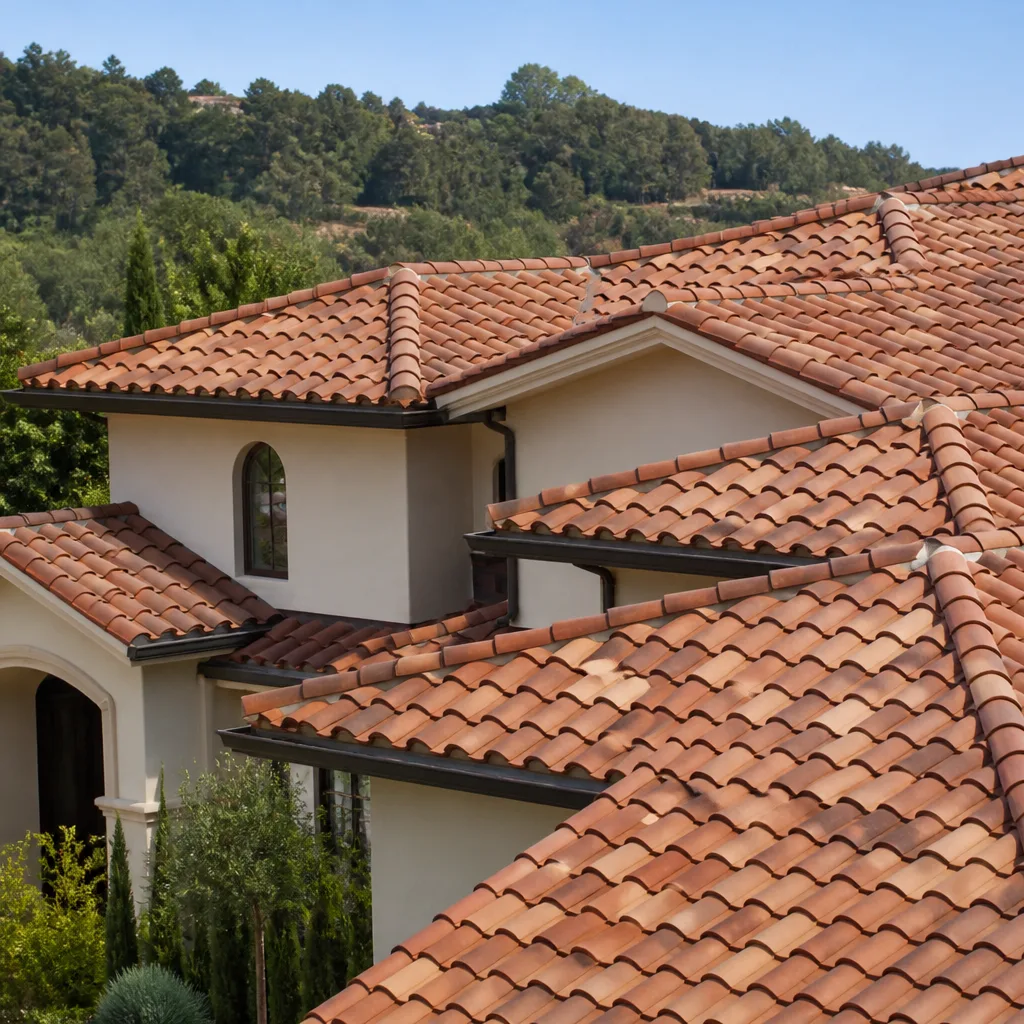
 Tile roofing
 Architectural shingles
 Metal roofing
 GAF
GAF Owens Corning
 Flat & low-slope
Free roof inspection with deck photos before we talk money - GAF and Owens Corning certified installation
Boral Flashing Replacement: The Houston Owner’s Guide
Boral flashing replacement in Houston typically runs $390 to $860 installed, depending on the flashing type, how many linear feet need replacing, and whether the surrounding tile or underlayment has taken water damage. We stock Boral-compatible flashing on our trucks and can usually complete the swap in a single visit. Most Houston homeowners discover the problem the same way: a water stain on the ceiling after a hard Gulf storm, or granules and tile debris piling up in a gutter near a wall intersection. By the time flashing fails visibly, water has usually been working its way behind the tile for months.

We’re an independent roofing company, not affiliated with Boral, but we install and replace their flashing systems regularly across Houston. Greg Holloway has seen enough failed flashing jobs in Meyerland and Bellaire to know that the flashing is rarely the root cause; it’s almost always the installation detail around it.
Which Boral Models This Applies To
Boral’s roof tile systems share common flashing profiles across most of their concrete and clay tile lines, but there are real differences between the flat-profile and high-profile series. If your home has Boral’s flat concrete tile (common in Houston subdivisions built from the late 1990s onward), you’re typically working with a lower-profile flashing that sits tighter to the deck. Homes with Boral’s high-profile clay tile, which you see a lot of in older Meyerland and West University builds, need a taller flashing with more rise to keep water from backing up under the tile course.
The cleanest way to identify what you need is to look for the tile manufacturer stamp on the underside of a loose tile, usually near the nose. Boral stamps vary by production year; older stock may say “Monier” or “MonierLifetile,” which Boral acquired, and those systems are dimensionally compatible with current Boral flashing in most cases. The second check is the flashing material itself. Original Boral flashing is typically 26-gauge galvanized steel or aluminum. In Houston’s heat and humidity, galvanized steel flashing near salt air or pool chemicals corrodes faster than you’d expect. We often replace it with Boral-spec aluminum or a powder-coated steel that holds up better in our climate. For aftermarket options, quality equivalents exist from manufacturers like Berger and Custom-Bilt, but we prefer OEM-spec dimensions so the flashing seats cleanly under the tile profile. An aftermarket piece that’s a quarter-inch off changes the water lap and creates a new leak.
Styles & brands we work with
Signs Your Boral Flashing Replacement Is Failing
- Water staining at wall-to-roof intersections or around chimneys. This is the classic symptom of step flashing or counterflashing that’s separated, corroded through, or was never lapped correctly. The stain may appear far from the actual leak because water travels along the underlayment before it drops through the ceiling.
- Loose or lifted tile at rake edges, valleys, or hips. Flashing failures let water underneath, which washes away the mortar or fasteners holding edge tiles in place. If you can wiggle a tile with your hand from a ladder, the flashing underneath has likely been compromised for a while.
- Rust streaks or white corrosion running down the roof surface. That oxidation is coming from a deteriorating metal flashing, not the tile itself. Once the galvanized coating fails, the steel underneath thins quickly in Houston’s wet-dry-wet cycles.
- Granules or tile chips collecting in gutters below wall intersections. Water intrusion loosens the bond between tile and mortar, causing spalling along the tile edges. The debris collects right where the flashing should be shedding water cleanly.
- Sudden ceiling leaks after a storm with wind-driven rain. Houston storms push rain sideways, exposing flashing laps that handle vertical water fine but fail under wind pressure. If a leak only appears during windy rain, the flashing lap direction is often wrong for the prevailing storm pattern.
See the difference
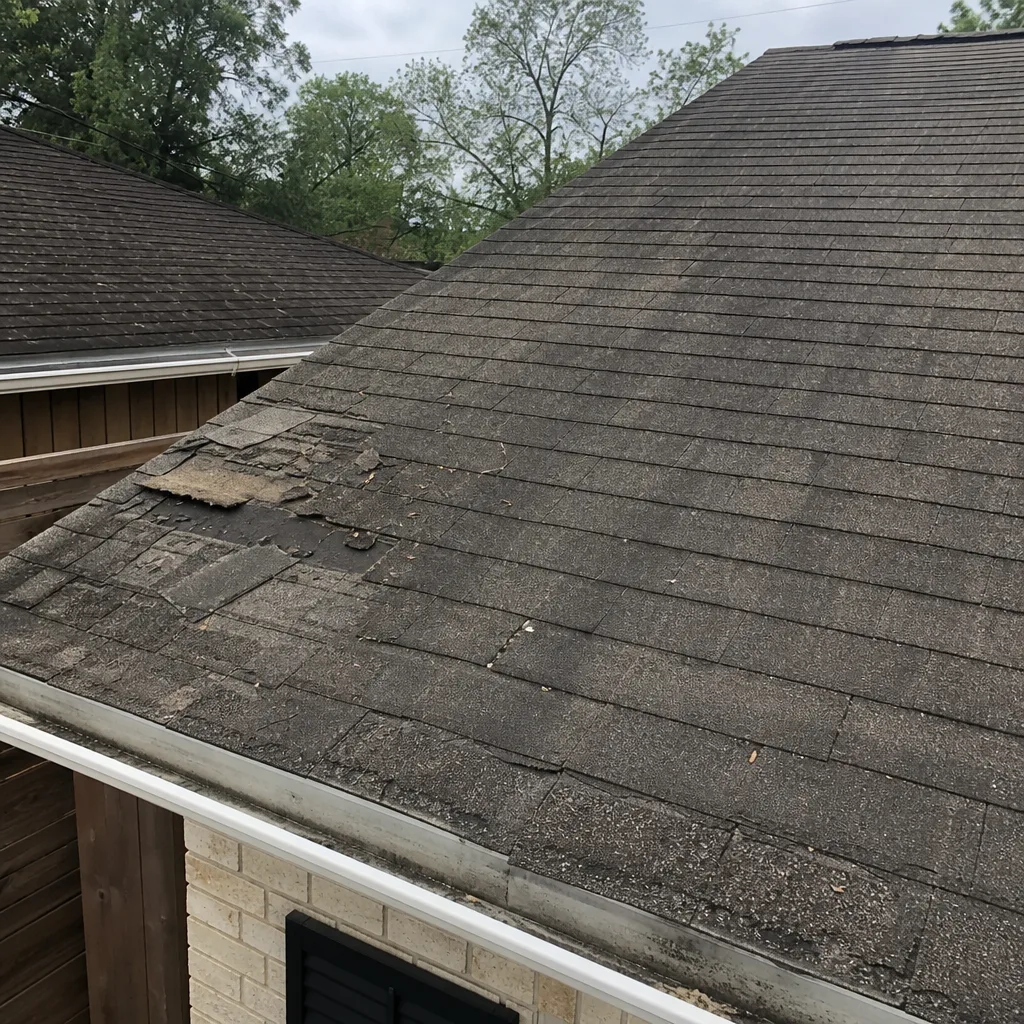 Before
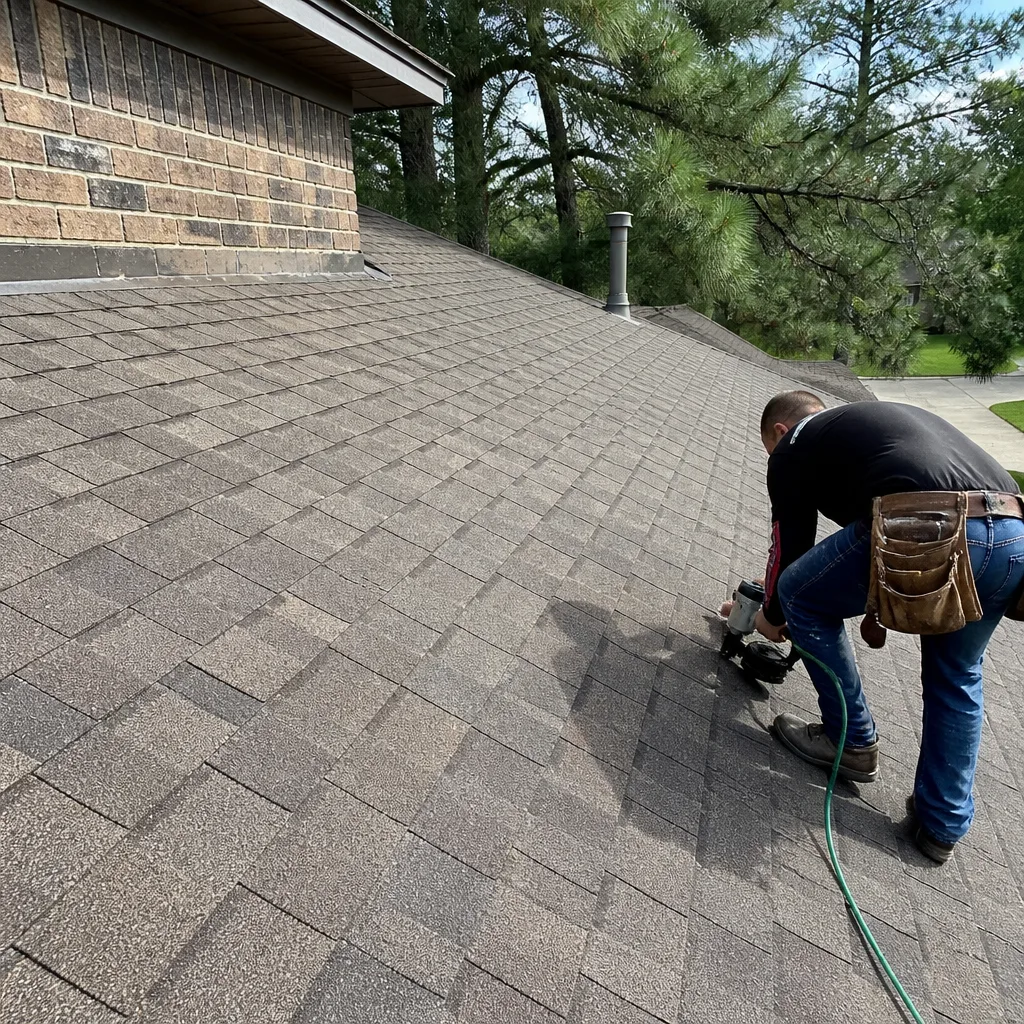 After
After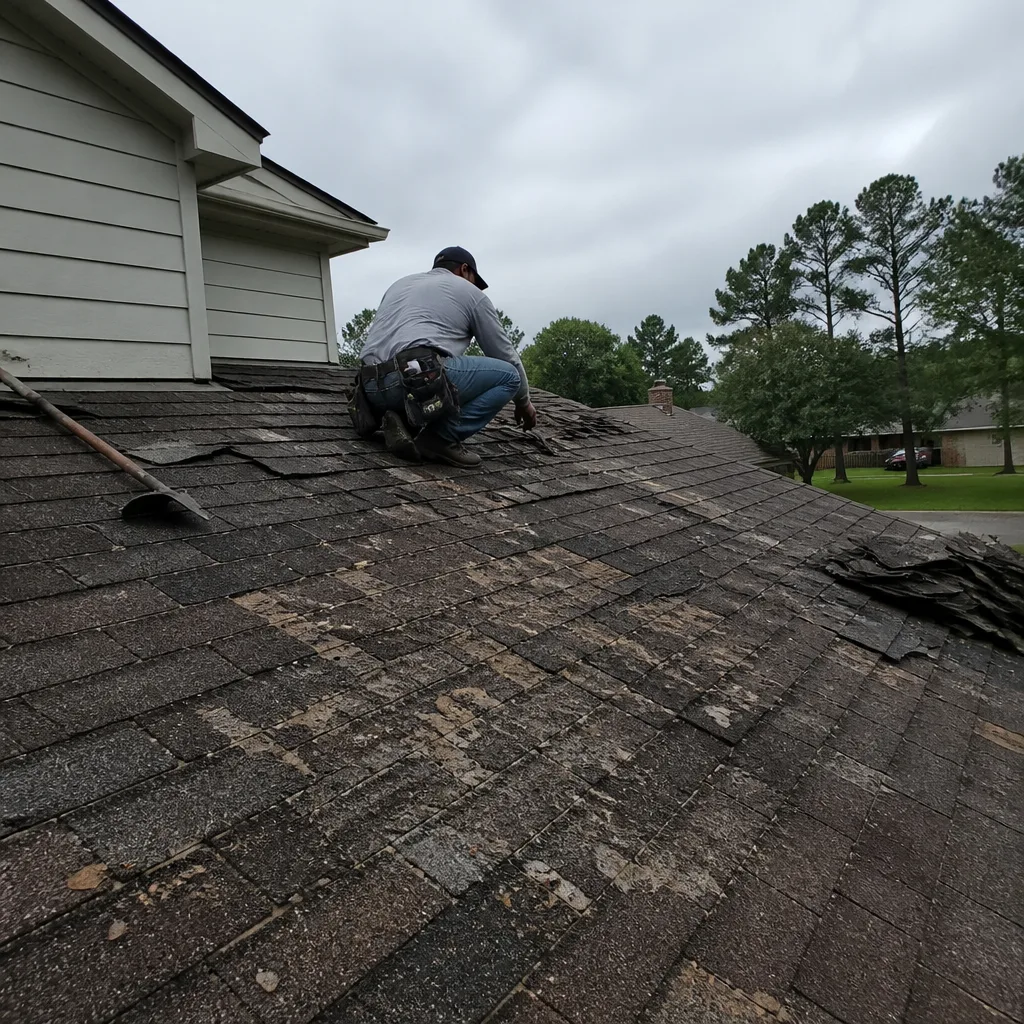 Before
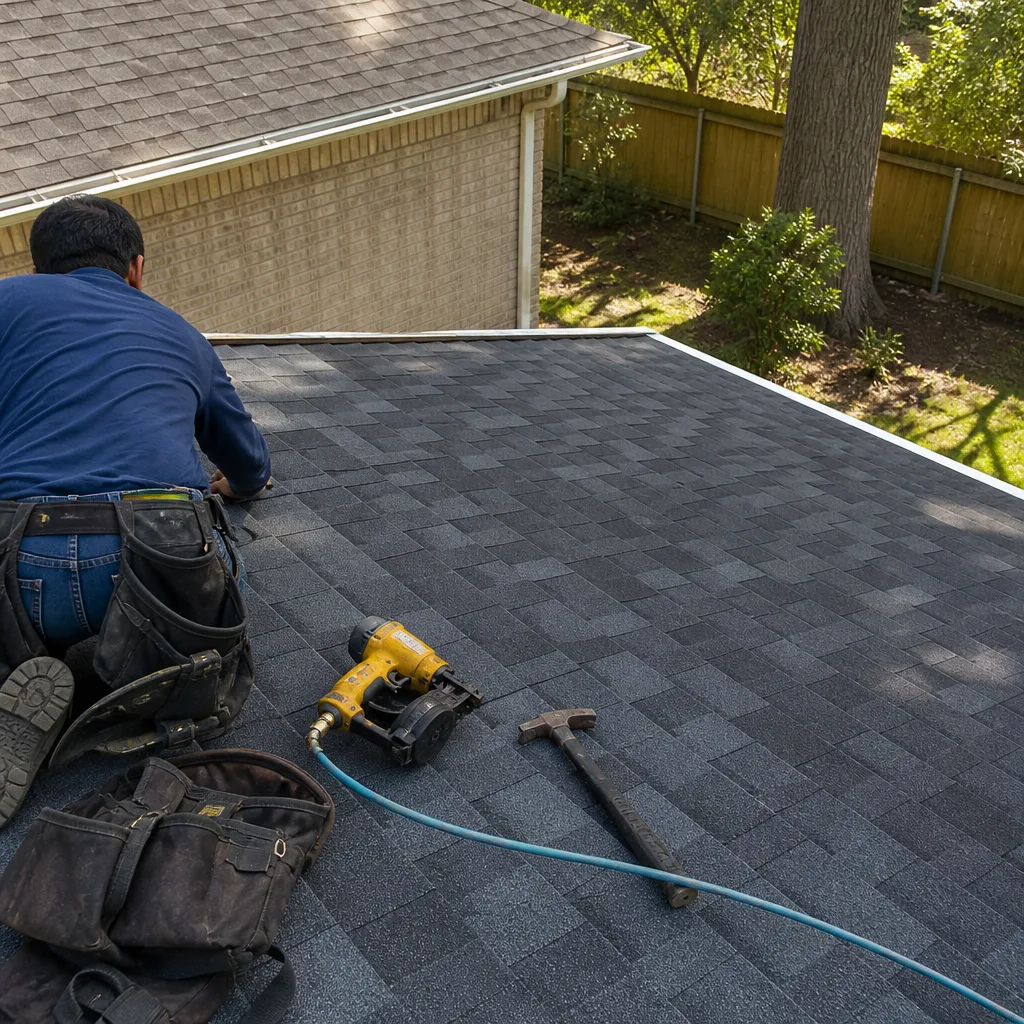 After
After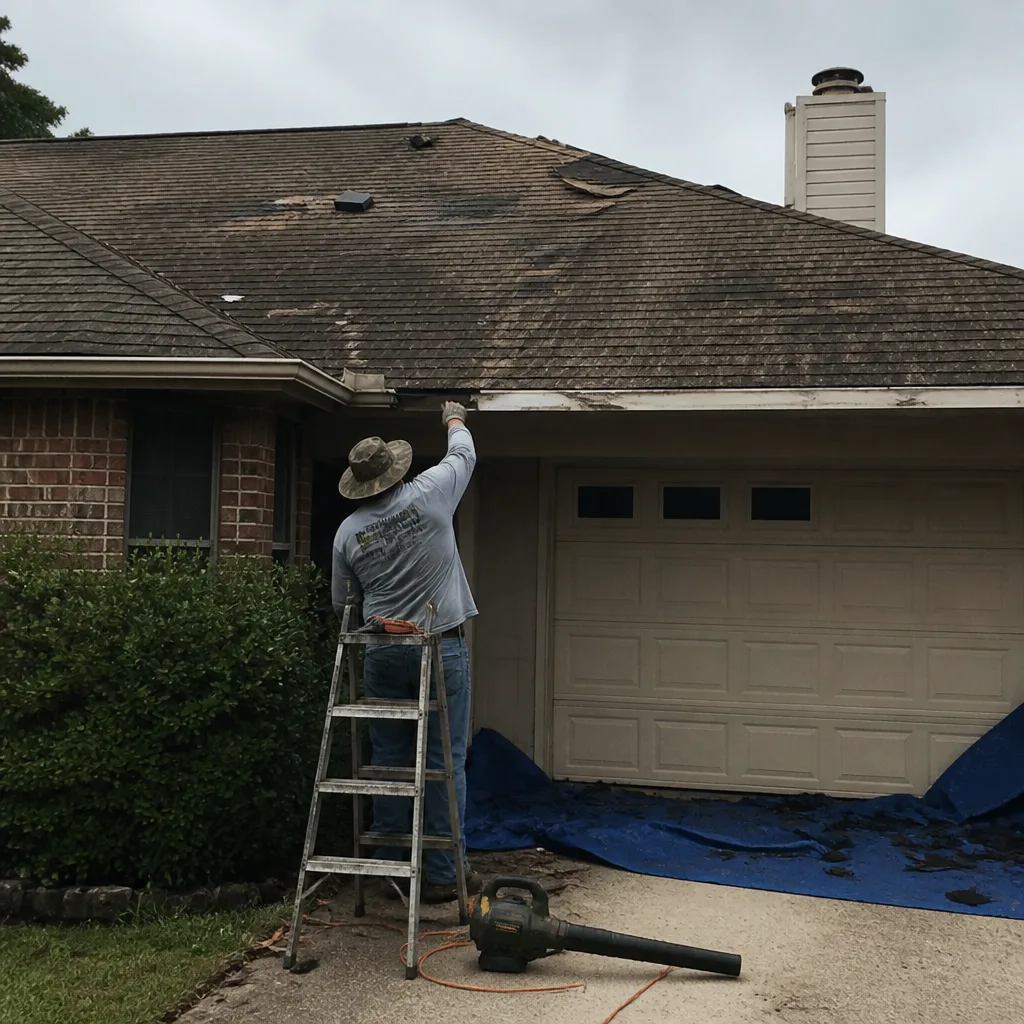 Before
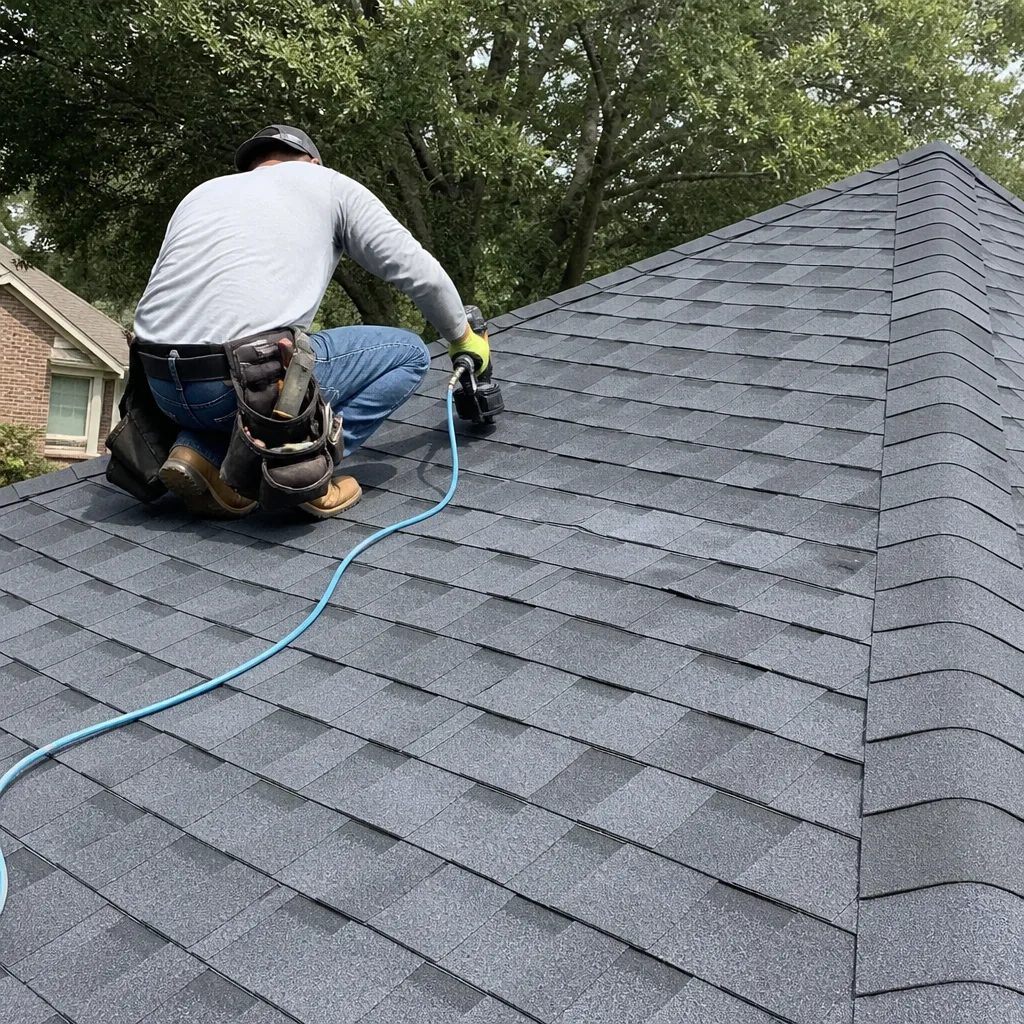 After
AfterReplacement Cost & What’s Included
For Houston homes with Boral tile, most flashing replacement jobs fall in the $390 to $860 range for a single area like a chimney, a roof-to-wall intersection, or a valley section. Larger jobs that involve multiple penetrations, re-bedding tile, or replacing water-damaged underlayment can push toward $1,200 or more. The spread comes down to three things: how much linear footage of flashing is involved, whether we’re matching an existing retrofitted flashing or doing it from scratch, and what condition the surrounding tile and decking are in once we open the area.
What you get from us is a written price before any work starts, and that price includes the flashing, fasteners, sealant, tile re-bedding where needed, and cleanup. The written guarantee covers the repair for a full year under our 365-Day Done Right Promise. If the flashing fails inside that window, we come back and correct it at no charge, no phone tag, no re-quote. A live person answers our line 24/7, so if you have a leak at 9 p.m. on a Sunday, you’re not leaving a voicemail and hoping. You’ll know the price before we touch the roof.
DIY or Call Us?
There’s one thing you can safely check from the ground or a sturdy ladder: look for missing ridge caps, cracked tiles at wall intersections, or visible gaping at the flashing laps. That tells you the area needs attention. What you should not do is pull tiles, cut flashing, caulk over a failed lap, or attempt any repair that requires being on the roof itself. Tile roofs in Houston are often steep, the tile surface is slippery with algae and humidity, and a broken concrete tile edge is sharp enough to do real damage to a hand or leg.
Beyond the safety piece, the reason we tell homeowners not to DIY Boral flashing is that most failures we see are the result of a previous handyman repair that didn’t respect the lap direction or used the wrong sealant. Flashing only works when water always, always sheds downhill and outward. One wrong lap and you’ve built a funnel into your decking. That’s a costly lesson we’d rather you not learn on your own roof. Call (254) 566-3573 and we’ll come take a look, write the price down, and you can decide from there.
FAQs
Original Boral flashing typically lasts 20 to 30 years in Houston, but galvanized steel flashing can corrode in as little as 12 to 15 years if it’s near pool chemicals, salt air from the coast, or has debris sitting against it. Aluminum flashing lasts longer here. If you’re seeing rust streaks, the clock has run out and replacement is due. Call (254) 566-3573 for a free estimate and we’ll give you an honest read on remaining life.
Usually not. Flashing fails by corroding through, tearing at fastener points, or losing its lap integrity, and a patch or caulk line over any of those failures is a short-term bandage at best. The correct fix is cutting out the failing section and installing new flashing with proper laps. We’ll tell you if a small reseal is genuinely viable, but in most Houston cases, replacement is the honest answer. Call (254) 566-3573 and we’ll inspect before recommending anything.
Most single-area Boral flashing replacements are done in one visit, typically 4 to 7 hours including tile removal, flashing install, re-bedding, and cleanup. Multiple areas or underlayment repair can extend the job, and we’ll spell that out in the written estimate before we start. Call (254) 566-3573 to schedule a time that works.
Yes, we stock the most common Boral-compatible flashing profiles and materials on our trucks, including step flashing, counterflashing, valley flashing, and pipe boot flashing in the dimensions that fit Boral tile profiles. If your home needs an unusual size or finish, we can usually source it same week through our supplier network. Call (254) 566-3573 with your tile’s stamp information if you have it, and we’ll confirm fitment before we arrive.
Yes. We stock flashing and repair materials for all seven major manufacturers we work with: GAF, CertainTeed, Owens Corning, IKO, Atlas, Tamko, and Boral. If your roof is a mix of tile systems or you’re not sure what you have, we’ll identify it during the inspection and quote accordingly. Call (254) 566-3573 to get started.
Written by Greg Holloway, Owner, Tilehurst Roofing Houston at Tilehurst Roofing Houston, serving Houston and nearby areas.