

Last updated October 17, 2026
 Metal roofing
 Architectural shingles
 Tile roofing
 GAF
GAF Owens Corning
 Flat & low-slope
Free roof inspection with deck photos before we talk money - GAF and Owens Corning certified installation
Roofing Company Maintenance Checklist for Houston Homeowners
Here’s a number most Houston homeowners never hear: by the time a shingle visibly curls, lifts, or lands in your yard, the roof has usually been failing for eighteen to twenty-four months underneath it. The damage starts where you can’t see it, in the attic, at the flashing joints, under the valley metal, and along the drip edge. A roofing maintenance checklist written for Seattle or Portland misses what Houston actually does to a roof: live oak debris that turns into acidic mulch in your gutters, attic temperatures that hit 140 degrees in August, and the kind of wind-driven rain that finds every unsealed nail hole. This guide flips the standard checklist around. Instead of forty generic boxes, we start with the five failure points that account for roughly 80% of the roof claims we see across Houston, then show you exactly what a legitimate Roofing Company services provider should be doing at each one.
Quick Answer
A Houston roofing maintenance checklist should focus on five failure points first: flashing and pipe boots, ridge vent screens, gutter and downspout drainage, attic ventilation and humidity, and post-storm nail and sealant checks. Most asphalt-shingle repairs in Houston run $350 to $900, while full maintenance visits with documentation typically cost $150 to $400. After any storm above 50 mph, a professional should inspect and document the roof in writing, not just give a verbal summary, and that documentation should include photos with timestamps plus an attic humidity reading.
Styles & brands we work with
Table of Contents
- The Five Failure Points That Matter Most in Houston
- The Post-Storm Sequence: What to Expect After 50 MPH Winds
- How to Audit Whether a Maintenance Visit Actually Happened
- Why Houston Gutters Need a Different Standard Than “Twice a Year”
- What You Can Do Yourself vs. What Voids Manufacturer Warranties
- Record-Keeping That Makes Insurance Claims and Resale Easier
- Common Mistakes to Avoid
- When to Call a Professional
The Five Failure Points That Matter Most in Houston
A Houston roofer who checks your flashing but skips your ridge vent screens has missed the entry point for the carpenter ants and moisture that will rot your decking long before any shingle fails. Most maintenance checklists don’t mention ridge vents once. That’s a problem, because in Houston, the roof failures we see follow a pattern, and that pattern has very little to do with the shingles themselves. Here are the five points worth inspecting before anything else.
1. Flashing and Pipe Boots
Flashing is the metal, usually aluminum or galvanized steel, that seals the joints where your roof meets a wall, chimney, skylight, or vent pipe. Pipe boots are the rubber or neoprene collars that seal around plumbing vent stacks. In Houston, these fail before shingles do because rubber and sealant break down faster in high heat and UV exposure than asphalt does. A pipe boot in direct sun can crack and split within five to seven years. When it does, water follows the pipe straight through the decking and into the ceiling below. A proper maintenance visit should inspect every pipe boot by hand, not from the ground with binoculars. If the rubber is stiff, cracked, or pulling away from the pipe, it gets replaced. That’s a $180 to $350 repair that prevents a $2,000 ceiling and insulation job.
2. Ridge Vent Screens
Ridge vents run along the peak of your roof and let hot air escape from the attic. Most have screens or baffles designed to keep pests out while letting air move. Those screens fail quietly. A torn or missing ridge vent screen is an open door for carpenter ants, wasps, squirrels, and the humid air that feeds mold on your decking. In Houston’s humidity, that mold can establish itself in a single summer. A maintenance checklist should include removing the ridge vent cover if possible, or at minimum inspecting each vent opening for screen damage and blockage. If a roofer tells you the ridge vents “look fine from the ladder,” ask them to check the screens specifically.
3. Valley Metal and Underlayment
Valleys are where two roof planes meet, and they channel more water than any other part of the roof. In most Houston homes, valleys are lined with metal or woven shingles. That metal eventually corrodes, especially if oak leaves sit on it through a wet spring. Underlayment is the water-resistant barrier between your decking and the shingles. In older Houston homes, underlayment is often felt paper that has been baking for twenty years and now tears like parchment. A legitimate maintenance visit should inspect valley metal for rust-through and exposed fasteners, and should note the underlayment condition wherever the shingles are lifted for a repair.
4. Drip Edge and Fascia Board
The drip edge is the metal strip along the roof’s lower edge that directs water into the gutter instead of letting it wick back under the shingle. Fascia board is the vertical board behind the gutter. In Houston, fascia rot is one of the most common hidden conditions we find during roof repair in Houston. When gutters overflow, water backs up against the fascia and starts a rot cycle that eventually loosens the gutter itself. A maintenance visit should check whether the drip edge extends past the fascia, whether water is getting behind the gutter, and whether any fascia sections feel soft when probed.
5. Attic Ventilation and Humidity
This is the one measurement that proves a roofer actually entered your attic and checked ventilation. Houston attics should stay within roughly 55% to 65% relative humidity in summer. Above 70%, and you’re feeding mold. A proper maintenance visit includes an attic walk with a hygrometer, a check of intake vents at the soffits, and a check of exhaust vents at the ridge or gables. If your attic has no baffles at the soffit vents, or if insulation has been blown over the intake vents, ventilation is compromised. That shortens shingle life and raises your cooling bill. We consider an attic humidity reading a mandatory part of any maintenance visit, and we write the number down.
The Post-Storm Sequence: What to Expect After 50 MPH Winds
Houston gets wind events every year, from spring squall lines to tropical systems. Anything above 50 mph can lift shingles, crack sealant, and drive water under flashings that were perfectly fine the day before. What matters after the storm is sequence and paperwork. Here’s the order a professional maintenance visit should follow.
- Ground-level visual circle, first. The roofer walks the perimeter and photographs every elevation before climbing. This catches obvious damage and records the pre-ladder condition.
- Ladder inspection of every penetration. Every pipe boot, chimney flashing, skylight, and vent gets examined by hand. Wind-driven rain exploits these joints first.
- Shingle lift test. The roofer gently lifts shingle tabs in affected areas to check for cracked sealant strips. Shingles that are no longer bonded will slide or flap.
- Attic check with flashlight and hygrometer. The roofer looks for water staining on decking, checks the relative humidity, and verifies the ventilation path is still open.
- Written documentation. This is the step most companies skip. You should receive a written report that lists what was inspected, what was found, what was repaired or recommended, and photos with timestamps. A verbal note like “you lost a few shingles” is not documentation. If you make an insurance claim later, the adjuster will ask for the written record, not the memory of a phone call.
What gets documented in writing versus what’s a verbal note matters. Anything related to damage, repair recommendations, warranty conditions, or safety should be in writing. “I’d keep an eye on that valley” as a verbal aside is useless three months later. A legitimate company puts it in the report. At Tilehurst Roofing Houston, every maintenance visit ends with a written summary, and every repair carries a written guarantee before the crew leaves the property. That’s the standard we operate under as part of the Kingswell family of roofing companies, founded in 2000. The Kingswell Way is simple: say the price before the work, show up in the window we gave, leave the place cleaner than we found it, put the guarantee in writing, come back if it fails.
How to Audit Whether a Maintenance Visit Actually Happened
We’ve taken over jobs where a previous company charged for a roof inspection and never set foot on the roof. It happens more than Houston homeowners want to believe. If you’re paying for maintenance, you should be able to prove it happened. Here’s how to audit the visit.
First, ask for photos. A legitimate inspection generates at least fifteen to twenty photos covering each elevation, the flashings, the valleys, the ridge vents, and the attic. Ask to see photos with time and date stamps embedded. If the photos only show the shingles from the ground, the roofer never climbed. If there are no attic photos, the roofer never entered the attic, which means ventilation and humidity were not actually checked.
Second, ask for the attic humidity reading. This is the single measurement that proves real work happened. A roofer who entered the attic with a hygrometer can tell you the relative humidity and the attic temperature, and should have recorded both. If the answer is “it felt fine up there,” the visit was incomplete regardless of what the invoice says.
Third, ask what was actually touched. A real maintenance visit should include some physical action: a pipe boot replaced, sealant applied to a flashing, a nail popped back down, a vent screen repaired. If the entire visit produced zero physical findings and zero physical work, either the roof is unusually pristine or the visit was a drive-by. In Houston’s climate, a roof older than eight years almost always has at least one item worth addressing. At the roofing company in Houston standard we hold ourselves to, a maintenance visit that changes nothing is a rare outcome, not the default.
Why Houston Gutters Need a Different Standard Than “Twice a Year”
The national advice is to clean gutters twice a year, in spring and fall. That advice was not written for Houston. Between the live oaks that drop leaves and tassels in March and April, the summer thunderstorms that fill gutters with shingle granules, and the fall leaf drop that runs from October into December, a Houston gutter can go from clear to clogged in six weeks. And a clogged Houston gutter doesn’t just overflow. It becomes a damp, acidic mat that accelerates fascia rot and provides a nursery for the mold that eventually finds its way into the attic.
Here’s the Houston-specific gutter standard we recommend. Inspect after the live oak leaf drop in late spring, again after the first major summer storm sequence, and again in late fall. That’s a minimum of three inspections per year, and four is not excessive if you have large oaks within fifty feet of the roofline. During each inspection, check for standing water in the gutter runs, sagging or pulled hangers, separation at the miters, and granules collecting at the downspout elbows. Granule accumulation tells you the shingles are shedding, which in Houston is often a sign the roof is entering its final three to five years of service life.
Downspouts matter as much as the gutters. A downspout that dumps water at the foundation edge in Houston’s expansive clay soils causes the slab movement that cracks drywall and tiles. Gutter maintenance should include extending downspouts at least four feet from the foundation, and checking that the splash blocks or extensions are actually moving water away, not just spraying it under the slab edge.
What You Can Do Yourself vs. What Voids Manufacturer Warranties
There are maintenance tasks a Houston homeowner can safely handle, and there are tasks that, if done wrong, will void a manufacturer’s warranty or put you on a ladder you shouldn’t be on. Knowing the difference saves money and keeps warranties intact.
Safe to Do Yourself
- Visual ground inspection. Once a month, walk the perimeter and look for lifted shingles, missing ridge caps, dented flashing, or debris dams at the valleys. You’re not diagnosing, just noticing.
- Gutter clearing from a step ladder. If you’re comfortable on a step ladder and the ground is level, clearing leaves and checking downspouts is a reasonable homeowner task. Wear gloves; Houston gutters harbor ants and wasps.
- Trim overhanging branches. Limbs that touch the roof transfer pests and scrape shingle granules. Trimming them back is safe homeowner work as long as the branch is small and reachable from the ground.
- Check downspout extensions. Walk the perimeter during a heavy rain and verify water is moving away from the foundation. This catches drainage problems before the slab moves.
Do Not DIY These
- Any repair that involves lifting or replacing shingles. Most shingle manufacturers, including GAF and Owens Corning, require installation and repair by a licensed contractor to keep the warranty valid. A DIY shingle patch can void the material warranty on the entire roof.
- Flashing repair or replacement. Removing and reinstalling flashing correctly requires cutting, bending, and sealing metal at roof intersections. The mistake usually shows up as a leak six months later.
- Anything involving the roof itself beyond a ground inspection. Walking a Houston roof after rain means navigating a slick, granule-covered surface above a long fall. That’s not a homeowner task. The insurance implications of a fall are also significant.
- Attic moisture remediation. If you find mold, sagging decking, or staining, document it and call a professional. Treating the symptom without fixing the ventilation path just delays the real repair.
Record-Keeping That Makes Insurance Claims and Resale Easier
Houston homeowners deal with insurance claims after hail, wind events, and the occasional tropical system. The difference between a smooth claim and a denied one often comes down to the paper trail you kept before the storm happened. Here’s the record-keeping format we recommend for any Houston home.
Create a simple folder, physical or digital, with one page per year. On that page, record the date of every inspection, who performed it, what they found, what they repaired, and what they recommended. Attach the photos and the written report. If you replaced any components, note the material, brand, and the approximate age at replacement. For example: “April 2024 – pipe boot replaced (neoprene, brand unknown), flashing resealed at chimney, attic humidity 58%.”
This record does three things. First, it establishes a maintenance history that insurance adjusters respect. A homeowner who can show five years of documented inspections and timely repairs has a much stronger position when arguing that damage was storm-related and not deferred maintenance. Second, it gives you the documentation you need for a resale disclosure. Buyers in Houston increasingly ask about roof age, repair history, and ventilation. A clean, dated record answers that question with facts instead of shrugs. Third, it tells any future roofing company exactly what was done and when, which prevents paying for the same repair twice.
If you’re starting fresh, the first entry in that record should be a professional inspection with photos and an attic humidity reading. That creates your baseline. Every maintenance visit after that builds the history. If you want a head start, Tilehurst Roofing Houston’s home page walks through what our maintenance inspections include, and the pricing is always provided in writing before any work starts.
Common Mistakes to Avoid
- Skipping the attic entirely. Many maintenance visits never enter the attic, which means ventilation, humidity, and decking condition go unexamined. In Houston, attic moisture is the leading hidden cause of premature roof failure.
- Treating the gutter schedule as optional. Houston’s live oak debris cycle makes “twice a year” insufficient. A clogged gutter in June feeds a fascia rot problem by August.
- Paying for a maintenance visit with no written report. A verbal summary is not documentation. If there’s no written record with photos and measurements, the visit might as well not have happened for insurance and resale purposes.
- Replacing shingles without addressing the underlying cause. A shingle lost to wind is a simple repair. A shingle that fell because the sealant strip failed across the entire slope is a warning sign about roof age and ventilation. Treating the symptom and not the cause just delays a larger job.
- Ignoring ridge vent screens. As noted at the top, most checklists don’t mention ridge vents. A torn screen is the entry point for the pests and moisture that destroy decking from the inside out.
- Skipping maintenance because the roof “looks fine.” Houston roofs rarely show their condition from the ground. The failures that cost the most are the ones that were invisible for a year or more before the first ceiling stain appeared.
When to Call a Professional
Call a professional after any wind event above 50 mph, even if nothing looks damaged from the ground. Call when you see ceiling stains, attic moisture, or daylight through the roof boards. Call when the roof is past its tenth year and has never had a documented inspection. Call when you’re selling the home and need a maintenance history that answers buyer questions. Tilehurst Roofing Houston offers free estimates in Houston and the surrounding areas. Call (254) 566-3573 to schedule one, and you’ll get a written price before any work starts. Greg Holloway leads the team, and every repair carries a written guarantee delivered before the crew leaves, backed by the 365-Day Done Right Promise.
See the difference
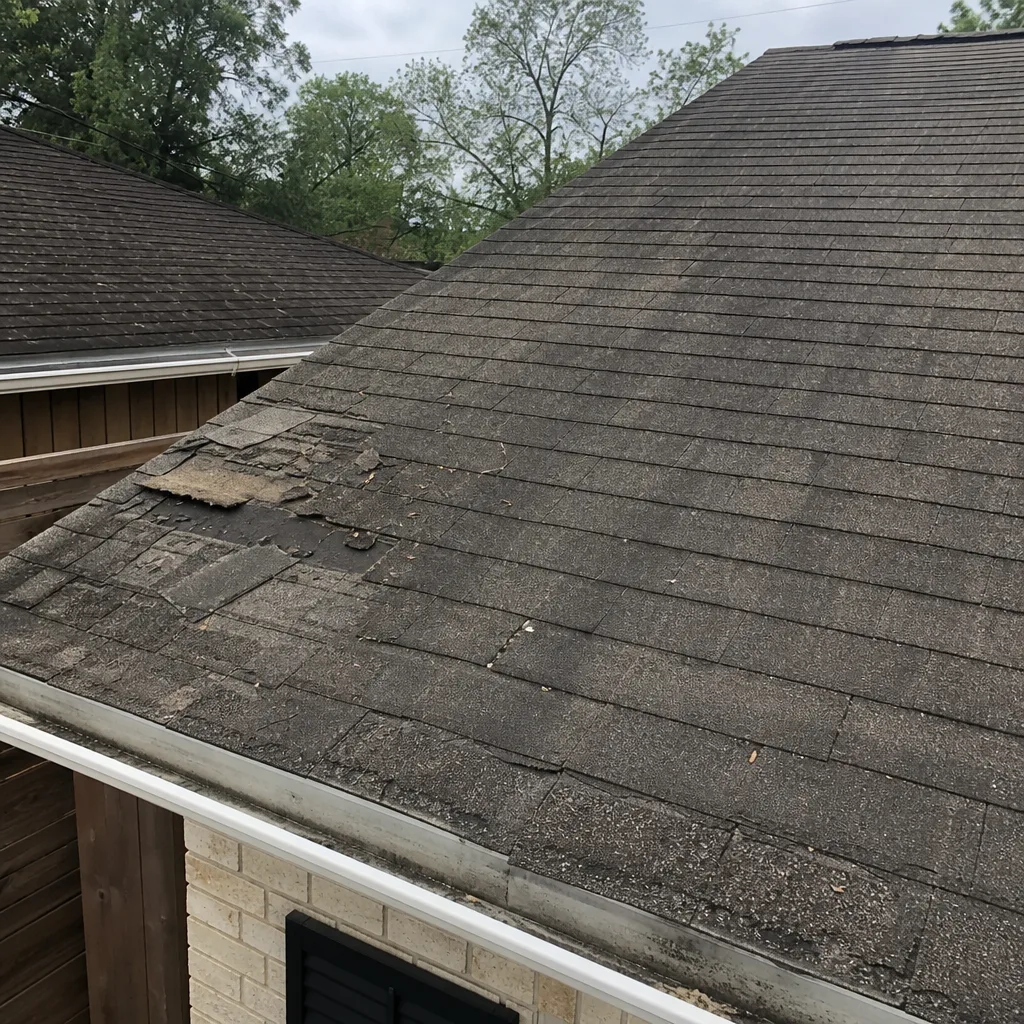 Before
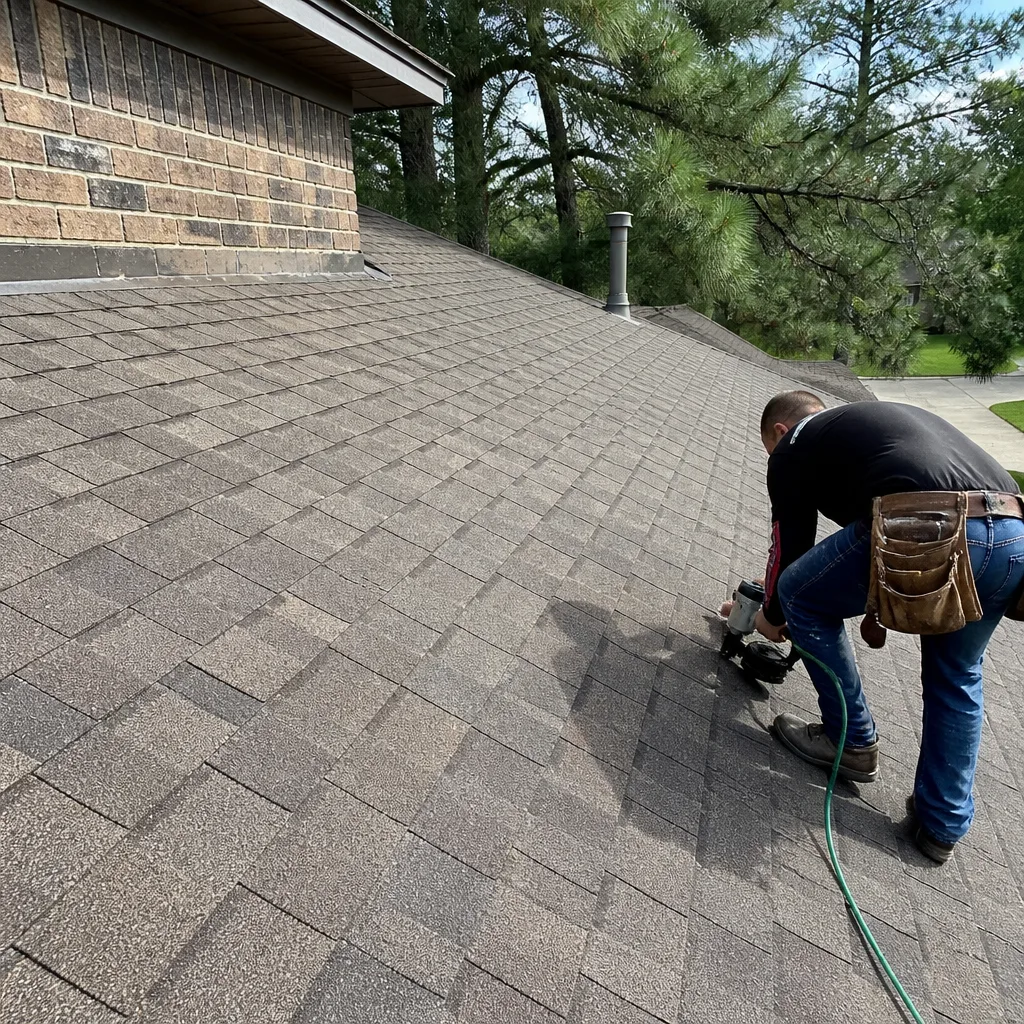 After
After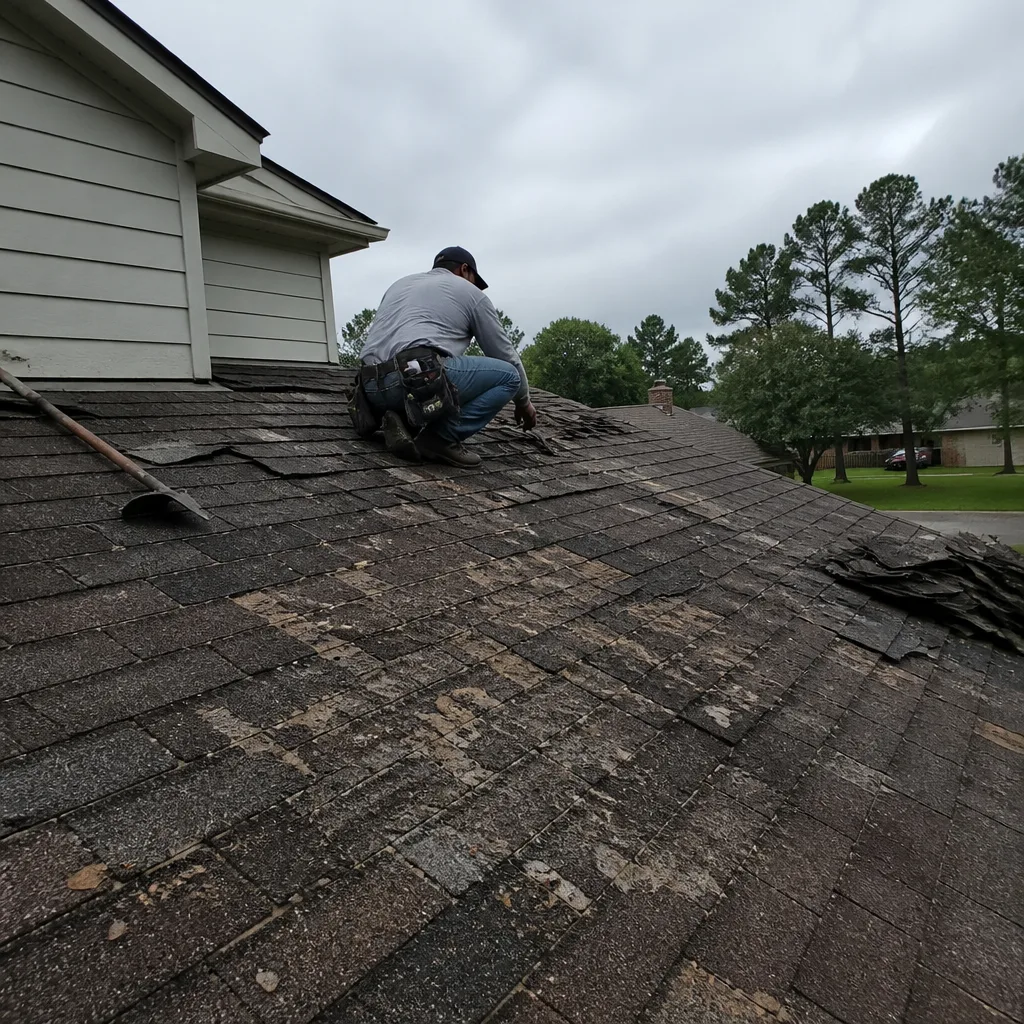 Before
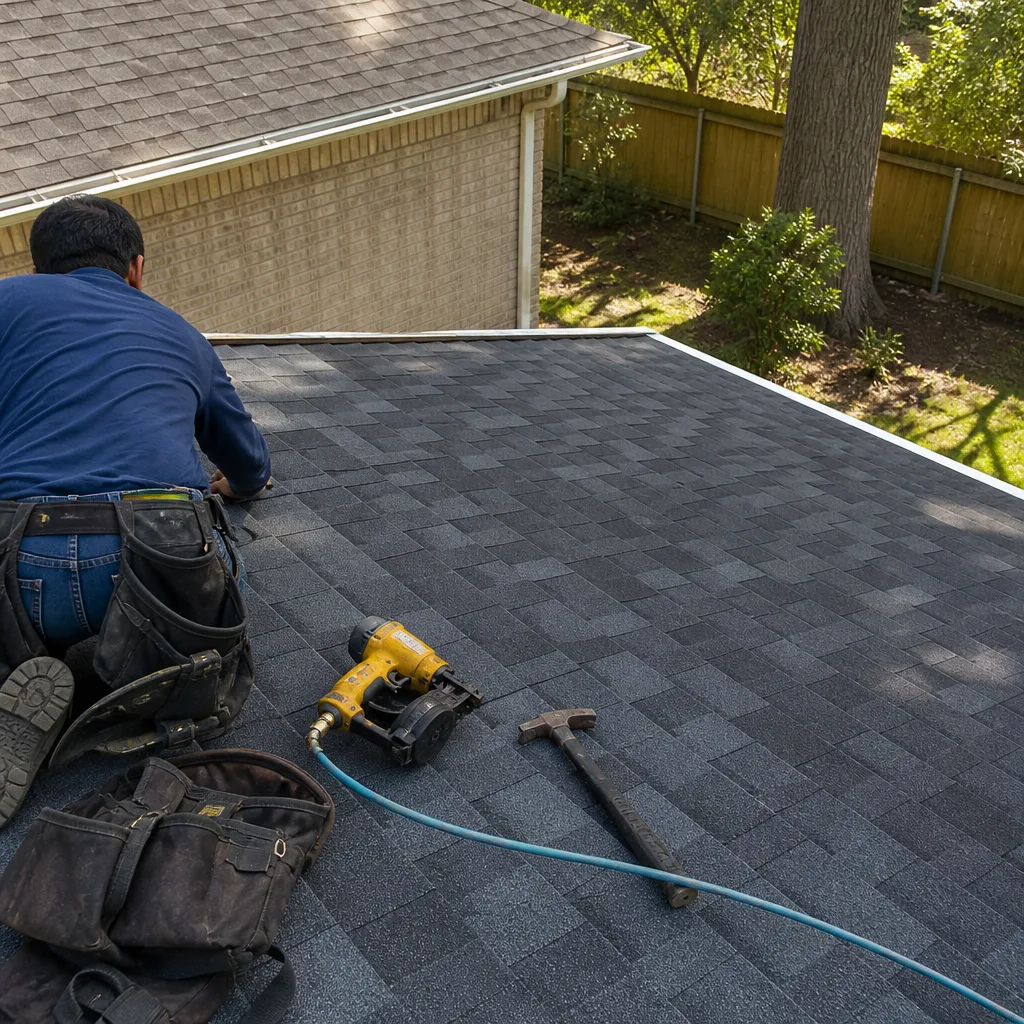 After
After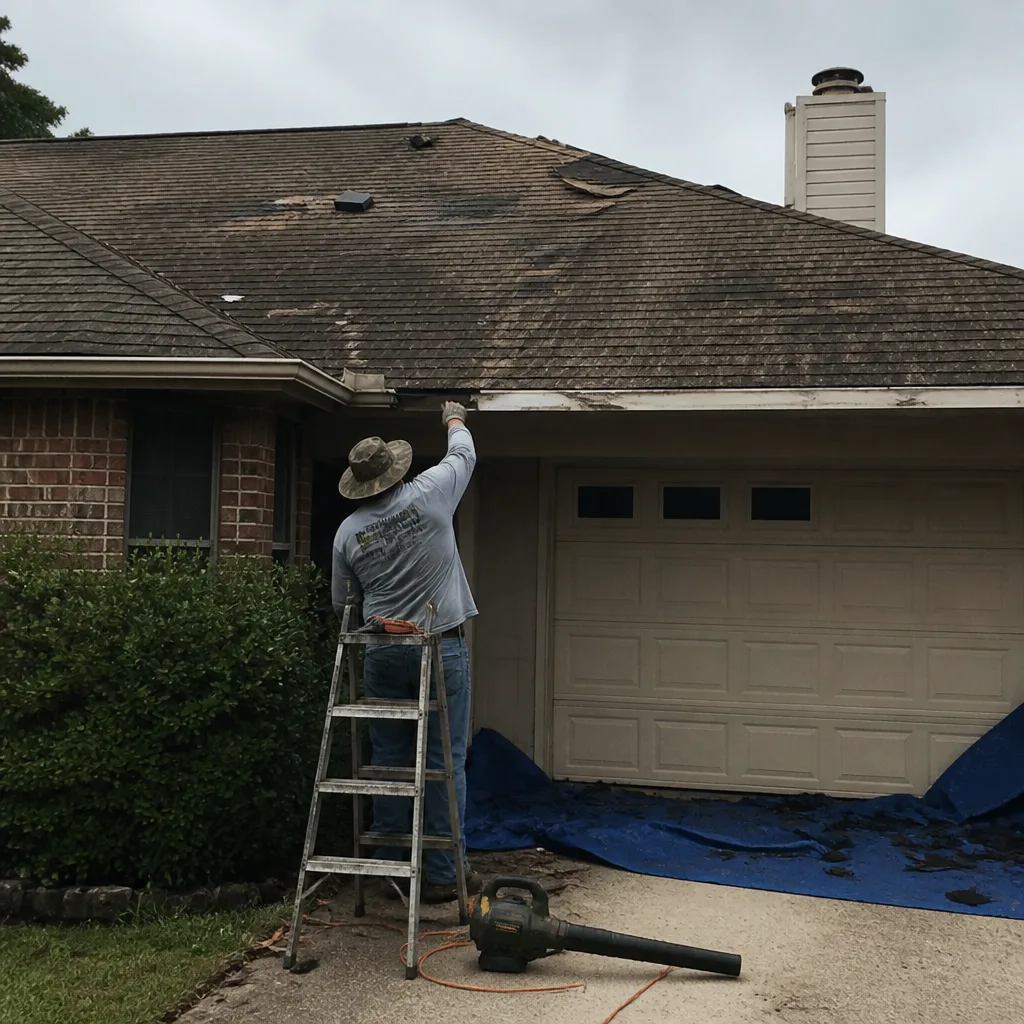 Before
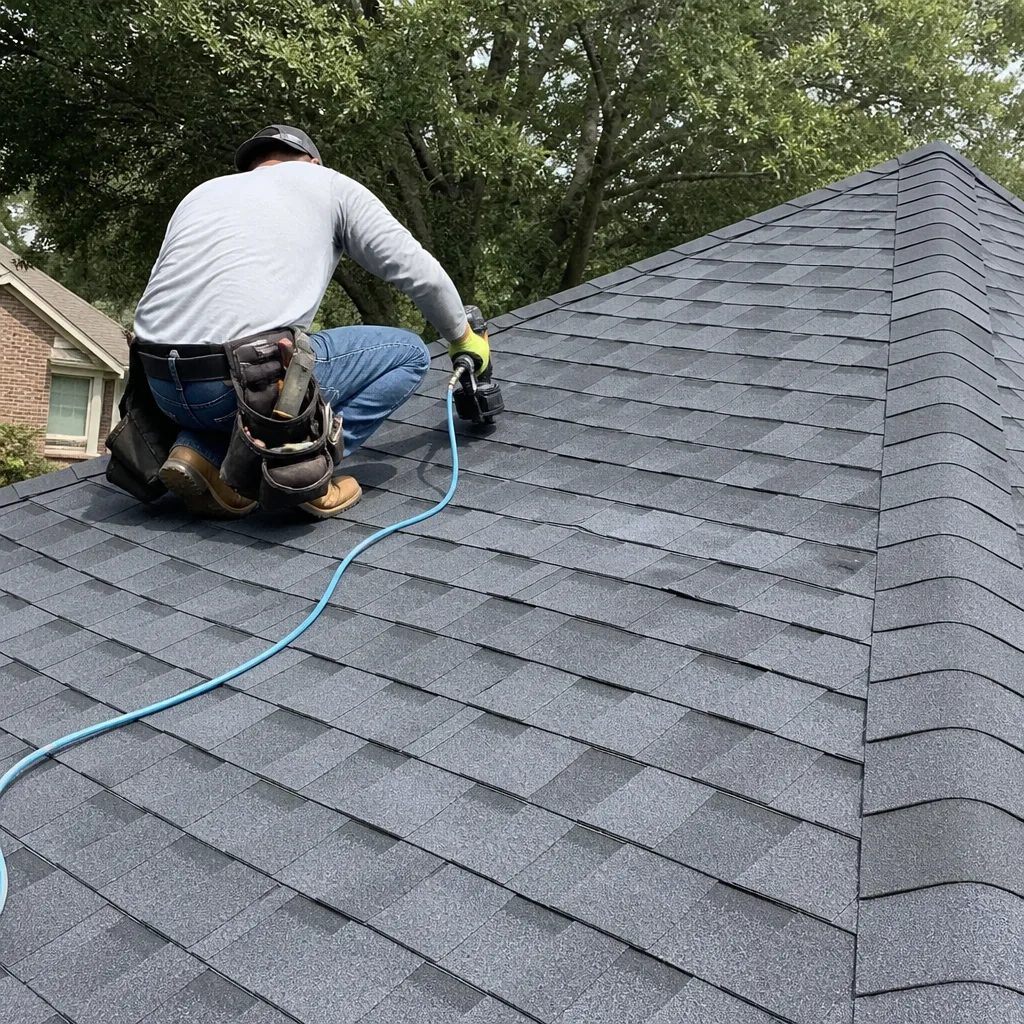 After
AfterFrequently Asked Questions
A maintenance-only inspection visit in Houston typically runs $150 to $400, while small repairs found during maintenance add $350 to $900 for items like pipe boot replacement, flashing resealing, or ridge vent screen repair. The exact number depends on what the inspection finds. We provide a written price before any work begins, so there are no surprises. Call (254) 566-3573 for an exact quote on your roof.
At least twice a year, once in spring after the oak leaf drop and once in fall before the winter weather, plus a post-storm inspection after any wind event above 50 mph. Houston’s climate compresses the normal maintenance calendar, and skipping the post-storm check is the most common way small wind damage becomes a long-term leak.
At Tilehurst Roofing Houston, the price you’re given in writing is the price you pay, period. We don’t change pricing at the door or add change orders after the job begins. If a repair reveals additional work that’s necessary, we document it, explain it, and provide a new written price before proceeding. You approve everything in writing first.
You can safely handle ground-level inspections, gutter clearing from a step ladder, branch trimming, and downspout checks. Anything on the roof itself, including shingle repair, flashing work, or ventilation fixes, should be handled by a licensed professional, both for safety and because manufacturer warranties from brands like GAF and Owens Corning require professional installation and repair to remain valid.
Houston’s humidity turns minor ventilation problems into structural issues. An attic that consistently stays above 70% relative humidity feeds mold growth on the decking, warps the wooden substrate, and shortens shingle life by years. In drier climates, the same ventilation gap might not cause noticeable damage. Here, it’s one of the first things we check on every visit, and the attic humidity reading tells us immediately whether the ventilation system is working.
For full roof replacements, yes, we handle the permitting process and the inspections that follow. For minor repairs and maintenance items, most Houston jurisdictions don’t require a permit, and we’ll tell you straight whether yours does. The guiding rule is simple: if a permit is required, we pull it and close it before we consider the job done. Ask Greg Holloway directly at (254) 566-3573 and you’ll get a straight answer.
The Bottom Line
Houston roofs fail from the inside out, and the standard maintenance checklist misses the exact points where that failure starts. The ridge vent screens, the pipe boots, the attic humidity, the drip edge, and the valley metal are what actually determine how long your roof survives this climate. A legitimate maintenance visit documents all of it in writing, with photos, timestamps, and a hygrometer reading, and that documentation is what protects you when the insurance adjuster or the buyer’s inspector comes looking. You can handle the gutters and the ground-level walk-arounds. Let a professional handle the roof itself. If you want a maintenance visit that checks the failure points that matter in Houston, call Tilehurst Roofing Houston at (254) 566-3573 for a free estimate and a written price before any work begins.
Written by Greg Holloway, Owner at Tilehurst Roofing Houston, serving Houston since 2000.