
 Tile roofing
 Architectural shingles
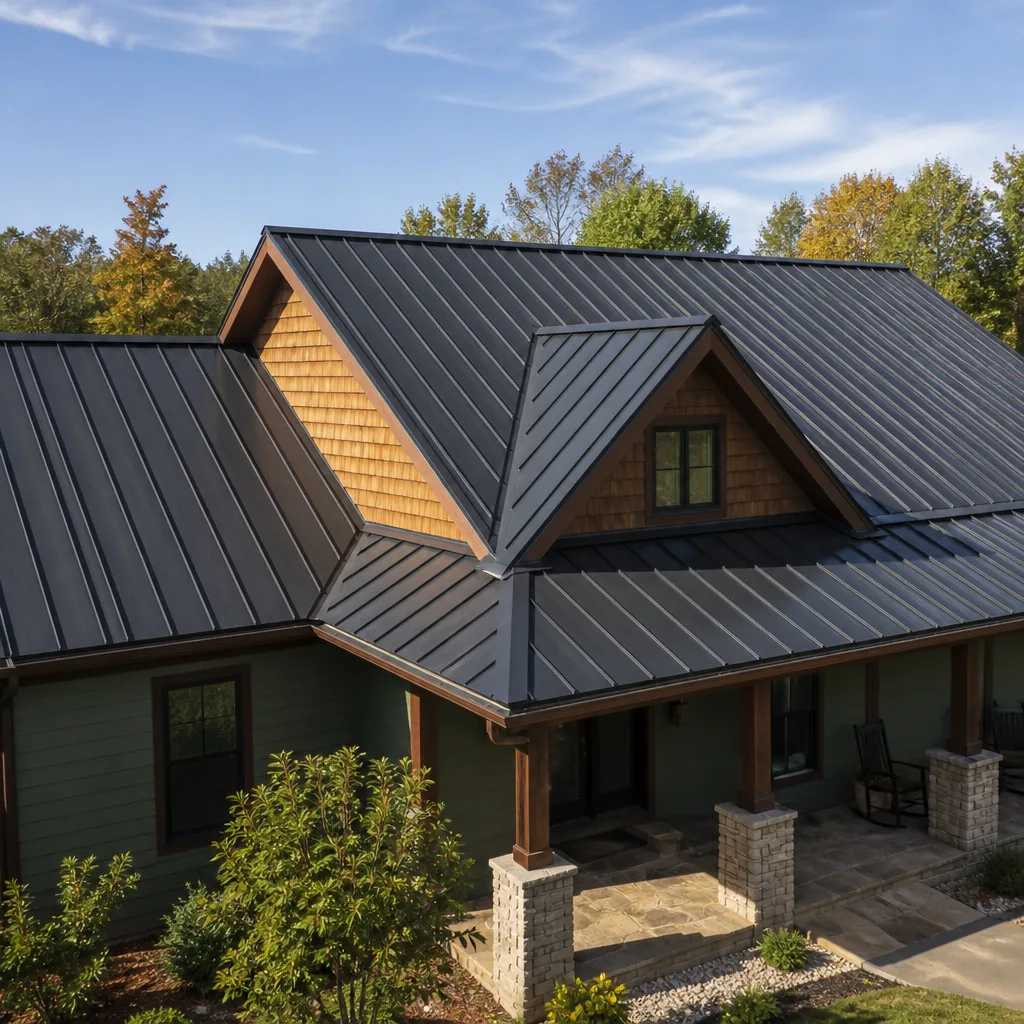 Metal roofing
 GAF
GAF Owens Corning
 Flat & low-slope
Free roof inspection with deck photos before we talk money - GAF and Owens Corning certified installation
IKO Flashing Replacement: The Houston Owner’s Guide
IKO flashing replacement in Houston typically runs $340 – $780 installed for a single penetration point, and most jobs take our crew under three hours once we’re on site. We keep IKO-compatible flashing stock on the truck for the most common series, so the swap usually happens in one visit. Homeowners usually discover the problem the hard way: a water stain on the ceiling after a hard Gulf Coast rain, a rust streak down the side of a vent pipe, or granules washing into the gutter where the roof meets a wall.

Flashing is the folded metal that bridges the joints where your roof changes direction or gets interrupted by pipes, chimneys, skylights, and walls. When it fails, water follows the exact path flashing was meant to block. Houston’s heat and humidity don’t create the leak, but they sure speed up the corrosion that eventually lets one through. We’ve pulled flashing off Meyerland homes that looked fine from the street and were tissue-thin underneath.
Tilehurst Roofing Houston is an independent roofing contractor and is not affiliated with IKO. We install flashing compatible with IKO shingle systems alongside parts from GAF, Owens Corning, and CertainTeed.
Which IKO Models This Applies To
IKO flashing isn’t a single product line, it’s a component that changes based on which IKO roof system you have and where the penetration sits. The three IKO families we see most often in Houston are Cambridge, Dynasty, and Nordic, and the flashing spec differs slightly for each because the shingle thickness and exposure change the way water moves off the roof.
Here’s the compatibility gotcha most homeowners miss: IKO’s Cambridge line uses a standard 5-inch exposure, but Dynasty runs a larger 5-7/8-inch exposure. That changes where step flashing needs to sit so each shingle course sheds water properly. If someone installs step flashing cut for a smaller exposure on a Dynasty roof, water hits the wrong spot and the flashing looks fine until it isn’t. We measure the exposure on the existing roof before selecting the flashing profile, every time.
For pipe boots and vent flashing, IKO recommends a minimum 24-gauge galvanized or painted steel base in residential applications. In Houston’s humidity, we lean toward the heavier end of that spec and prefer a wide-base boot that extends at least 4 inches up the pipe. The rubber collar on cheaper universal boots breaks down in about half the time under Gulf Coast UV, and once that collar cracks, the boot is finished even if the metal base still looks solid.
OEM IKO-branded flashing exists, but the honest truth is that IKO sources flashing from the same sheet-metal manufacturers most quality aftermarket suppliers use. The spec matters more than the stamp. We match the gauge, profile, and finish to the existing roof, and if a genuinely OEM part is available and you want it, we’ll order it. Most homeowners are better served by a correct-spec aftermarket part installed the same week than a branded part sitting on backorder.
Styles & brands we work with
Signs Your IKO Flashing Replacement Is Failing
Flashing failure usually announces itself gradually, then all at once. These are the symptoms we see again and again on Houston roofs:
- Water stains on ceilings or walls near a chimney, pipe, or wall junction. The leak follows the flashing line. By the time the stain shows, water has been getting in for weeks. The stain is almost never directly below the failure point, which is why ceiling patches without flashing repair fail again.
- Rust streaks or flaking metal visible on exposed flashing. Galvanized flashing lasts 15 to 20 years in Houston’s humid air. Once the zinc layer is gone, the steel goes fast. If you can reach out a window and see rust scaling off a vent boot, the flashing is done.
- Granules collecting in gutters below a wall or chimney junction. This means water is running where it shouldn’t be and eroding the shingle surface near the flashing line. The shingles fail second, but the flashing failed first.
- A cracked or shrunken rubber collar around plumbing vent pipes. Houston’s UV cooks rubber boots in about 8 to 12 years. The collar shrinks, splits, and lets water track straight down the pipe into the attic. This is the most common flashing failure we replace on IKO roofs in Meyerland and Sharpstown.
- Loose step flashing or visible caulk repairs around a chimney. If someone caulked it before, the flashing behind it was already failing. Caulk is a band-aid on flashing, never a repair. We pull old caulk back, inspect the metal underneath, and usually find the original flashing rusted or lifted.
See the difference
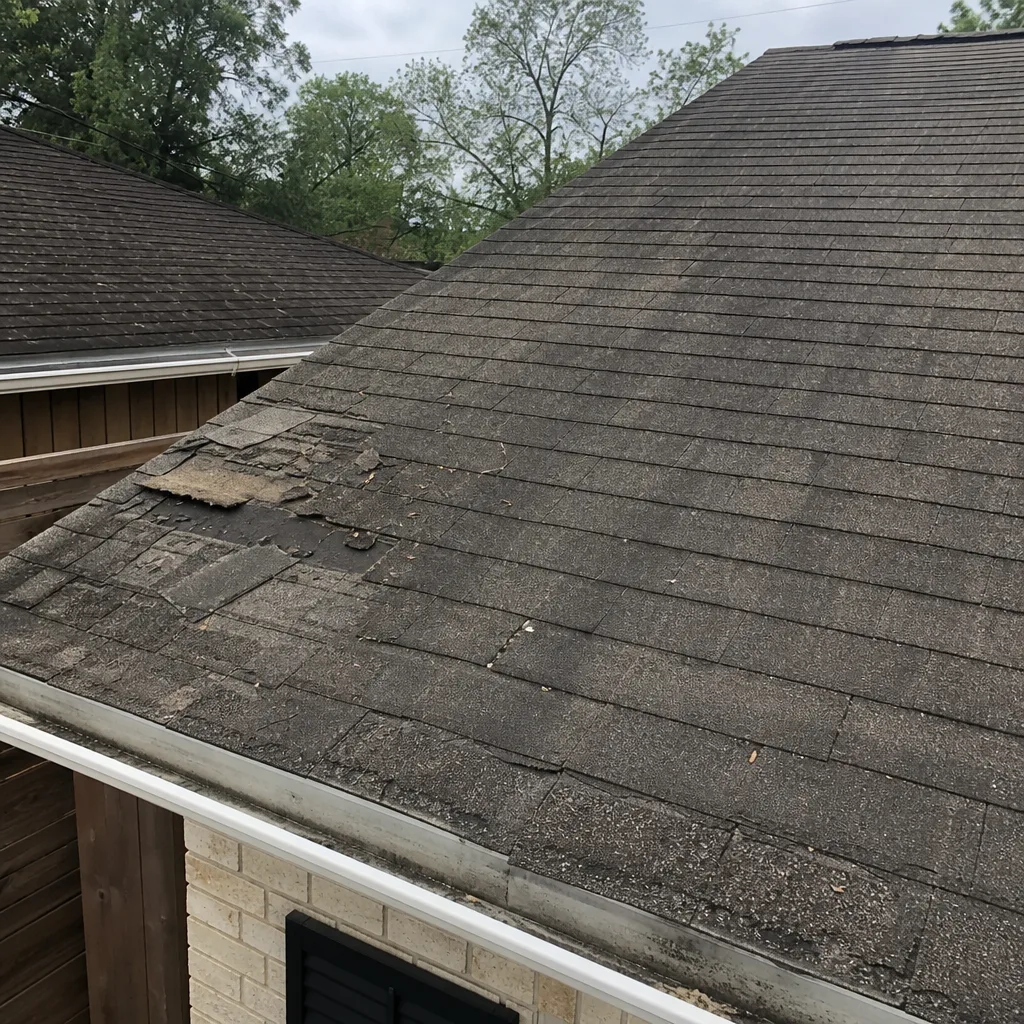 Before
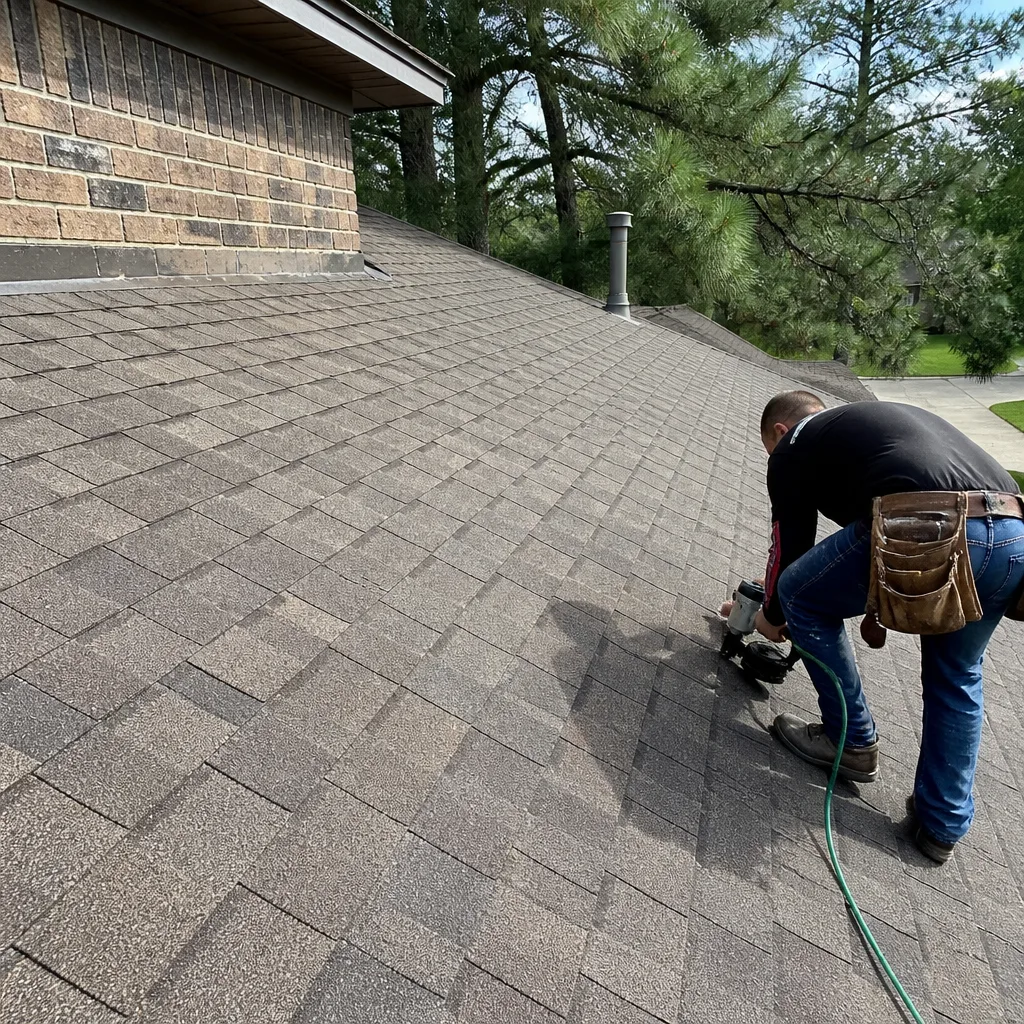 After
After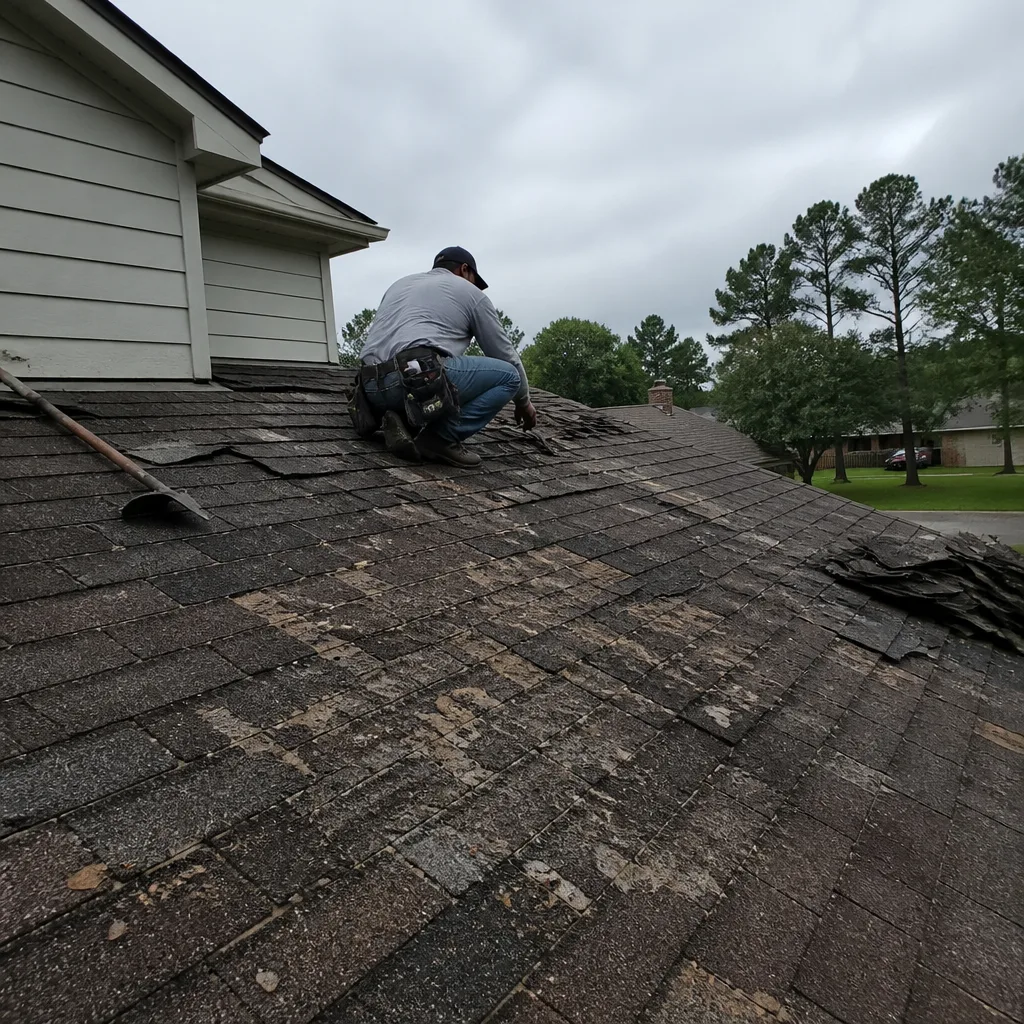 Before
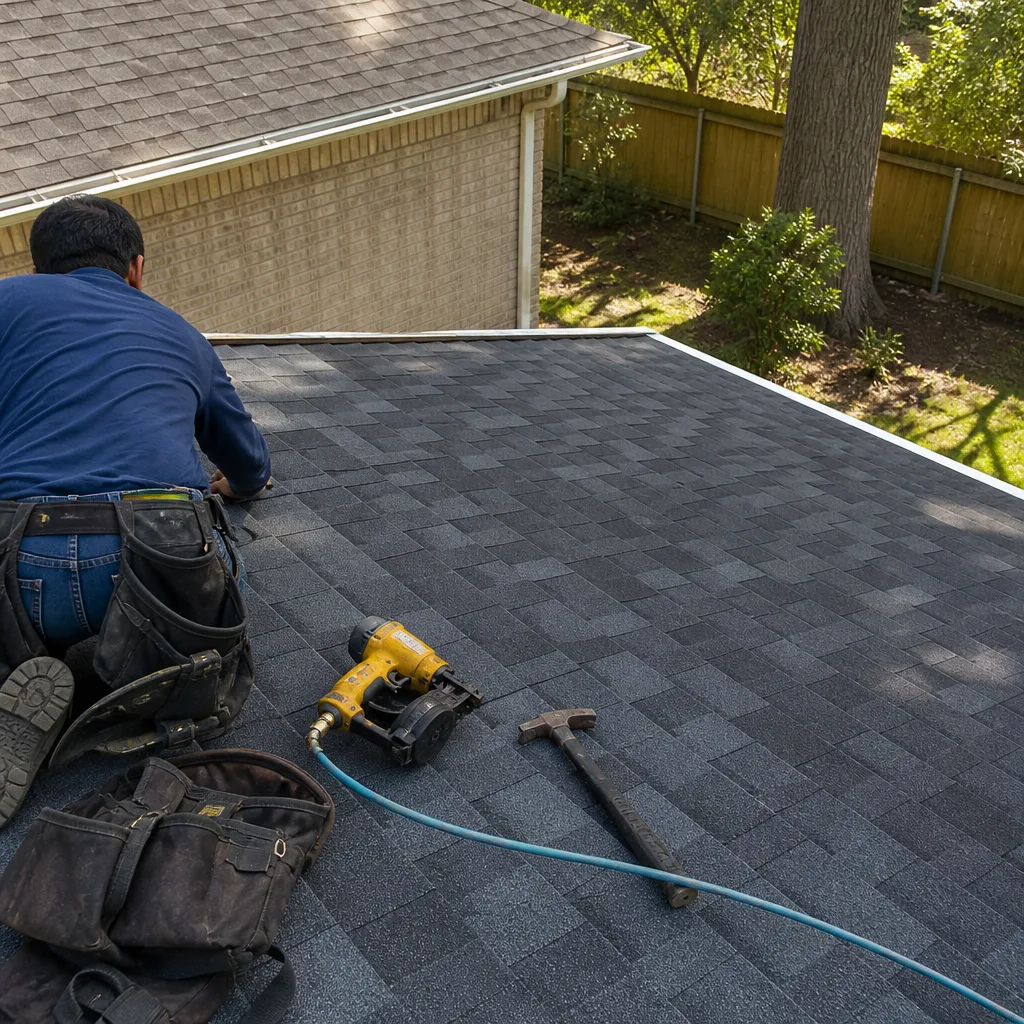 After
After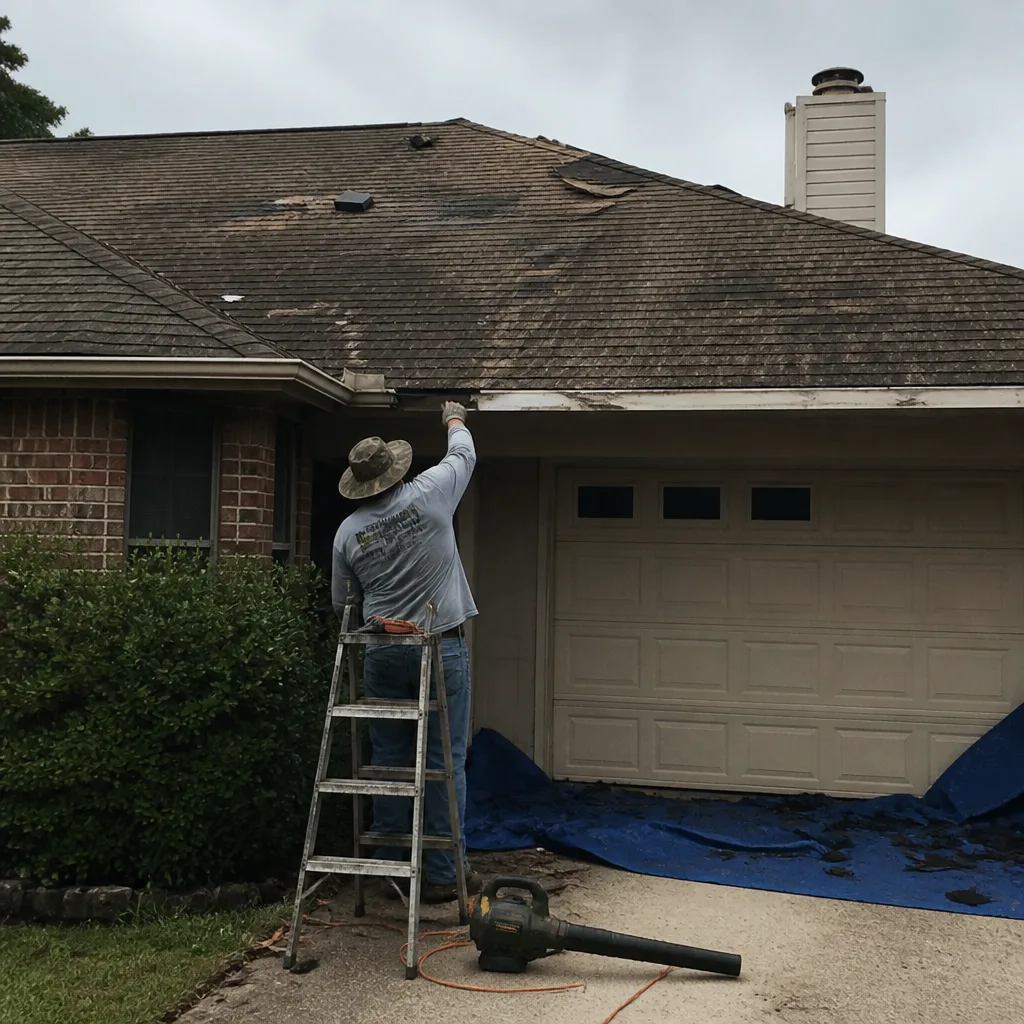 Before
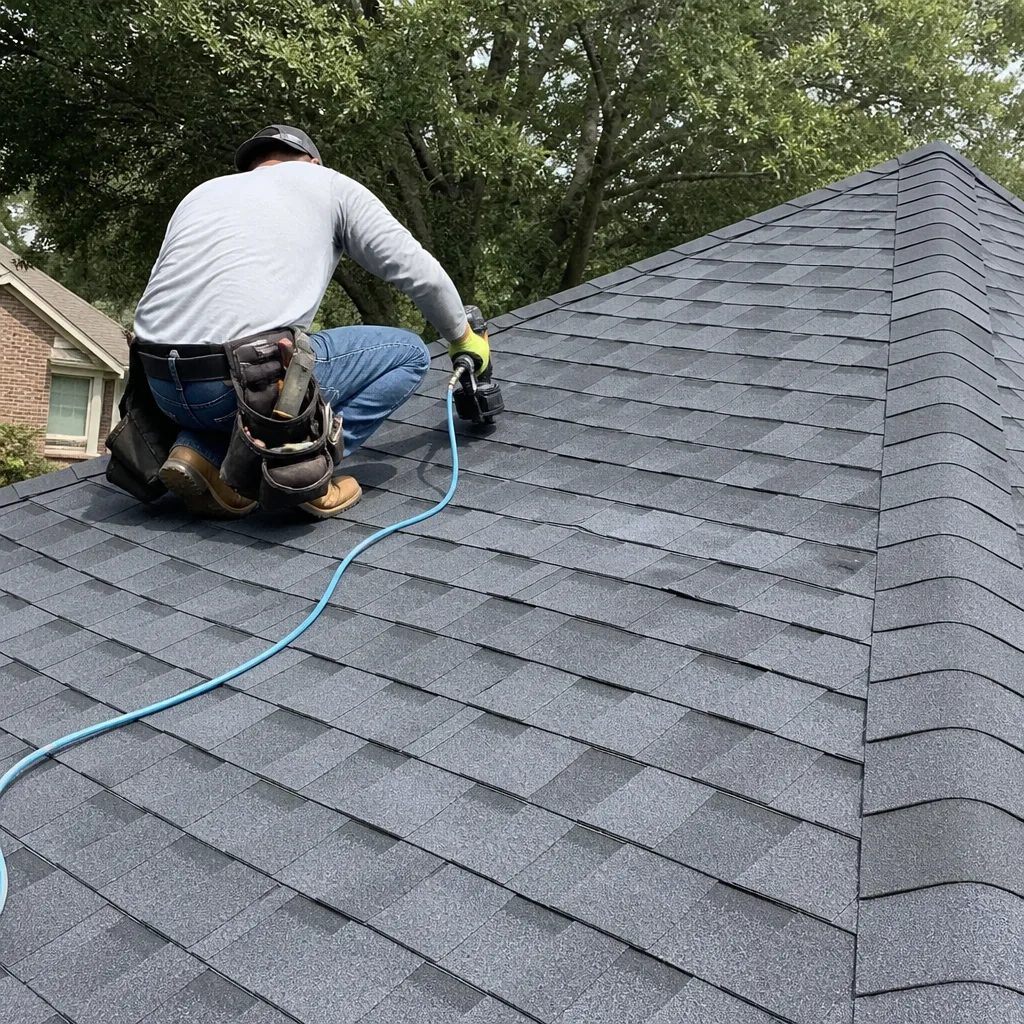 After
AfterReplacement Cost & What’s Included
For an IKO flashing replacement in Houston, expect to budget $340 to $780 for a single penetration point like a pipe boot, vent, or small wall junction. A chimney flashing replacement runs $650 to $1,400 depending on the chimney size and whether we need to cut a new reglet into the brick. A full valley flashing replacement, where two roof planes meet, typically lands between $800 and $1,900.
Here’s what that price includes, and it’s the same written-price structure we use on every repair:
- Parts and materials: correct-gauge flashing, matching fasteners, sealant, and any replacement shingles needed around the flashing.
- Labor: removal of the old flashing, inspection of the underlying decking, installation, and integration with the existing IKO shingle course.
- Cleanup: old flashing and shingle debris removed from site, not left in the yard.
- Written guarantee: delivered before the crew leaves, covering the repair for a full year under the 365-Day Done Right Promise. If the repair fails inside that window, we return and correct it at no charge.
What drives the price is access and condition. A single-story roof with a walkable pitch and a standard pipe boot is the low end. A two-story chimney flash on a steep slope is the high end. Either way, you’ll know the price before we touch the roof, because Greg writes every estimate himself and explains the line items in plain English.
DIY or Call Us?
The honest split is this: you can absolutely inspect your own flashing from the ground or from an upper window. Look for the rust streaks, the cracked rubber collars, the lifted step flashing. What you shouldn’t do is get on a Houston roof in July with a caulk gun and a screwdriver. Roof surfaces hit 140 degrees in the summer sun, the pitch doesn’t care how careful you’re being, and a flashing repair done wrong leaks worse than the original failure.
If you do look, stay off the shingles. Walk only on a ladder or look from the eaves with binoculars. If you spot a cracked boot or rusted metal, that’s our job, and we’re genuinely glad you caught it early. Early flashing replacement is a fraction of the cost of decking replacement and interior drywall repair after a leak runs for a season.
Call (254) 566-3573 with what you found. We’ll tell you what we think it needs, give you a written price for the repair, and schedule a time that actually works. No one on our crew will show up and change the number at the door.
FAQs
Most IKO flashing installations last 12 to 20 years in Houston, with pipe boot rubber collars failing faster at 8 to 12 years because of constant UV exposure and humidity cycling. The metal itself can last decades if it’s the right gauge and the sealant isn’t failing. Call (254) 566-3573 if your flashing is in that age range and you’re seeing rust or leaks, and we’ll give you an exact quote for a replacement.
Small, localized issues like a single lifted step flashing or a cracked pipe boot collar can sometimes be repaired, but patch jobs on rusted or corroded flashing don’t hold in Houston’s humidity. We’ll tell you straight which one you’re looking at when we inspect it. If repair makes sense, we do it and it’s covered by the same written guarantee; if replacement is the honest call, we’ll tell you that too and give you the price before starting.
A single pipe boot or vent flashing replacement usually takes 1 to 3 hours on site, weather permitting, and we schedule it as a defined appointment time so you’re not waiting on a mystery window. A chimney or valley flashing job runs half a day. We’ll tell you the expected time in writing when we scope the job, and a live person answers the phone around the clock if you need to check on anything.
We stock IKO-compatible flashing for the most common Houston roof configurations on the truck, including pipe boots, step flashing, and standard wall flashings. If your roof needs a less common profile or a heavier-gauge custom bend, we measure on site and have it fabricated, usually within a week. Call (254) 566-3573 with your roof details and we’ll confirm what’s in stock for your specific IKO series before you book.
Written by Greg Holloway, Owner, Tilehurst Roofing Houston at Tilehurst Roofing Houston, serving Houston and nearby areas.