

Last updated October 17, 2026
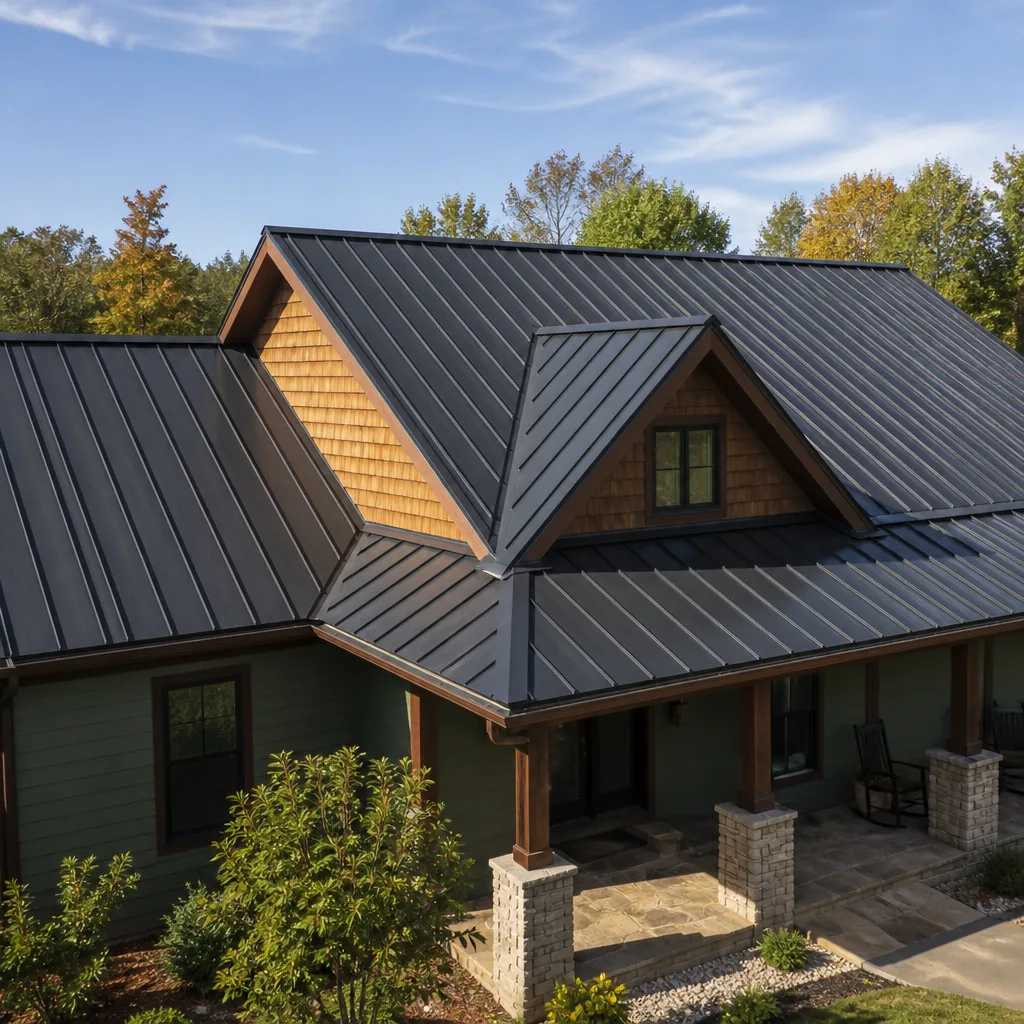 Metal roofing
 Architectural shingles
 Tile roofing
 GAF
GAF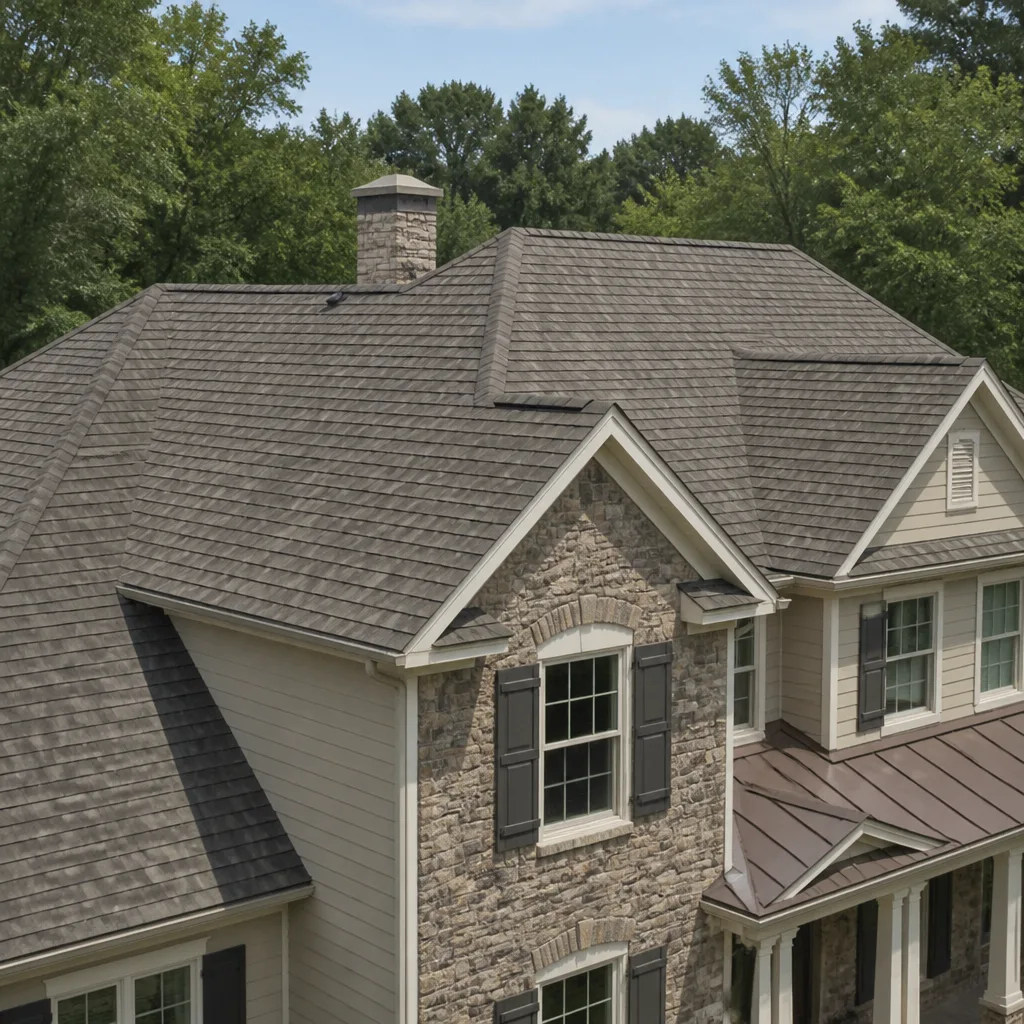 Owens Corning
 Flat & low-slope
Free roof inspection with deck photos before we talk money - GAF and Owens Corning certified installation
How to Hire a Roofing Contractor in Houston: A Step-by-Step Guide
After every major Houston storm, the Texas Department of Licensing and Regulation logs a spike in roofing complaints. The surprising part: most of those complaints aren’t against unlicensed fly-by-nights. They’re against licensed contractors who changed the price after tear-off, subbed the work out to a crew nobody vetted, or vanished before the final inspection. This guide won’t give you the tired advice about getting three quotes and checking Google reviews. It will teach you how to vet a contractor’s process, because in Houston, that’s what separates a roof that lasts 25 years from one that fails in 18 months.
Styles & brands we work with
Quick Answer
To hire a roofing contractor in Houston, start by verifying their Texas license and insurance, then insist on a written contract that includes a change-order provision locking any additional work at a fixed price before it begins. Ask who exactly will be on your roof (payroll employees or subcontractors), get the warranty in writing before the crew leaves, and confirm the contractor pulls permits on every job. The right Houston roofer will put every one of these answers in writing without being asked twice.
Table of Contents
- Step 1: Verify the Texas License and Insurance – the Right Way
- Step 2: Ask Who Exactly Will Be on Your Roof
- Step 3: The Five Contract Clauses That Protect You
- Step 4: The 10-Minute Pre-Hire Phone Script
- Step 5: Read Reviews for What’s Missing, Not What’s Glowing
- Step 6: Houston-Specific Factors Most Guides Ignore
- Step 7: Choose Materials That Fit Your Houston Home
- Common Mistakes to Avoid
- When to Call a Professional
- Frequently Asked Questions
- The Bottom Line
Step 1: Verify the Texas License and Insurance – the Right Way
Texas doesn’t license roofers the way it licenses electricians or plumbers. There’s no state roofing license. What Houston homeowners need to verify instead is the contractor’s registration with local permitting offices and, more importantly, their commercial general liability and workers’ compensation insurance. This is where most hiring guides stop and where most problems start.
A roofer working in Houston should be able to hand you a certificate of insurance (COI) that names your property and project. Don’t accept a COI that’s more than 30 days old. Call the insurance carrier directly. The Texas Department of Insurance maintains a database where you can confirm the policy is active, not just printed. Ask for the policy number and the carrier’s name, then verify both. A roofer who hesitates on this step is telling you something.
What to Verify, Specifically
- General liability coverage of at least $500,000 per occurrence – this covers damage to your property during the job.
- Workers’ compensation insurance – if a worker falls off your roof and the contractor doesn’t carry coverage, your homeowner’s policy becomes the target. In Texas, roofers are not legally required to carry workers’ comp, but reputable Houston contractors carry it anyway.
- The certificate names you as additionally insured – this is a standard request and a legitimate contractor will handle it without friction.
- The policy is active today, not last month – policies lapse. Verify with the carrier.
In our experience at Tilehurst Roofing Houston, roughly one in five homeowners who call us after a bad experience never checked whether the original contractor’s insurance was active at the time of the work. They checked it existed. That’s not the same thing.
Step 2: Ask Who Exactly Will Be on Your Roof
This is the question Houston homeowners almost never ask, and it’s the one that most directly predicts how a warranty claim will go if something fails. The contractor who signed your contract is not necessarily the contractor who shows up. In the Houston roofing market, subcontracted crews are common – especially in the weeks after a hailstorm, when every roofing company is booked out six weeks and looking for bodies.
Why Subcontracting Matters for Your Warranty
If a subcontractor installs your roof and the company that sold you the job has never worked with that crew before, a warranty claim becomes a negotiation between two companies – not a commitment from the company that signed your contract. When the warranty is only as good as the relationship between the contractor and the crew, you’re holding a piece of paper.
Ask the contractor directly: “Is the crew that will install my roof your own payroll employees, or will you be subcontracting?” A contractor who uses their own employees and background-checks every technician will say so quickly and plainly. A contractor who plans to subcontract will often give a vague answer. Push for a clear one.
At Tilehurst Roofing Houston, every technician on your roof is background-checked, uniformed, and accountable to us directly. That matters because the 365-Day Done Right Promise – a full year of documented accountability on every job – only works if we control who’s holding the nail gun.
Step 3: The Five Contract Clauses That Protect You
The difference between a binding agreement and a handshake is five specific clauses. Most Houston homeowners sign contracts that include none of them. Here’s what to look for, clause by clause.
1. Change-Order Provision with Fixed Pricing
The most common complaint after a Houston roof replacement is a price that grew after tear-off. The contractor pulls the old shingles, discovers rotted decking, and suddenly the job costs $3,000 more. Some decking replacement is legitimate – you can’t see what’s under the shingles until they come off. But the price for that additional work should be agreed upon before the work happens, in writing, at a rate that was established in your original contract. The clause should read something like: “Any additional work discovered during the project will be documented in a written change order, approved by the homeowner, and priced before that work begins.” If a contractor refuses to include a change-order provision, walk away.
2. Scope of Work, Line by Line
The contract should list every material, every component, and every task. Not “roof replacement.” It should say: remove existing shingles to decking, inspect decking, install synthetic underlayment, install drip edge on all eaves and rakes, install ice and water shield in valleys and around penetrations, install X brand shingles in X color, install new ridge cap, replace pipe boots, clean all debris magnetically swept for nails. Each line is a commitment. A vague contract is a contractor reserving the right to do less.
3. Payment Schedule Tied to Milestones
Never pay for a roof before it’s installed. A legitimate Houston roofing contractor will use a payment schedule tied to milestones: a deposit (often one-third or less) at contract signing, a second payment when materials are delivered and work begins, and the final payment when the job passes inspection. A contractor who demands full payment upfront is not someone you want on your roof.
4. Warranty Language in the Contract Itself
Here’s the test: if the contractor promises a “10-year workmanship warranty” verbally but the contract only mentions the manufacturer’s shingle warranty, you have a paper warranty. The workmanship warranty – the contractor’s own commitment to correct installation errors – should be written into the contract, not handed to you later. At Tilehurst Roofing Houston, every repair receives a written guarantee delivered before the crew leaves. If a repair fails inside the guarantee period, we return at no charge under the 365-Day Done Right Promise. That language is in writing, on the contract, every time.
5. Permit Responsibility and Inspection Language
The contract should state clearly that the contractor will pull all required City of Houston permits and that the final payment is contingent on passing final inspection. If the contract is silent on permits, assume the contractor plans to skip them. Unpermitted roof work in Houston can complicate an insurance claim or a future home sale, and it’s a red flag that the contractor is cutting corners.
Step 4: The 10-Minute Pre-Hire Phone Script
The best vetting tool in Houston is a phone call. Not the first call – the second one. The first call is for the estimate. The second call is for the questions that surface reliability. Here’s a script that gets you the answers you need in under ten minutes.
The Script
- “When you give me a window for arrival, what does that window look like – and what happens if you miss it?” Listen for a specific, tight window and a clear protocol for communication. A contractor who says “we’ll be there sometime Tuesday” has told you something about how the job will go.
- “Who pulls the permit on this job?” The answer should be immediate and clear: “We do.” If the contractor hesitates, offers to “help you” pull it, or suggests the job doesn’t need one, end the call.
- “What’s your process if the crew leaves debris in my yard or a nail in my driveway?” A real answer includes magnetic sweeping and a final walkthrough. A vague answer means you’ll be picking nails out of your tires in August.
- “Is the crew I’m meeting at the estimate the same crew that installs the roof?” See Step 2 above. The answer matters for your warranty.
- “Can you put the warranty terms in writing in the contract, not in a separate document?” A contractor who says yes has a process. A contractor who demurs is offering a handshake.
In our experience, the homeowners who ask these five questions end up with dramatically fewer problems. Not because the questions are clever, but because the answers are revealing. A contractor who has a clear answer for each one has run a lot of jobs and learned what can go wrong. A contractor who stumbles hasn’t.
Step 5: Read Reviews for What’s Missing, Not What’s Glowing
Every Houston roofing contractor has at least a few five-star reviews. The question isn’t whether the reviews are good – it’s whether they’re real. The Houston contractor market has a well-documented problem with incentivized and fabricated reviews, and the patterns are easy to spot once you know what to look for.
Red Flags That Appear in Positive Reviews
- Language clustering. Five different reviews that all use the same unusual phrase – “world-class workmanship” three times in a week is not a coincidence. Real homeowners don’t talk like marketing copy.
- Reviews that describe the salesperson, not the work. A review that says “Josh was so professional and explained everything clearly” but never mentions the actual roof is often written before the work happened – or by someone who never had a roof installed.
- No negative reviews at all. A contractor with 87 five-star reviews and zero negative ones, in a market like Houston, is statistically suspicious. Real companies occasionally have a bad day. The question is how they respond – look for a calm, specific, accountable reply, not defensiveness.
- Timing clusters. Twelve reviews posted in three days, then nothing for months, suggests a campaign, not a track record.
- Reviews that mention “the company” in a way no homeowner would. Phrases like “they exemplify the values of the roofing industry” are not written by people who just had a roof installed.
You want to see reviews that mention specifics: a storm date, a neighborhood, a problem that got solved. A review that says “they showed up when they said they would during storm season and the flashing around my chimney is finally dry” is a review written by a real person with a real roof.
Step 6: Houston-Specific Factors Most Guides Ignore
Houston isn’t just a city where roofs get installed. Houston is a city where roofs get tested. The combination of Gulf Coast humidity, hurricane season, hail, and punishing August heat doesn’t just wear out shingles – it exposes installation shortcuts that would go unnoticed in, say, Fort Worth or Austin.
What Actually Fails in Houston
- Decking rot from trapped humidity. When underlayment is installed incorrectly or attic ventilation is ignored, Houston’s humidity gets trapped between the decking and the shingles. The decking rots from the inside. You won’t see it until the shingles come off.
- Flashing failures around chimneys and valleys. Houston’s driving rain finds the weak points. Properly installed step flashing and valley flashing separate a dry attic from a ceiling stain after the next big storm.
- Wind-driven rain through improperly sealed penetrations. Pipe boots, vents, and skylights are the most common leak points in Houston, and they’re also the most common places installers cut corners.
- Nail pops from thermal expansion. Houston’s temperature swings cause decking to expand and contract. Underdriven or improperly placed nails back out over time. This is a workmanship issue, not a shingle issue.
A Houston roofing contractor should be able to speak to these specific failure modes by name. Ask about decking inspection protocol. Ask about ice and water shield in valleys. Ask about ventilation requirements in a Houston attic in August. The answers will tell you whether you’re hiring a roofer or just a crew with ladders.
Step 7: Choose Materials That Fit Your Houston Home
Houston homeowners have real choices when it comes to roofing materials, and the right choice depends on your home’s architecture, your neighborhood’s character, and your tolerance for heat and storm seasons. At Tilehurst Roofing Houston, we don’t stock one house brand and push it on every customer. We work with seven manufacturers – GAF, CertainTeed, Owens Corning, IKO, Atlas, Tamko, and Boral – so the product fits the home, not what happens to be in the truck.
Material Considerations for Houston
- Asphalt shingles are the most common Houston roofing material. Within asphalt, impact-resistant ratings matter in hail zones. Atlas and CertainTeed both offer Class 4 impact-rated shingles that can qualify for insurance discounts in some Houston-area policies.
- Metal roofing – standing seam specifically – handles Houston’s heat and wind better than almost anything else, but it costs more upfront and requires a contractor who specializes in the installation details that keep it from leaking.
- Tile and slate from Boral are beautiful and durable in hot climates, but they’re heavy. Your roof decking must be evaluated for structural load before you commit. A contractor who doesn’t mention this is not doing the math.
- Synthetic underlayment matters more than the shingle brand in Houston. It’s what protects your decking during the weeks between tear-off and shingle installation, and it’s what stands between your attic and Houston’s humidity.
Common Mistakes to Avoid
- Hiring the first contractor who knocks on your door after a storm. In Houston, door-knocking storm chasers are a known phenomenon. Many are legitimate; many are not. Never sign a contract with someone who showed up unsolicited without doing Steps 1 through 5 first.
- Making the decision on price alone. The cheapest bid in Houston is often the one that discovers “surprise” decking rot after tear-off – and remembers that the price for that repair wasn’t in the contract. The free estimate is useful; the written, fixed price is what protects you.
- Skipping the insurance verification call. A printed COI is a piece of paper. Calling the carrier to confirm active status is the step that separates a roof from a lawsuit.
- Signing a contract without reading the warranty clause. If the workmanship warranty isn’t in the contract, it doesn’t exist. A separate warranty document handed to you after the job is a promise, not a contract.
- Paying the full amount before the final inspection. No legitimate Houston contractor needs full payment before the city inspector signs off. A contractor who asks for it knows something about the job you don’t.
- Ignoring the cleanup plan. A roof that’s installed well but leaves nails in your driveway and shingle granules in your flower beds is not a finished job. The Kingswell Way – the standard we hold every Tilehurst Roofing location to – includes leaving the place cleaner than we found it, and that’s not a slogan. It’s on the checklist.
When to Call a Professional
Some roof work is genuinely dangerous, and some is simply beyond what a homeowner should attempt. If a ladder is taller than you are comfortable with, that’s already the answer. More specifically: call a professional for anything involving the roof’s structural components – decking, rafters, or trusses – and for any repair that touches flashing, valleys, or penetrations. These are the points where Houston’s rain gets in, and a homeowner who seals them incorrectly has just created a slower, more expensive leak. If you’re seeing water stains on your ceiling, that’s not a DIY moment. That’s a call to Tilehurst Roofing Houston. We offer free estimates in Houston, and a live person answers the phone 24 hours a day, 7 days a week. Call (254) 566-3573 when the stain shows up.
Frequently Asked Questions
Most asphalt shingle roof replacements in Houston run between $8,000 and $15,000 for a typical 1,800 to 2,500 square foot single-family home, depending on the shingle grade, the roof’s pitch, and whether the decking needs replacement. For a deeper dive, see our Roofing Cost Breakdown: The Houston Homeowner’s Reference for 2026. Tile and metal roofs run significantly higher. The way to get an exact number for your roof is to request a written, line-item estimate – which Tilehurst Roofing Houston provides free, with no pressure and no price changes after the fact. Call (254) 566-3573 to schedule yours.
No. A standard post-storm inspection should be free, and in Houston, most reputable roofing contractors will perform one at no charge. What you’re actually paying for on a paid inspection is often a sales visit disguised as a service. Tilehurst Roofing Houston offers free estimates in Houston, including post-storm assessments, so you can get an honest look at your roof without a sales pitch.
A typical asphalt shingle roof replacement in Houston takes one to three days from tear-off to final cleanup, assuming good weather and no unexpected decking replacement. Larger homes, steep roofs, and tile or metal systems take longer. The key is what the contractor commits to in writing: a specific start window, a realistic duration, and a cleanup protocol that leaves your property clean on day one, not “eventually.”
It shouldn’t, not if the contract includes a change-order provision that locks additional work at a fixed price before it begins. Some price adjustments are legitimate – if the crew discovers rotted decking under the old shingles, that’s real additional work. But that work should be priced, documented, and approved by you before it happens. Tilehurst Roofing Houston provides a written price before any work starts, every single time, and that price doesn’t change without your written approval. That’s a Kingswell Guarantee standard, not a courtesy.
Texas doesn’t require a state license for roofing contractors, which means Houston homeowners need to verify the things that actually protect them: active insurance, local permitting, and a written contract. The absence of state licensing is precisely why the steps in this guide matter. You’re not hiring a license; you’re hiring a process. And a process is what gets tested when the next hurricane season rolls through.
First, document everything – photos, emails, and a copy of your contract. Then, review the warranty language in the contract itself. If the contractor promised a workmanship warranty and isn’t honoring it, you have leverage. If the failure is inside Tilehurst Roofing Houston’s 365-Day Done Right Promise period, we return at no charge to correct it. For other contractors, file a complaint with the Texas Attorney General’s office or consult an attorney if the damage is significant.
The Bottom Line
Hiring a roofing contractor in Houston is not about finding the best review score or the lowest bid. For more guides & resources on protecting your investment, explore our blog. It’s about finding a contractor who operates with a process that protects you: written pricing before any work starts, a change-order provision that locks unexpected work at a fixed price, a clear answer about who’s on your roof, insurance you can verify, and a warranty that lives in the contract, not in a sales pitch. The right contractor will offer all of these things without being asked. The wrong one will make you ask, and then dodge the answer.
When you’re ready to talk to a Houston roofer who does all of the above, call Tilehurst Roofing Houston at (254) 566-3573 for a free estimate. A live person answers, day or night. We’ll put the price in writing, the warranty in the contract, and the guarantee in plain language – because that’s what a roof over your family should come with.
Written by Greg Holloway, Owner at Tilehurst Roofing Houston, serving Houston since 2000.
See the difference
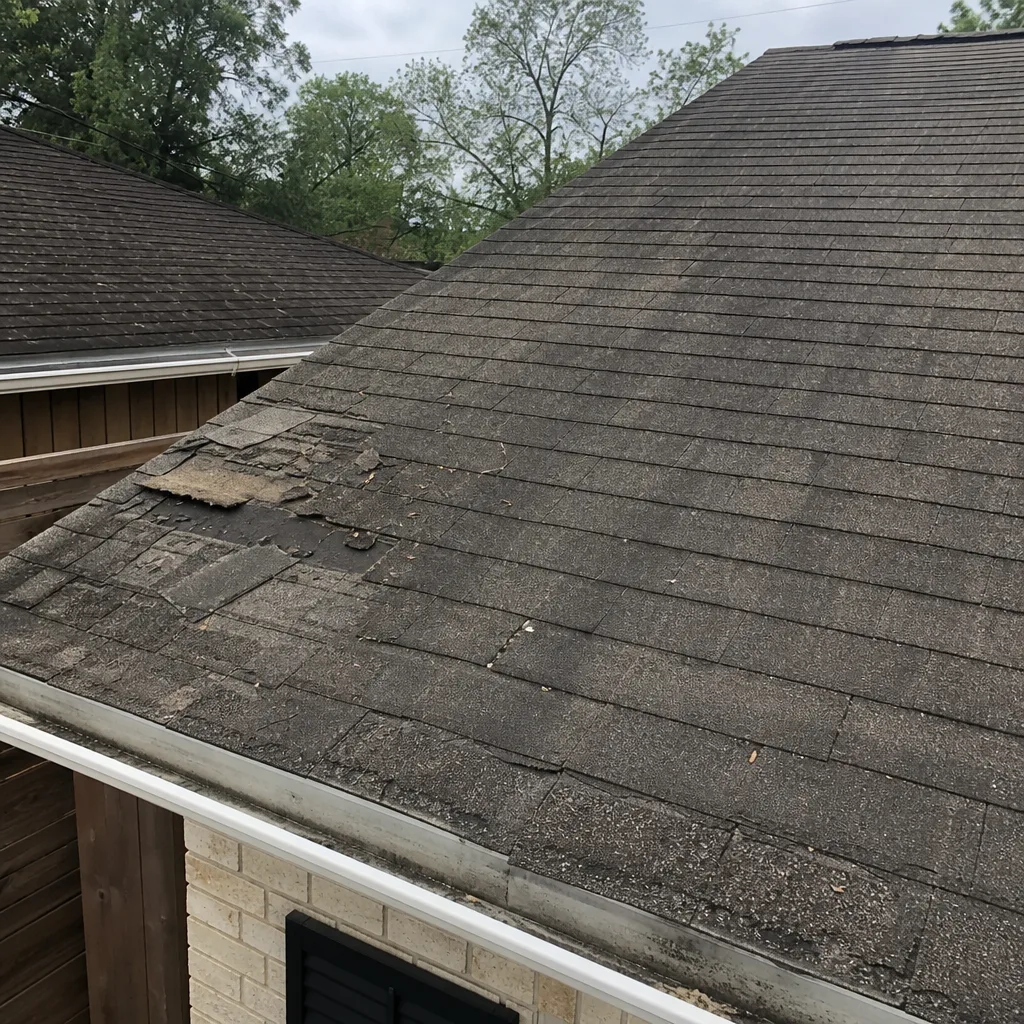 Before
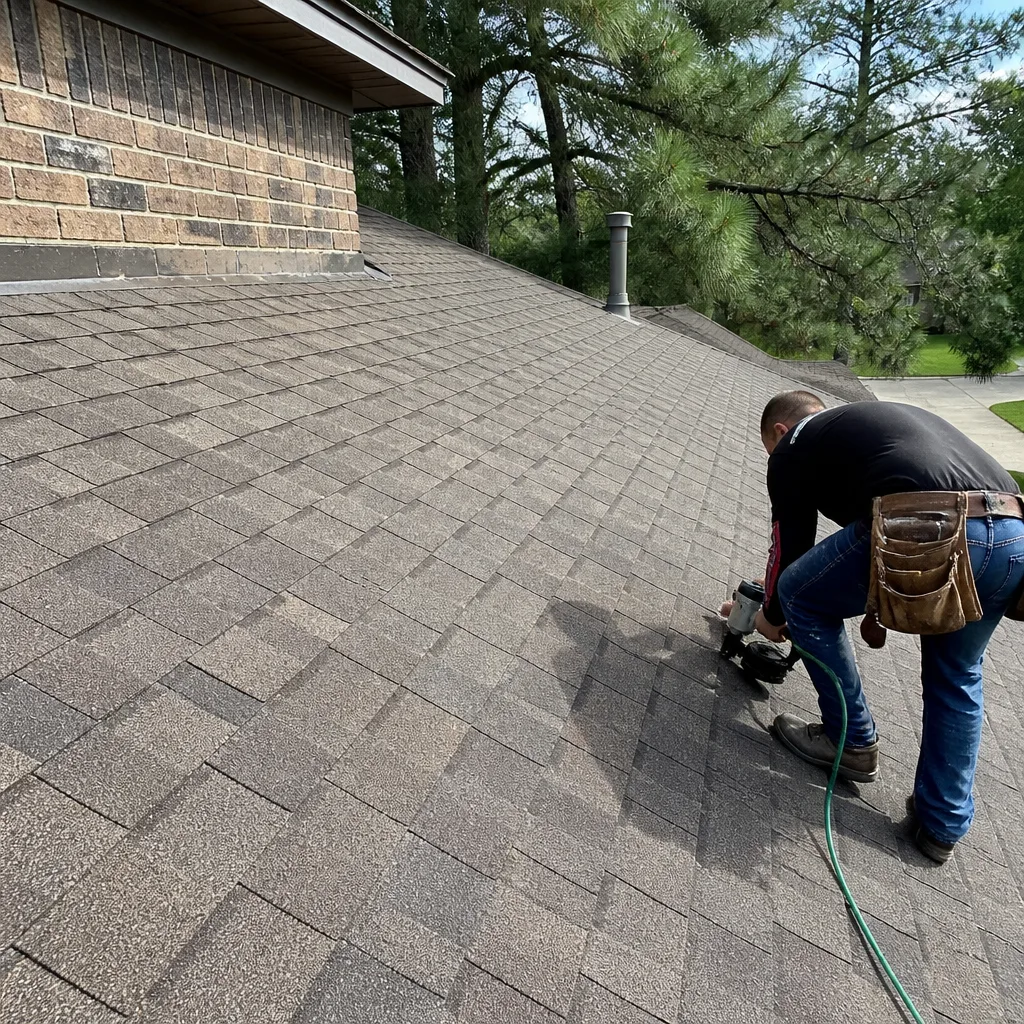 After
After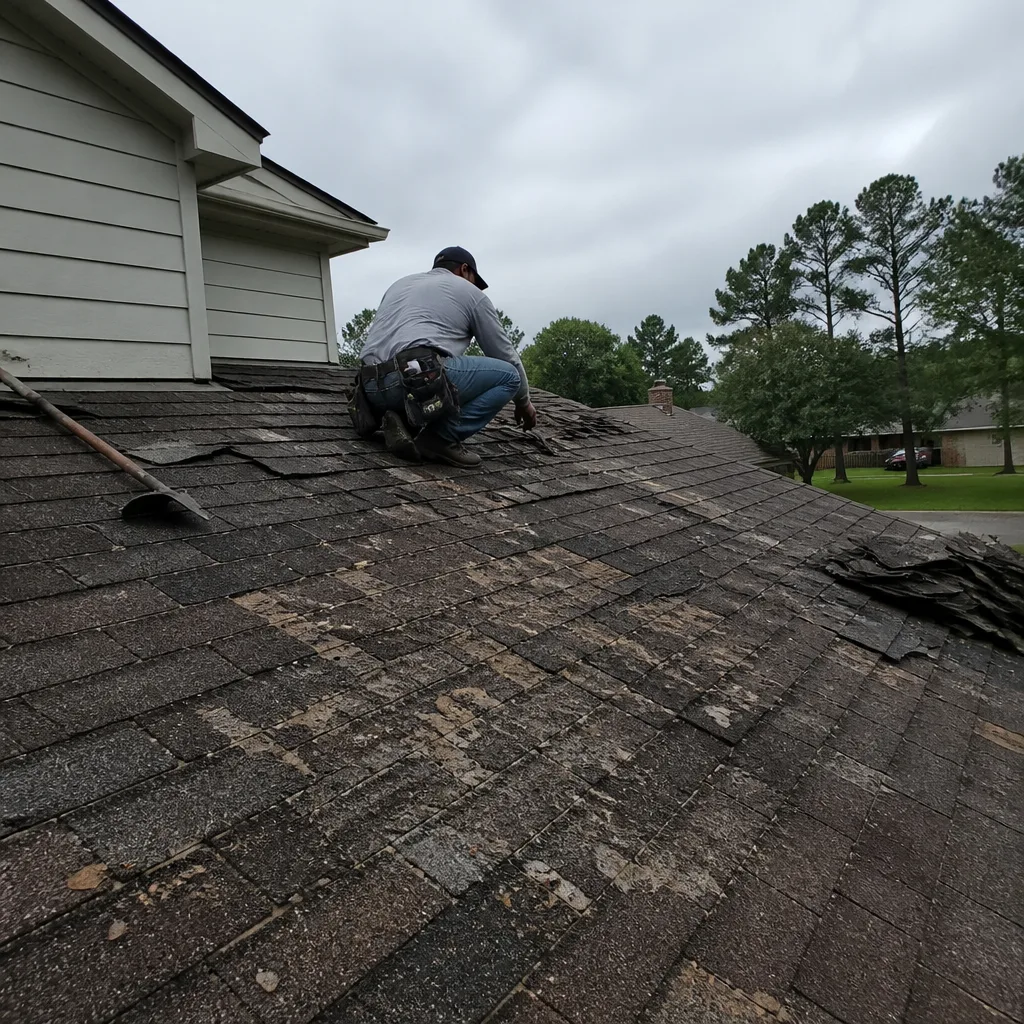 Before
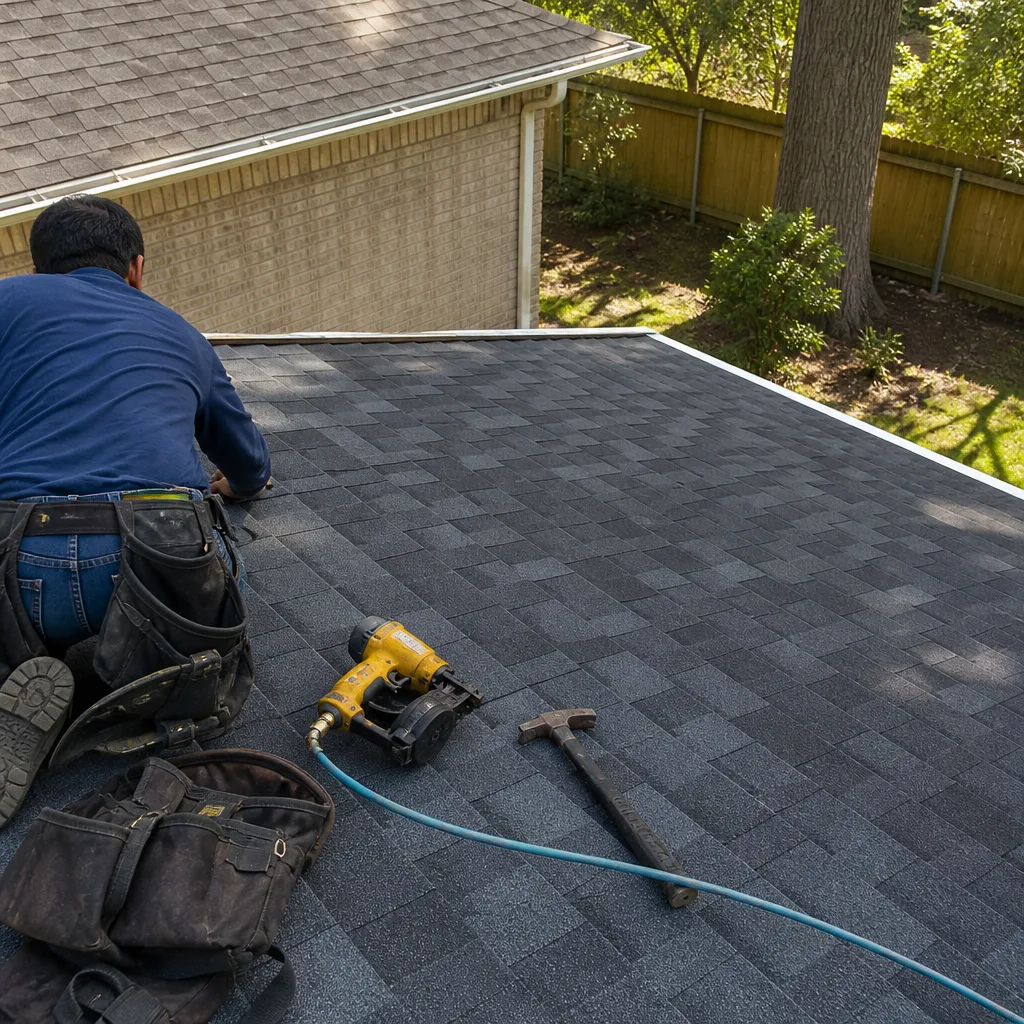 After
After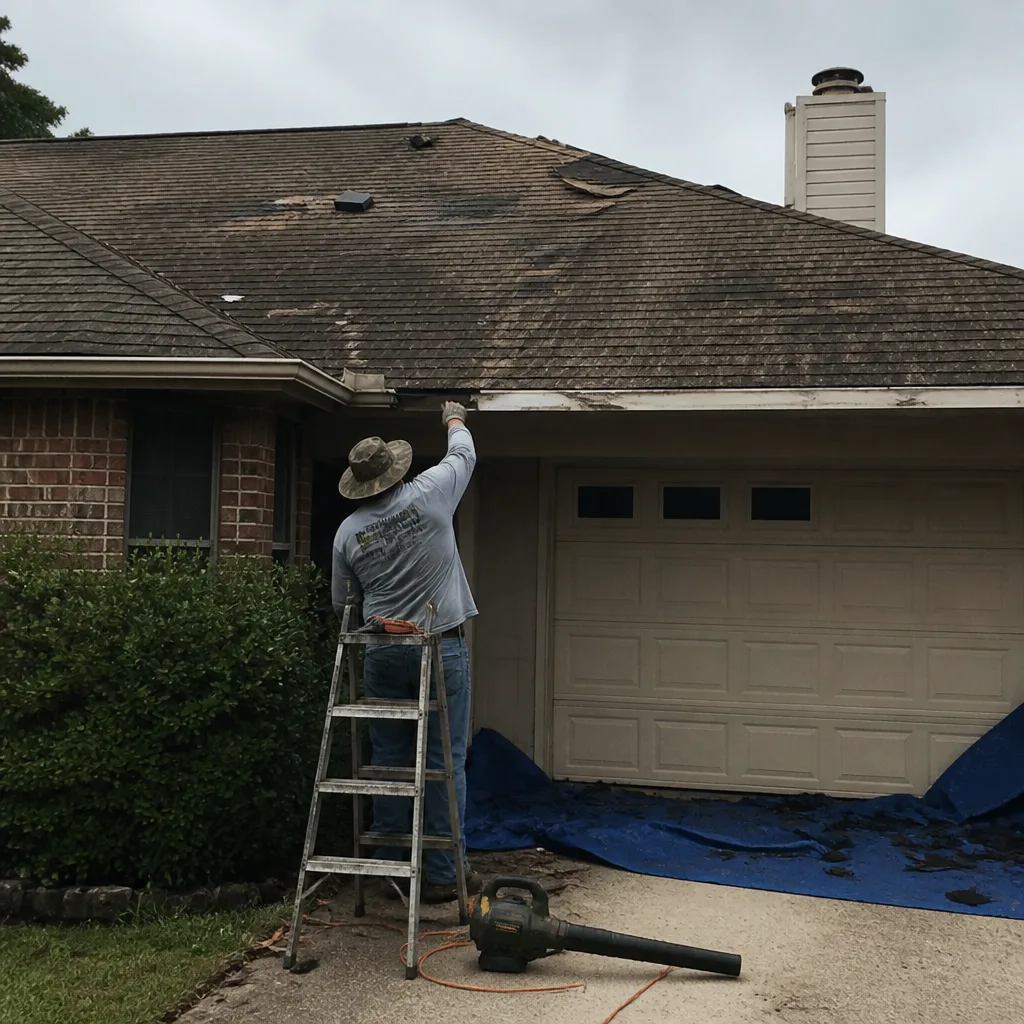 Before
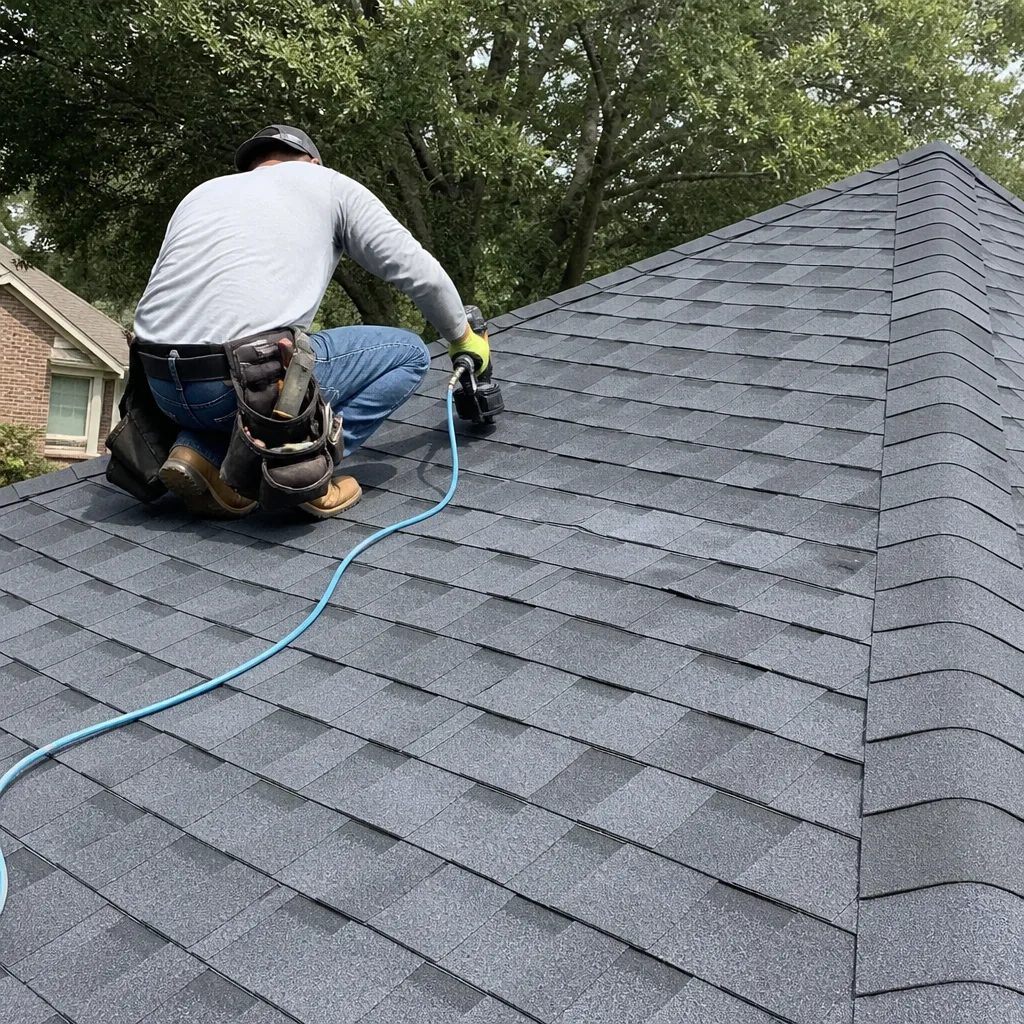 After
After