

Last updated October 17, 2026
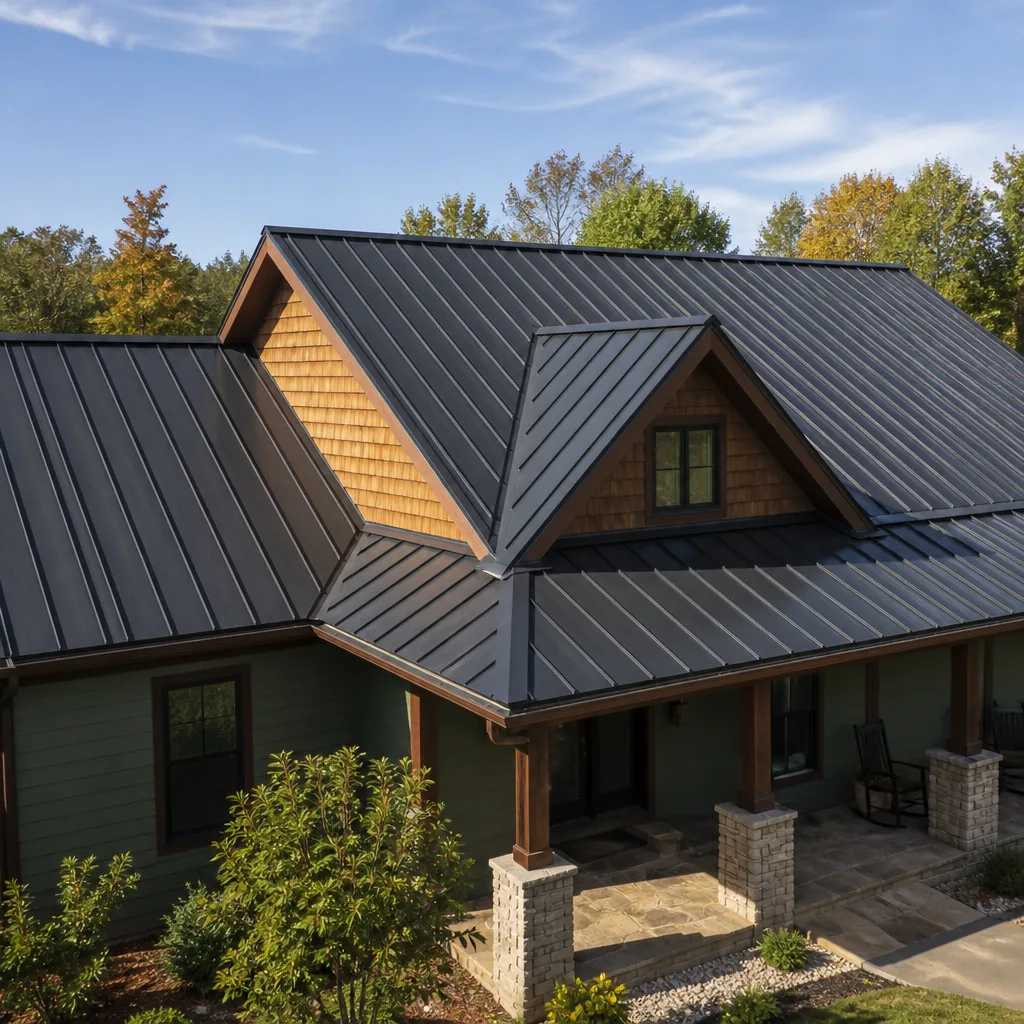 Metal roofing
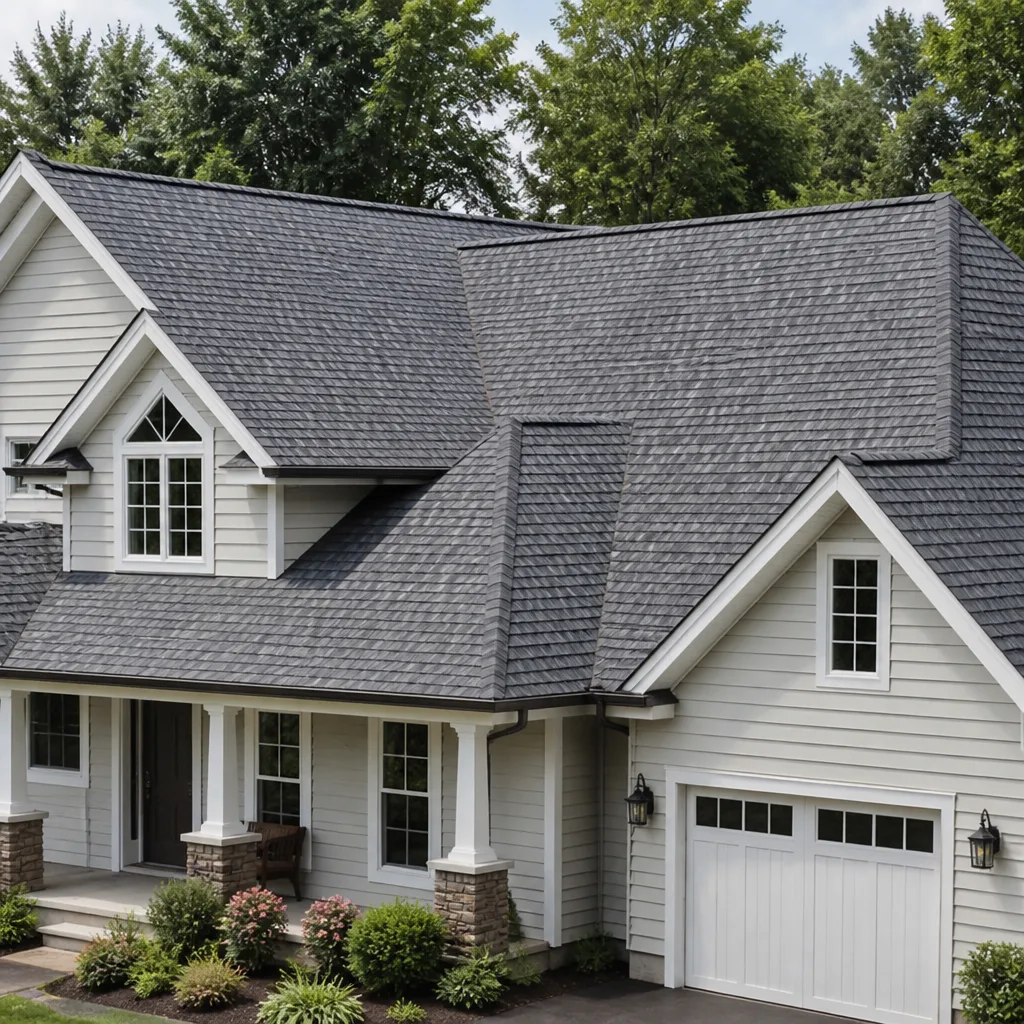 Architectural shingles
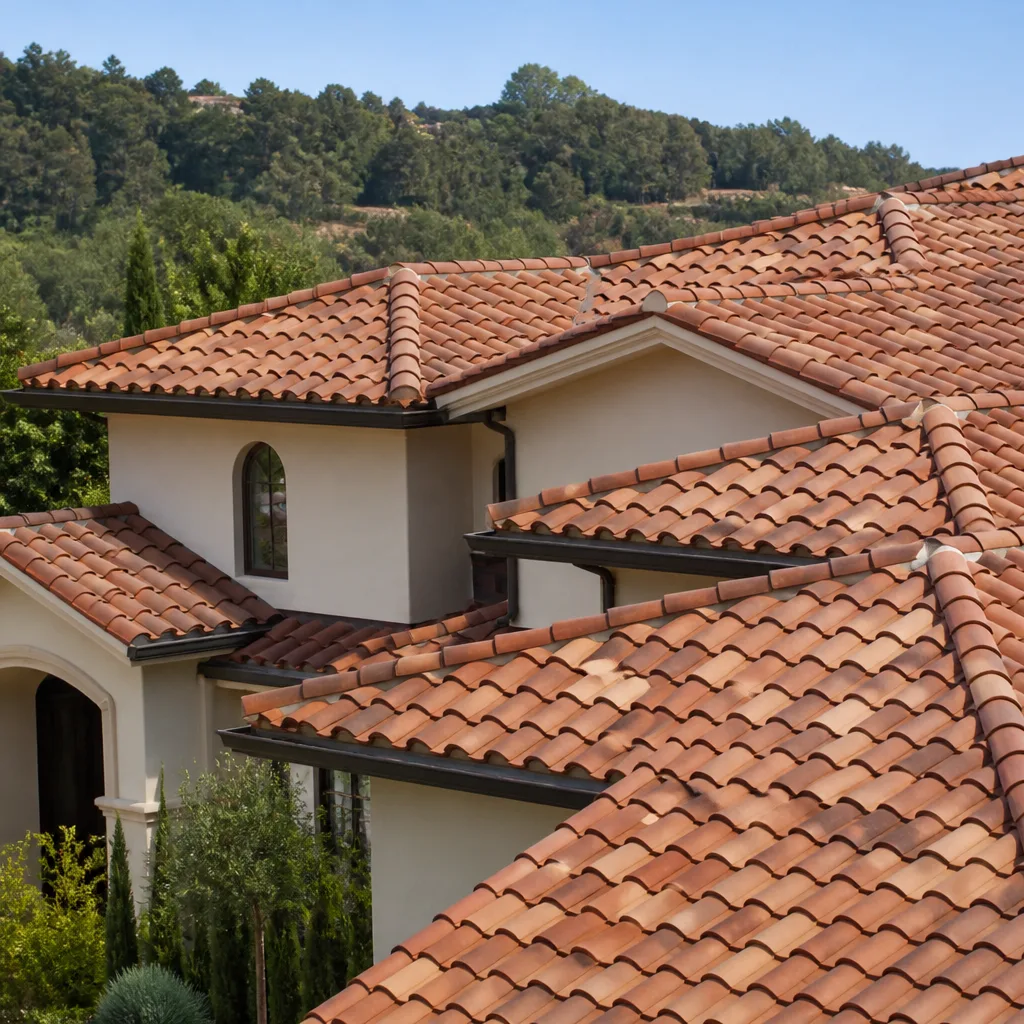 Tile roofing
 GAF
GAF Owens Corning
 Flat & low-slope
Free roof inspection with deck photos before we talk money - GAF and Owens Corning certified installation
DIY vs Professional Roofing: The Houston Homeowner’s Decision Guide
In Houston, a homeowner who patches their own roof with matching shingles saves $400 and, if they use a nail gun set to standard pressure in July heat, creates a fastener blow-through problem that voids the manufacturer’s wind warranty on the surrounding undamaged field. That one afternoon of cost savings turns a $400 repair into a $14,000 replacement question within two years. This guide walks through the legal, financial, and physical realities of DIY roofing in Houston specifically, so you can make the call with your eyes open. For how to hire a roofing contractor in Houston: a step-by-step guide, see our companion resource. We’ll cover what’s genuinely safe to do yourself, what Texas law says about homeowner permits, what your insurance company will look for after a storm, and the three decision scenarios that matter most.
Quick Answer
For most Houston homeowners, DIY roofing is only cost-effective for minor tasks like clearing gutters, replacing a single missing shingle on a low-slope section, or sealing a small exposed nail head. Any repair that touches flashing, underlayment, decking, or more than a few square feet of shingles should go to a licensed professional, because the warranty, insurance, and permit consequences of a failed DIY repair in a wind and hail zone routinely cost more than the professional job would have. Review our roofing cost breakdown: the Houston homeowner’s reference for 2026 before deciding.
Styles & brands we work with
Table of Contents
- What’s Actually Safe to DIY on a Houston Roof
- Texas Homeowner Permit Law: What Pulling Your Own Permit Really Means
- The Houston-Specific Physical Risks Nobody Talks About
- What Your Insurance Company Does When It Finds a DIY Repair
- Manufacturer Warranties and the DIY Fine Print
- The Real Decision Framework: What Does This Cost If It Goes Wrong?
- Material Choice: Seven Manufacturers, One Roof
- The Real Cost Numbers for Houston Roof Work
What’s Actually Safe to DIY on a Houston Roof
The honest answer is narrower than most YouTube videos suggest. A competent Houston homeowner with a stable ladder, a fall-arrest harness, and a clear understanding of shingle mechanics can safely handle three categories of work. Everything beyond these three tasks carries enough hidden liability that you should at minimum call a Roof Repair in Houston professional for a written assessment before touching it.
Task one: debris and gutter maintenance. Houston’s oak trees, pine needles, and the occasional hurricane-spawned branch load gutters fast. Clearing them twice a year is safe, necessary, and has zero warranty implication. Stay off the roof surface itself; work from the ladder and a gutter scoop. The roof decking does not need your body weight to inspect a clogged downspout.
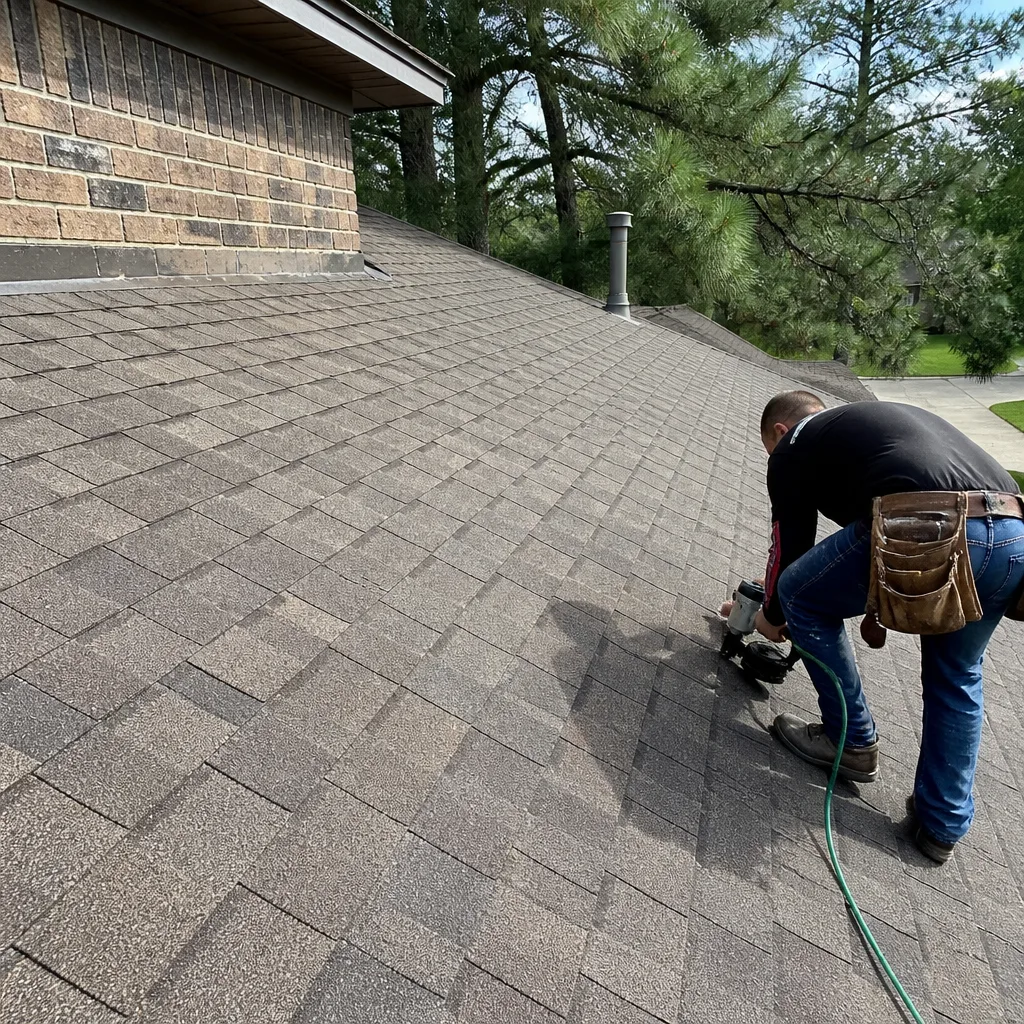
Task two: replacing a single missing or cracked shingle on a low-slope section. If the damaged shingle is one or two pieces, on a section of roof you can reach without walking on steep pitch, and the underlayment beneath is dry and intact, a careful homeowner can do this. Use the same nail pattern as the surrounding shingles: four nails per shingle in our wind zone, never staples. Hand-nail, do not use a nail gun. Set nails flush, not driven through the shingle surface. In July, that means turning the compressor pressure down or nailing by hand entirely, because hot shingles are soft and a standard pressure setting blows the nail head straight through the granule layer.
Task three: sealing exposed nail heads and small gaps. A tube of high-quality roof sealant applied to a popped nail or a small gap around a vent pipe is genuinely DIY-appropriate. Keep the sealant bead tight, tool it smooth, and do not smear it across surrounding shingle surfaces. Excessive sealant traps water behind it and accelerates granule loss.
Anything involving flashing, valley metal, ridge cap, or underlayment is not a weekend job. Those components direct water off the roof, and a small error there leaks into the decking within weeks. We’ve seen DIY valley repairs in Houston leak inside two months because the homeowner overlapped the metal the wrong direction for our prevailing southeast rain angle.
Texas Homeowner Permit Law: What Pulling Your Own Permit Really Means
Texas allows a homeowner to perform work on their own residence without holding a contractor’s license, provided they own the home, occupy it as their primary residence, and are not selling or leasing it within a specified period after completion. That exemption is real, and it’s the core legal argument for DIY roofing in Houston. But pulling your own permit under the homeowner exemption changes your legal standing in ways most people never hear about until after something fails.
When you pull your own permit in Houston, you sign the permit application as both owner and contractor. That signature carries liability for code compliance, worker safety, and any damage to adjacent property. A contractor who pulls the permit signs those same lines, and their insurance policy backs the work. Your homeowners policy typically does not cover construction-related liability for work you perform yourself. If a shingle you installed in March blows off in a summer storm and damages your neighbor’s car, your insurance company may deny the liability portion because the work was self-performed and not code-verified by a licensed contractor.
Houston’s permit office also inspects work differently based on who pulled the permit. A contractor-pulled permit gets inspected by an inspector who reviews the work against current International Residential Code and Houston’s wind load amendments. A homeowner-pulled permit gets the same inspection, but the homeowner is responsible for scheduling, responding to correction notices, and resolving any failed inspection items. Miss a notice, and the permit stays open. An open permit shows up on title searches when you sell the house. Lenders see open roofing permits the same way they see unpermitted additions: as a reason to delay closing until the permit is cleared.
The cost difference matters too. Homeowner permit fees in Houston are typically lower than contractor permit fees for the same scope of work. That $80 to $150 savings is real. But the liability difference is not $80 to $150. It is open-ended. We have seen homeowners spend more money clearing a failed self-permit inspection than the labor savings on the entire roof because the correction required tearing off and reinstalling flashing that was never documented properly in the first place.
The Houston-Specific Physical Risks Nobody Talks About
Roofing is physically hazardous anywhere. Houston adds three risk factors that temperate-climate DIY guides rarely mention, and they change the safety calculus entirely.
Heat stroke thresholds on south-facing slopes. In July and August, a south-facing asphalt shingle roof in Houston reaches surface temperatures of 160 to 180 degrees Fahrenheit by 1:00 PM. The air temperature at roof level runs 15 to 20 degrees hotter than ground level. Your body stops regulating temperature effectively when your core hits 104 degrees, and on a Houston roof in full sun, that happens faster than most people realize: often within 45 to 60 minutes of sustained work. The standard advice, “work early in the morning,” is only partial cover. Many Houston homeowners start at 7:00 AM, feel fine at 8:30, and are in heat exhaustion by 10:30 because they never registered how fast the surface heated under them. If you DIY in the summer, the roof itself tells you when to stop: if you cannot comfortably hold the back of your hand flat on a shingle for five seconds, the surface is too hot to work on safely.
Thermal updraft and steep pitches. Houston’s humid air rises off sun-heated roofs in visible convection currents by mid-morning. That updraft sounds insignificant, but on a 7/12 or 8/12 pitch it is enough to unbalance a person carrying a bundle of shingles. Most roof falls in Houston happen between 10:00 AM and 2:00 PM, not at dawn. The absence of morning dew in summer (which would normally reduce footing traction) plus the updraft creates a window where the roof is dry, hot, and subtly lifting against you. Fall-arrest equipment rated for roof work is non-negotiable on any pitch over 6/12, and realistically you should use it on any pitch where you are working more than ten feet off the ground.
Ladder footing on Houston soil. The gumbo clay under Houston homes expands and contracts dramatically with moisture. A ladder set on grass or bare soil in the morning can shift by several inches by noon as the ground dries and contracts. Set ladders on plywood pads, check the feet at least every 30 minutes, and never work alone. If you fall while solo on a roof, the person who finds you may be a neighbor walking a dog three hours later.
What Your Insurance Company Does When It Finds a DIY Repair
Here is the sequence that actually happens, based on how Texas homeowner policies are written and what adjusters check in the aftermath of a claim.
You file a claim for wind damage after a spring storm. The adjuster arrives, walks the roof, and photographs the damaged area. If the damage path includes or is adjacent to a self-performed repair, the adjuster’s first question is whether that repair was permitted and whether it complied with the manufacturer’s installation requirements. The second question is whether the repair contributed to the damage now being claimed.
Texas homeowner policies typically include exclusion language for damage “caused by or resulting from faulty, inadequate, or defective workmanship, repair, construction, or maintenance.” The Texas Department of Insurance has repeatedly upheld the principle that an insurer is not obligated to pay for damage that would not have occurred if the prior repair had been done correctly. In practice, this means: if your DIY patch leaked into the decking, and the decking now has rot, the rot exclusion applies. If your DIY shingle was nailed wrong and blew off, taking three neighboring shingles with it, the insurer pays for the three neighboring shingles, not the failed repair.
The more difficult scenario is when the adjuster cannot determine whether the DIY work contributed to the damage. In that case, Texas insurance law generally puts the burden of proving coverage on the policyholder. You would need an independent roof inspection, possibly an engineer’s report, and documentation that your work met code. Most homeowners do not have that file. Contractors do. Every job we complete at Roof Replacement in Houston includes the manufacturer install documentation, permit records, and photo documentation filed for exactly this kind of dispute.
We are not saying insurance companies are looking for reasons to deny claims. We are saying that a self-performed repair with no paper trail gives them a legitimate reason to deny a portion, and you will not know that until you are already out of pocket.
Manufacturer Warranties and the DIY Fine Print
Shingle manufacturers have tightened installation requirements significantly in the last decade, and the Houston market sits inside a designated high-wind zone that triggers additional requirements. The warranty language is specific, and it does not bend for well-intentioned homeowners.
Most major shingle warranties require installation by a contractor who meets the manufacturer’s certification standards, and the warranty registration must be completed by that contractor. If you install shingles yourself, the material warranty usually reverts to the base coverage, which covers manufacturing defects only, not installation errors, and typically does not cover labor to remove and replace defective material. On a full roof, labor removal and reinstallation is the majority of the cost.
The fastener issue from the opening of this guide is the clearest example. In our wind zone, manufacturers specify nail pressure settings, nail placement, nail count, and nail type. In July heat on a Houston roof, a nail gun set to standard pressure drives nails through the shingle rather than flush to the surface. That is called overdriving, and it is the single most common cause of shingle blow-off in Houston after minor storms. A manufacturer inspector who finds overdriven nails has grounds to deny a wind warranty claim on the entire roof, because one overdriven nail indicates an installation defect that could exist throughout the field.
The same logic applies to underlayment. Houston’s building code and manufacturer requirements both call for specific underlayment types in high-wind zones. A homeowner replacing shingles on a small section may pull back the old shingles, see the existing underlayment, and assume it is fine. If that underlayment was not replaced to the manufacturer’s current spec, the warranty on the surrounding roof is compromised. Professional roofers in Houston are required by the manufacturers to inspect underlayment condition as part of any repair, and to document what is there before and after. Our roofing company maintenance checklist for Houston homeowners covers what that inspection should include.
Material choice matters, too. We install from seven manufacturers: GAF, CertainTeed, Owens Corning, IKO, Atlas, Tamko, and Boral. That range exists because a roof in Meyerland faces different moisture exposure than a roof in Kingwood, and the right manufacturer for one home is not automatically right for another. Homeowners doing their own work almost always buy the shingle that matches what is already on the roof, and that is the correct visual choice but sometimes the wrong technical choice for our wind zone. A written assessment from a Roofing Company in Houston costs nothing and tells you whether the existing product line is still current, still rated for our zone, and still available. Matching color is only part of the answer.
The Real Decision Framework: What Does This Cost If It Goes Wrong?
Forget “can I do this?” The question that matters in Houston is “what does this decision cost if something goes wrong?” Three scenarios with realistic dollar numbers.
Scenario one: the $400 DIY shingle patch on a 6/12 pitch. You replace four shingles after a January windstorm. The immediate cost is about $60 in materials and a Saturday afternoon. If the repair holds, your total cost is $60 and some sweat. If the repair fails because the nails were overdriven in warm weather, water enters the decking over the next six months. By the time you notice the ceiling stain, the repair zone has expanded to include decking replacement, two rafter sections, insulation remediation, and interior drywall. Professional repair now: $2,800 to $5,500. Your savings: negative $2,700 to negative $5,400. And that assumes no manufacturer warranty issue on the surrounding field.
Scenario two: the $1,200 DIY flashing repair around a chimney. Chimney flashing in Houston fails constantly because of thermal expansion and contraction on the roof surface. You remove the old flashing, install new step flashing and counter flashing, and seal it. If the flashing leaks at the corners (the classic Houston DIY failure point, because the corner detail requires a specific fold sequence), water enters the roof deck and runs down the rafter line. You see the stain six weeks later. Professional repair of the flashing plus interior damage runs $3,000 to $7,000 depending on how far the water traveled. Savings: negative $1,800 to negative $5,800.
Scenario three: the $3,500 DIY underlayment replacement on a 1,000-square-foot section. You strip the shingles, replace the underlayment, and re-shingle. The work takes a full week of evenings and weekends, and you save roughly the labor cost of a professional crew. If everything goes correctly, you saved money, no question. But if the underlayment is not sealed or fastened to the manufacturer’s current wind-zone spec, the next hailstorm causes shingle loss that the manufacturer refuses to cover because the field installation does not meet spec. Professional re-installation to restore warranty validity: $9,000 to $16,000. Savings: negative $5,500 to negative $12,500.
None of these scenarios are worst-case imaginings. They are the three most common DIY failure patterns we have seen in Houston over the past several years. The pattern is always the same: the immediate savings are real, but the downside exposure is ten to twenty times the upside, and the downside is not covered by your insurance or the manufacturer when the work was self-performed.
Material Choice: Seven Manufacturers, One Roof
Houston’s climate does not reward brand loyalty. It rewards product selection based on the specific structure, pitch, shade coverage, and exposure of the home. A roof on a heavily treed lot in the Heights has different mildew and moss pressure than a roof on an exposed corner lot in Katy, and the right shingle for one is not the right shingle for the other.
We stock and install from seven manufacturers for exactly this reason: GAF, CertainTeed, Owens Corning, IKO, Atlas, Tamko, and Boral. Each has products designed for high-wind, high-humidity climates, and each registers warranty coverage differently. Homeowners doing their own work almost never have access to the full product range, because big-box stores carry two or three brands and a limited selection of product lines within those brands. You may be buying a fine shingle that is not the right shingle for your roof.
Atlas and IKO both make product lines specifically engineered for wind-driven rain environments like Houston’s, with different nail-strip designs and sealant activation temperatures. Tamko’s high-wind products perform differently in our humid heat than GAF’s, and the difference shows up at installation, not on paper. A professional installation includes the manufacturer-required fastening pattern for the specific product line, not a generic one-size-fits-all approach. That matters when you try to claim a wind warranty after a storm: the manufacturer’s inspector checks whether the installation matched the published requirements for that exact product.
If you are committed to doing your own repair, at minimum buy the exact same product line that is already on the roof, not just the same color. The product line is printed on the shingle wrapper and usually on the underside of the shingle. Mixing product lines on a roof triggers two issues: visual mismatching from different granule blends, and mechanical mismatching where the two products have different sealant activation temperatures. Houston’s summer heat activates sealant quickly, and a mixed roof with two different activation points will seal unevenly, leaving gaps that lift in wind.
The Real Cost Numbers for Houston Roof Work
You cannot make a sound DIY-or-professional decision without knowing the actual market rates for professional work in Houston. These are current ranges based on Houston labor rates, material availability, and the scope of typical single-family homes in the metro.
| Job Type | Typical Houston Cost Range | DIY Material Cost | Professional Labor Included? |
|---|---|---|---|
| Single shingle replacement (low-slope, one or two pieces) | $180 – $320 | $25 – $60 | Yes – labor, insurance, warranty documentation |
| Small flashing repair (pipe boot, vent) | $250 – $450 | $40 – $90 | Yes – plus sealant and fasteners matched to existing roof |
| Chimney flashing replacement | $1,100 – $2,800 | $180 – $400 | Yes – plus code-required counter flashing and inspection |
| Underlayment replacement (500 – 1,000 sf section) | $2,800 – $7,500 | $800 – $2,200 | Yes – plus tear-off, disposal, fastening certification |
| Full roof replacement (2,000 – 2,500 sf) | $11,000 – $22,000 | $4,500 – $9,500 | Yes – plus permit, inspection, manufacturer registration |
The DIY material cost column looks tempting. It always does. What that column does not show is the permit fee, the dumpster rental if you tear off, the tool cost if you need a nail gun or brake, the documentation cost if you ever need to prove the work was done to code, and the insurance gap if something fails. On a full roof, the DIY route saves you roughly half the professional cost but exposes you to the entire downside if installation errors shorten the roof’s life. On a small repair, the professional cost is so close to the DIY cost once you factor in time and risk that the DIY route only makes sense for genuinely minor work like single shingle replacement and sealant repair.
Common Mistakes to Avoid
- Using a nail gun on hot shingles. Houston’s summer heat softens asphalt shingles, so standard nail pressure overdrives nails and voids the wind warranty on the entire field. Hand-nail or dial the pressure way down, and test on scrap first.
- Pulling your own permit without understanding the liability. The homeowner permit exemption saves you a small fee but puts you on the hook for code compliance, failed inspections, and any damage to adjacent property. A contractor’s insurance absorbs that liability.
- Mixing shingle product lines. Two different product lines with different sealant activation temperatures will seal unevenly in Houston heat and lift in the first real wind event. Match the exact product line, not just the color.
- Working alone on any roof pitch. A solo fall on a Houston roof in the summer can mean hours before anyone finds you. Work with a partner and use fall-arrest equipment on any pitch over 6/12.
- Sealing over old sealant. Applying new sealant on top of cracked or dried old sealant creates a pocket that traps water against the shingle. Remove the old sealant with a plastic tool first, clean the surface, then apply.
- Ignoring the underlayment. If you tear off shingles and the underlayment is torn, deteriorated, or installed to an outdated spec, replacing shingles on top of it is a warranty and leak risk. Underlayment is not optional; it is the waterproofing layer.
- Assuming your insurer will cover DIY errors. Texas policy exclusion clauses for faulty workmanship are real, and a self-performed repair that contributed to later damage will likely not be covered. Paper trails matter.
See the difference
 Before
 After
After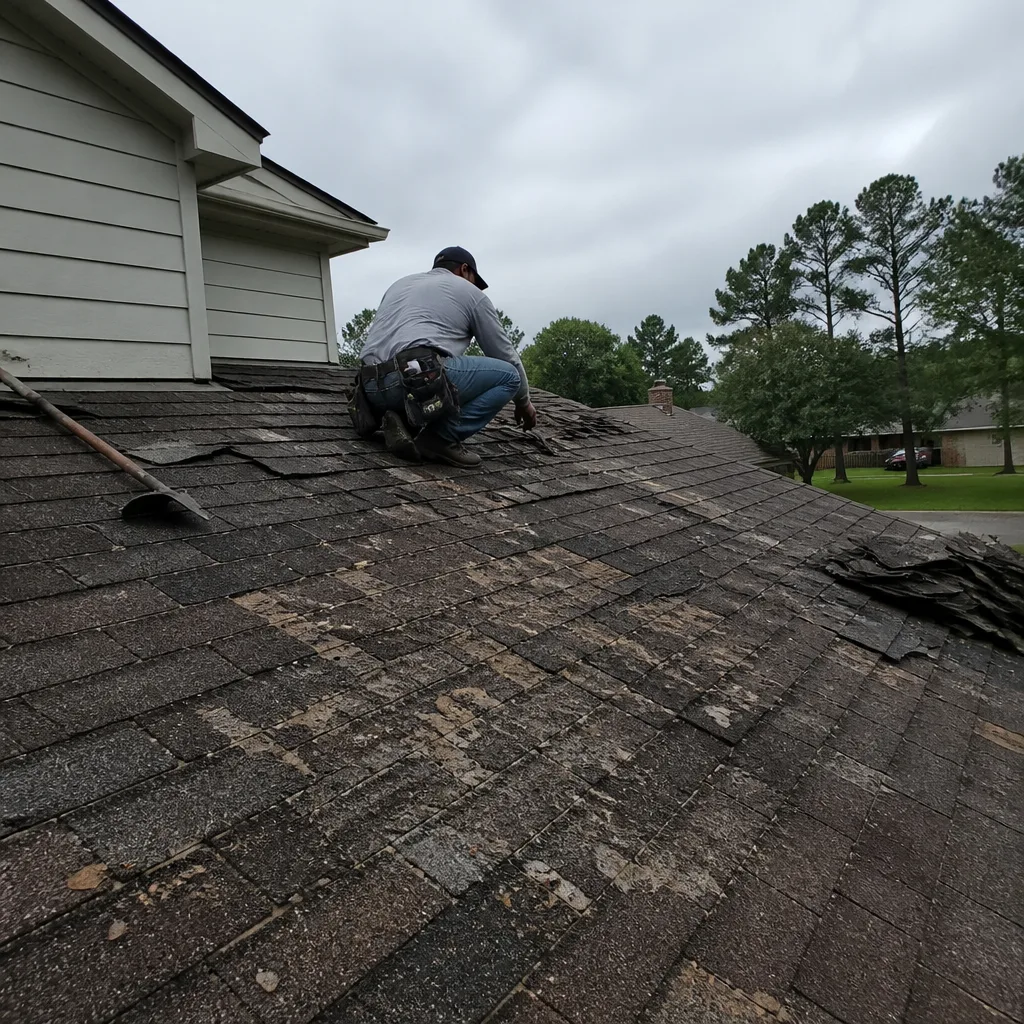 Before
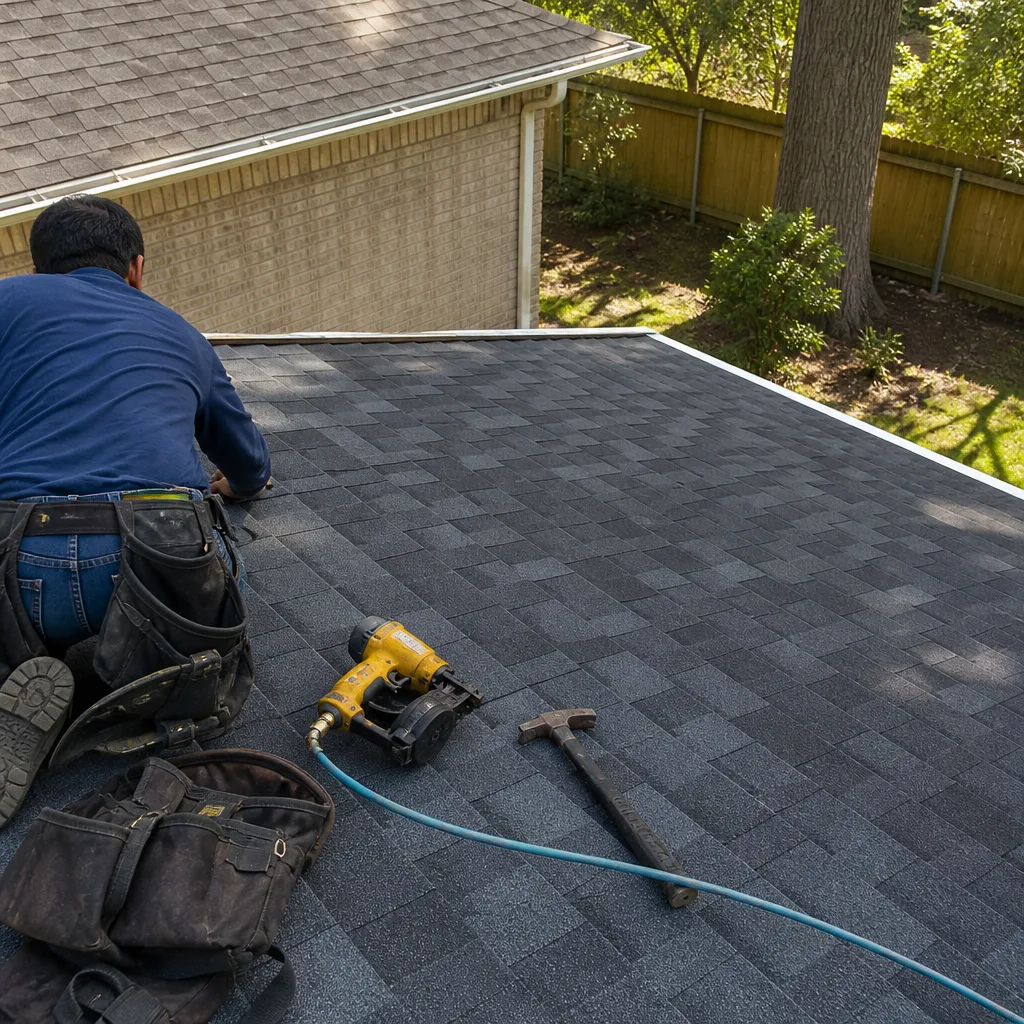 After
After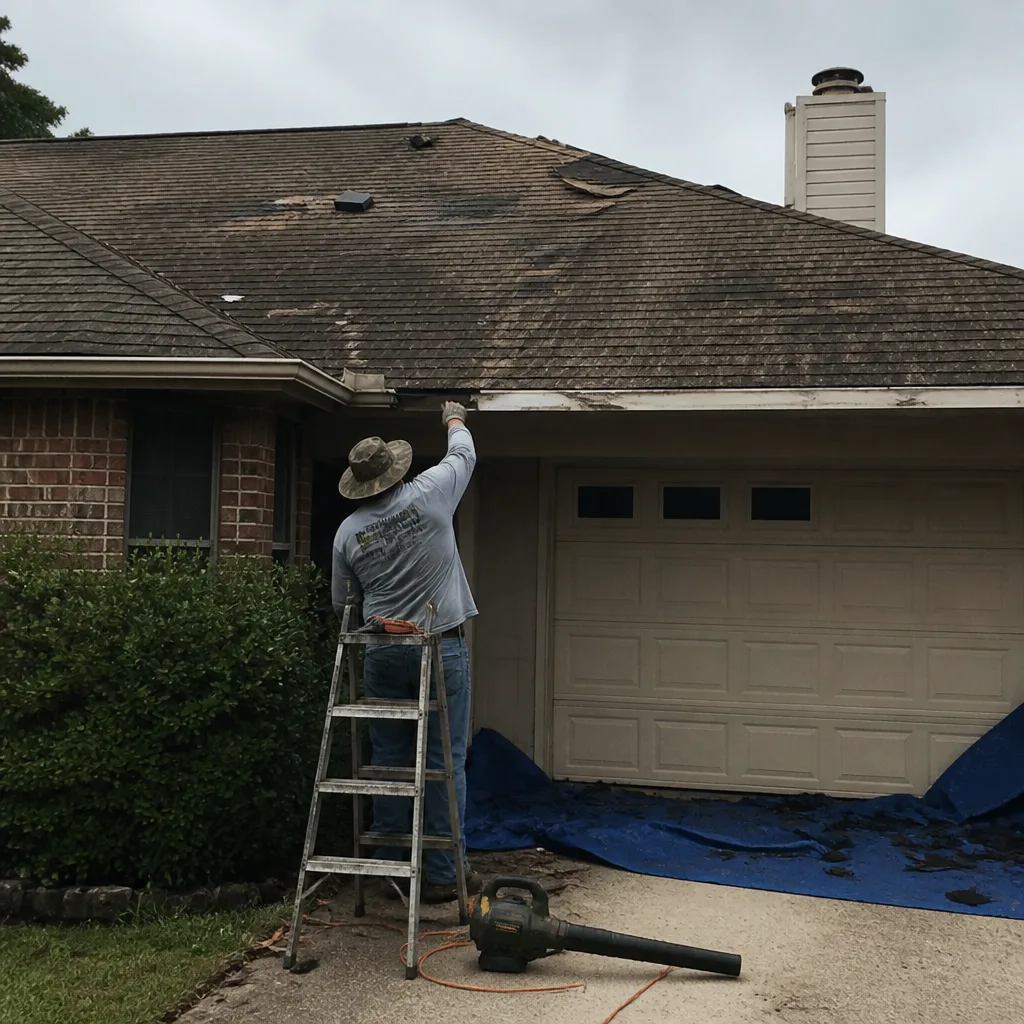 Before
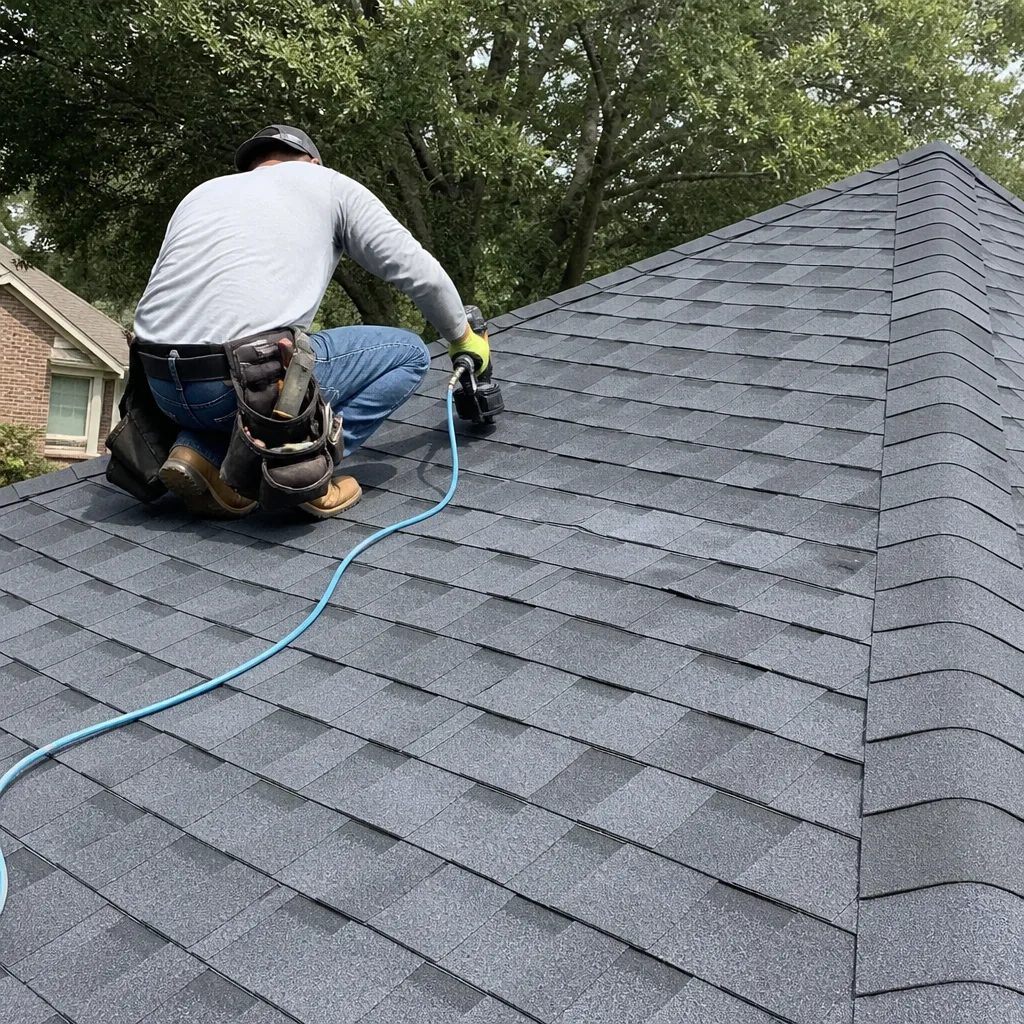 After
AfterWhen to Call a Professional
Call a professional when the repair involves flashing of any kind, more than three or four shingles, any underlayment work, any decking replacement, or any section of roof you cannot reach with both feet on a stable ladder. Call a professional when the roof pitch exceeds 6/12, when the work is within the wind-warranty zone of a previous claim, or when you have any doubt about what is under the shingles you are removing. Tilehurst Roofing Houston home offers free estimates across Houston with a written price before any work starts, and every repair leaves with a written guarantee. Call (254) 566-3573 to schedule yours.
Frequently Asked Questions
On a small repair like replacing two or three shingles, the realistic DIY savings is $100 to $250 after materials and disposal. On a full roof, the DIY savings can be $6,000 to $12,000, but that upside disappears quickly if warranty or insurance issues arise. Call (254) 566-3573 for an exact professional price so you are comparing real numbers, not guesses. Estimates are free.
Houston and unincorporated Harris County generally require a permit for roof work, though the homeowner exemption allows you to act as your own contractor if you own, live in, and do not intend to sell or lease the home within a year. The permit is not the expensive part; the liability you assume by signing as your own contractor is the part that matters. A professional contractor pulls the permit and carries the liability on their policy.
Your insurer will not automatically deny an unrelated claim. But if the damage path includes or is adjacent to your self-performed repair and the insurer determines the repair contributed to the damage, Texas policy language for faulty workmanship applies, and that portion of the claim will likely be excluded. Documenting code-compliant DIY work is difficult; being able to show a professional-installed repair with permits and manufacturer documentation is straightforward.
A south-facing asphalt shingle roof in Houston reaches 160 to 180 degrees Fahrenheit on a typical July afternoon, and roof-level air temperatures run 15 to 20 degrees hotter than ground level. Heat exhaustion can set in within 45 minutes under those conditions. If the shingles are too hot to hold your hand on for five seconds, the roof is too hot to work on safely. On the flip side, Houston’s winter days are mild enough that DIY work in January and February carries far less heat risk.
This happens constantly in Houston, especially with roofs installed 8 to 15 years ago. If the exact product line is discontinued, you cannot buy it anywhere, and installing a similar-looking shingle from a different line creates sealant and granule mismatches. A professional roofer can source close-match alternatives and document the variance, but this is a situation where the repair often expands into a broader section replacement so the mismatch does not create a problem area. Call (254) 566-3573 and we will tell you honestly whether a match is possible.
Houston sits in a designated high-wind zone under the Texas Windstorm Insurance Association and local code amendments, which means additional fastening requirements, different underlayment specifications, and a wind-speed design standard that exceeds much of the rest of the state. Work done by a permitted contractor is inspected against these standards. Work done under the homeowner exemption is inspected too, but the homeowner carries the burden of knowing what the requirements are, and most do not until an inspection fails.
The Bottom Line
DIY roofing in Houston makes sense for gutter cleaning, single shingle replacement on a reachable low-slope section, and sealing exposed nail heads or small gaps with sealant. Beyond that narrow band, the legal, insurance, and warranty consequences of self-performed work routinely exceed the savings, and Houston’s specific heat and wind conditions turn small installation errors into large water and structural problems faster than most homeowners expect. The smart homeowner decision is not “can I figure this out,” but “what does it cost if I figure it out wrong.” Tilehurst Roofing Houston offers free estimates, answers every call live, and puts every price and guarantee in writing before any work begins. Call (254) 566-3573 to compare real numbers.
Written by Greg Holloway, Owner at Tilehurst Roofing Houston, serving Houston since 2000.