

Last updated October 17, 2026
 Metal roofing
 Architectural shingles
 Tile roofing
 GAF
GAF Owens Corning
 Flat & low-slope
Free roof inspection with deck photos before we talk money - GAF and Owens Corning certified installation
Roofing Warning Signs: A Houston Homeowner’s Reference Guide
A one-inch dark streak at the bottom of your fascia board isn’t a cosmetic stain. In Houston’s humidity, that streak is the visible end of a moisture pathway that started at a failed step flashing and has been wicking through your decking for an entire rainy season. Most Houston homeowners learn to spot curling shingles and ceiling stains, but by then, the repair bill has already doubled. This guide leads with the subtle signals that appear three to six months earlier: the attic clues, the algae patterns, the soffit changes, and the hail damage you can’t see from the ground. We’ve written this for the homeowner who wants to catch a $400 repair before it becomes a $14,000 replacement.
Quick Answer
The earliest roof warning signs in Houston appear inside the attic, not on the shingles: dark decking stains, rusted nail points, damp insulation, and a musty smell that gets stronger after rain. Outside, watch for blue-green algae streaks (moisture retention) versus black streaks (cosmetic staining), soffit discoloration that signals trapped humidity rather than a shingle leak, and granule loss concentrated on one slope instead of evenly across the roof. Any of these means it’s time for a professional inspection, ideally before the next Gulf storm season.
Styles & brands we work with
Table of Contents
- Inside the Attic: The Early Warning System Most Homeowners Skip
- Houston’s Algae and Lichen: When a Streak Means Moisture
- Soffit and Fascia Signals: Ventilation Problems vs. Shingle Problems
- What a Good-Looking Roof Hides After a Houston Hailstorm
- How to Read Your Ceiling for Leak Source Direction
- Granule Loss, Curling, and the Shingle Clock
- Flashing and Decking: The Connective Tissue Most Roofs Fail At
- Common Mistakes to Avoid
- When to Call a Professional
- Frequently Asked Questions
Inside the Attic: The Early Warning System Most Homeowners Skip
The most reliable roof inspection in Houston happens before you ever climb a ladder. Your attic tells the truth about your roof months before the shingles do. Houston’s climate makes this especially true: our average humidity hovers near 75 percent year-round, and that means moisture problems announce themselves in confined attic air long before they stain a ceiling. A flashlight and ten minutes in your attic every spring and fall will catch more roof failures than any ground-level inspection.
Here’s what to look for, in order of severity:
- Dark stains on the underside of decking. The decking is the plywood or OSB layer the shingles are nailed to. In a dry attic, the wood should be uniform light brown. Dark gray or black blotches, especially in a pattern that follows the seams between sheets, mean water has been sitting on the wood. That’s rot forming, and it’s been happening for at least one rainy season.
- Rusted nail points. The tips of roofing nails poke through the decking into the attic. On a healthy roof, they stay bright galvanized silver. When you see orange-brown rust on the nail tips and a dark ring staining the wood around them, condensation has been cycling in your attic. The nails are corroding from the inside, and that corrosion travels up the shank and eventually pops the nail head through the shingle.
- Damp or matted insulation. Fiberglass batt insulation loses its loft when it’s been repeatedly wetted and dried. If you find flattened, crusty, or visibly damp sections, especially near the eaves or around vent pipes, there’s a leak or a condensation problem feeding it.
- A musty smell that gets stronger after rain. This is the smell of fungus and bacteria growing on organic material in a humid environment. In Houston, where a heavy afternoon thunderstorm can dump two inches of rain in an hour, a musty attic after rain is not normal. It’s water getting in somewhere.
- Visible light through the decking or around penetrations. Kill the attic light and look for any pinhole of daylight. If light gets through, water gets through. Check around plumbing vents, the chimney, and any roof-mounted exhaust fans first.
These five attic signals give you a three-to-six-month head start on a failure. A dark decking stain today is a ceiling stain next season and a reroof in two years if left alone. We’ve walked into Houston attics in Meyerland, Westbury, and the Heights where the decking looked like a topographical map of the last five hurricanes. The owner had no idea because the ceiling paint was still pristine. By the time the ceiling showed anything, the decking had lost its structural integrity and the job cost four times what a repair would have run at the first attic sign.
If you spot any of these, call a Roof Repair in Houston specialist before the next heavy rain. The attic doesn’t lie, but it only helps if someone looks.
Houston’s Algae and Lichen: When a Streak Means Moisture
You’ve seen the dark streaks on roofs all over Houston. They trail down from the ridgeline like black tears, and most people assume they’re just cosmetic staining from air pollution or general grime. The truth is more specific, and the color tells you which problem you’re dealing with.
Black streaks are almost always Gloeocapsa magma, a cyanobacteria that eats the limestone filler in asphalt shingles. It thrives in warm, humid climates, which is why Houston has one of the highest rates of roof algae in the country. The black color is the organism’s protective pigment. By itself, algae doesn’t rot your roof. It’s ugly and it shortens the shingle’s reflective life, but it’s not evidence of active moisture intrusion. It’s a surface problem.
Blue-green or green patches are different. These indicate lichen, a composite organism of fungus and algae. Lichen needs sustained moisture to survive, and on a Houston roof, that means water is pooling or sheeting somewhere and not drying fast enough. Lichen sends root-like structures into the shingle granule layer and can put literal pinholes through the mat. When you see green, it’s not just sitting on the surface; it’s anchored in. Lichen growth usually appears on north-facing slopes, under tree overhangs, or in valleys where water channels. It can also grow around plumbing boots, skylights, and in shaded sections behind chimney stacks.
Here’s the practical read:
- Black streaks in a vertical line downslope: algae, cosmetic. Treatable with a zinc or copper strip and a soft wash, but not an emergency.
- Black streaks concentrated at the bottom of a valley or behind a gutter: recurring water flow. Not just algae. A drainage or flashing issue is feeding it.
- Green-blue patches that are slightly raised and textured: lichen. Active moisture retention. These patches hold water against the shingle and accelerate granule loss. The roof under the lichen is degrading.
- Moss in shaded spots: Houston is warm enough for moss in deeply shaded sections, especially under live oaks. Moss means those shingles never fully dry. It is a moisture problem, not a stain.
One of the least understood facts about Houston roofing is that the city’s live oak canopy is responsible for a significant portion of roof failures. Branches keep sections in near-permanent shade, leaves pile in valleys and gutters, and the trapped moisture feeds lichen and moss that a sunny roof in Katy or Pearland wouldn’t support. We’ve replaced roofs in Tanglewood and Oak Forest where the north slope was green with lichen while the south slope still looked factory new. The fix wasn’t just new shingles; it was new shingles, a couple of strategic tree-limb removals, and improved attic ventilation so the next roof could dry out after every rain.
Soffit and Fascia Signals: Ventilation Problems vs. Shingle Problems
The soffit is the horizontal board on the underside of your roof overhang. The fascia is the vertical board the gutters screw into. Together they’re the roof’s breathing apparatus and its first line of defense against wind-driven rain. In Houston, where summer attic temperatures regularly exceed 140 degrees, the soffit and fascia are doing more work than most homeowners understand.
Here’s the distinction that matters most: soffit and fascia problems usually indicate a ventilation or drainage failure, not a shingle failure. Calling a roofer to replace shingles when the soffit is rotting is treating the symptom and leaving the cause. The correct question is always: why is moisture getting to the soffit in the first place?
Specific things to watch:
- Peeling paint on the fascia board. This is one of the earliest visible signs on any Houston house. If the paint is peeling from the bottom up, water is wicking behind the gutter. The source is usually a clogged gutter, a gutter pitched wrong, or a drip edge that’s missing or installed incorrectly. The drip edge is the metal strip at the eave that directs water into the gutter rather than letting it curl back under the shingle. A missing drip edge in Houston is a slow-motion fascia rot.
- Staining on the soffit boards. Especially if the stain grows after rain. This almost always means warm, humid attic air is condensing on the underside of the soffit, or rain water is running around a clogged gutter and soaking the soffit from the top. The roofer’s job is to find which one it is before replacing anything.
- Fascia that’s soft when you press it. In Cypress, Kingwood, and the Energy Corridor, we find this constantly. Usually, the gutter has been overflowing for years, the drip edge was never installed, and the fascia board is now a sponge. The fix includes replacing the rotted board, installing a drip edge, and re-hanging the gutter with the correct pitch.
- Black streaking on the fascia under the roof edge. This is often mistaken for mold or mildew, but it’s usually the same algae growing on the roof washing down onto the fascia. It indicates water is flowing over the roof edge in a concentrated sheet instead of into the gutter. This happens when the shingle overhang is too short or the drip edge is flipped the wrong way.
The reason this matters is simple: if the soffit and fascia are damaged because of a ventilation problem, replacing only the shingles is a waste of money. The new roof will start rotting from the edge inward within a few years. A proper repair addresses the airflow, the drip edge, the gutter pitch, and the soffit venting as one system.
We follow the Kingswell Way on every job that involves these parts: say the price before the work, show up in the window we gave, leave the place cleaner than we found it, put the guarantee in writing, come back if it fails. That last part is why we pay close attention to edges. It’s the details at the eaves that dictate whether a repair lasts five years or twenty.
What a Good-Looking Roof Hides After a Houston Hailstorm
Houston gets hail. It doesn’t always make the news like a hurricane does, but the spring storm season regularly produces quarter-sized and sometimes golf-ball-sized hail across neighborhoods from Sugar Land to Humble to Spring. Here’s what almost nobody explains: a roof can look perfectly fine from the ground after a hailstorm and still be structurally compromised.
The damage that matters most is called bruising. When a hailstone hits an asphalt shingle, it can fracture the fiberglass mat hidden inside without puncturing or visibly tearing the top layer. The granule surface remains intact, so from the ground, the shingle looks untouched. But the mat is broken, the shingle’s tensile strength is gone, and the impact rating that the manufacturer certified is void. What’s left is a shingle that will fail years earlier than it should, and now has no warranty coverage.
Inside the attic, the same impact shows up differently. Hail strikes from above can create a small crater in the decking below each impact point. Shine a flashlight across the decking at a low angle and look for small, moon-like depressions. Each one is a hail strike that transferred through the shingle and bruised it from underneath.
After a Houston hailstorm, here’s the smart homeowner’s sequence:
- Document the date and time of the storm. Insurance timelines in Texas require prompt filing. Note the size of the hailstones if you saw them. Thirty days from now, that memory will fade.
- Check the soft metal first. Look at the aluminum fins on your AC unit, the mailbox, the window screens, and the roof vents. Dents in these make hail claims much easier and tell you the stone size.
- Walk the perimeter and look at downspout splash blocks. Hail will knock granules loose, and after the next rain, they wash into the gutter and out the downspout. A pile of granules at the downspout mouth means the roof took a hit.
- Get a professional inspection while the storm is recent. Not every hailstorm means a new roof. Some do. The only way to know whether the shingles are bruised or merely scuffed is to inspect them up close and, if necessary, send a sample to a lab. This is not a ladder-and-wallpaper-scraper job. It requires knowing how to lift the shingle without breaking the seal, and what a bruise looks like under direct light.
One of the least understood aspects of Houston hail is that the same storm can hit two adjacent streets differently. The hail path can be a mile wide or a hundred feet wide. Your neighbor’s spotless roof is not evidence yours is fine. We once inspected two homes across the street from each other in Bellaire after a March storm: one needed a full replacement under insurance, the other needed nothing. Same storm, same development, different micro-scale hail tracks.
How to Read Your Ceiling for Leak Source Direction
When you see a brown water stain on your ceiling, the most common mistake in Houston is calling a roofer and pointing at the stain like a map. Here’s the fact most homeowners don’t know: the wet spot on your ceiling is almost never directly below the point where water is entering the roof. Water takes the path of least resistance: it runs along a rafter edge, rides a seam in the plywood, or travels horizontally across the backside of the drywall before gravity finally pulls it through at a weak spot.
A stain that appears in your living room may trace back to a roof penetration twenty feet uphill. A stain near the wall may come from a valley two rafters over. Water is lazy. It follows channels.
Here’s a simple, safe method to trace a leak source without tearing anything open:
- Mark the exact edges of the stain with a pencil. Use a light pencil line so you can see if the stain grows after the next rain. If it grows, the leak is active. If it stays static, the leak may be old or intermittent.
- Look above the stain for slope. Roofs pitch. Find the highest point of the ceiling stain and mentally draw a line up the slope of the roof, not straight up the wall. The entry point will be somewhere along that line between the stain and the ridgeline, usually at a penetration, a flashing junction, a valley, or a nail hole.
- Check for anything that penetrates the roof above that line. Plumbing vents, exhaust fans, chimney chases, HVAC lines, satellite dish mounts, solar tube skylights. In Houston, the most common leak sources are plumbing boot failures, chimney flashing gaps, and nail pops around vent pipe collars.
- In the attic, follow the same slope from the stain upward. Look for water marks on the decking underside that form a trail. A dark line that runs diagonally down a rafter tells you exactly which path the water followed. Follow it to its highest end. That’s your leak source.
- If the stain is directly under a valley, suspect the valley flashing. Valleys channel the most water on any roof. In Houston, where afternoon downpours can overwhelm a valley in minutes, a failed valley seam is one of the biggest sources of interior leaks we see.
This tracing method matters because it determines whether your roofer is fixing the right thing. A $250 flashing repair fixes a leak forever. A $300 patch in the wrong spot leaves the leak active and you’re paying for a second repair in six months. If you’re not comfortable doing the tracing yourself, a professional roofer will do it as part of the inspection. The key is that someone does it before any work starts.
Granule Loss, Curling, and the Shingle Clock
Asphalt shingles are a wear item, like tires or brake pads. They don’t fail all at once under normal circumstances; they degrade on a predictable schedule that Houston’s climate accelerates. Understanding the stages helps you know whether you’re looking at a repair or a replacement, and how much time you have left.
The stages, in order, look like this:
- Year 1 to 8: uniform light granule loss. New shingles shed a small amount of granules in the first year or two as the manufacturing excess shakes loose. This is normal. You’ll see a dusting in the gutter after rain. No action needed.
- Year 8 to 15: early curling at the edges. The shingle tabs start to lift at the corners, especially on south-facing slopes in Houston where the sun beats hardest. The asphalt is slowly losing its flexibility. This is the time to begin watching, and to have the roof inspected annually.
- Year 15 to 20: progressive curling and concentrated granule loss. The shingles begin to cup upward. The granule layer is wearing thin in patches. On a Houston roof that’s been through several hailstorms and a couple of hurricanes, this is typically where the first real leaks appear.
- Year 20 plus: widespread deformation. Shingles are brittle, cracked, or missing. The decking may be exposed. In Houston’s heat and humidity, very few asphalt shingle roofs make it past 25 years without significant repair work.
One thing to know about Houston specifically: our roof aging cycle is compressed by heat. The 110-degree attic temperatures of a Gulf Coast summer bake the shingle mat from below while the sun bakes it from above. A roof that would last 30 years in Michigan will typically last 20 to 25 here. The city’s building stock ranges from 1920s bungalows in the Heights to 1990s and 2000s tract homes in Cypress and Katy, so every house is at a different point on the shingle clock. The homeowner’s job is simply to know which stage they’re in.
If you’re seeing granule loss accumulated in gutters and downspouts after a normal rain, your shingles are mid-life or beyond. If the granules are piling up at every downspout mouth, call a Roof Replacement in Houston specialist for an honest assessment of remaining life. The material options at Tilehurst Roofing Houston come from seven manufacturers – GAF, CertainTeed, Owens Corning, IKO, Atlas, Tamko, and Boral – so the replacement product matches the home’s slope, exposure, and budget rather than whatever happens to be on the truck.
Flashing and Decking: The Connective Tissue Most Roofs Fail At
Every roofer in Houston has a saying: the shingles don’t leak. The flashings do. It’s not entirely true; shingles absolutely can fail. But the sentiment points to an important fact. The vast majority of roof leaks in this city originate at the intersections, the transitions, the places where roof meets wall meets pipe meets chimney. Those junctions are protected by flashing, and flashing is the part of the roof most likely to be installed poorly, aged out, or simply missing in the first place.
Flashing is thin metal, usually galvanized steel, aluminum, or copper, bent and fitted to redirect water away from vulnerable intersections. The key word is redirect. Flashing doesn’t seal; it manages. When flashing fails, it’s usually because the sealant holding it has dried and cracked in Houston’s sun, the metal has corroded from years of sitting in trapped moisture, or the original installation never included a piece that should have been there.
The areas to worry about, in order of how often we see failures in Houston:
- Step flashing along side walls. Where a roof meets a vertical wall, step flashing should be woven between each shingle course. When it’s missing or the pieces are too small, Houston’s wind-driven rain gets pushed sideways into the wall junction. This is the number one leak source in town, especially on additions and dormers built in the 1980s and 1990s.
- Chimney flashing and counterflashing. Brick chimneys settle at different rates than the roof, and the flashing around them gets pulled and cracked. Houston’s clay soil shrinkage doesn’t help; the expanded and contracted ground moves the house slightly, transferring stress to the chimney intersection.
- Plumbing vent boots. The rubber boot around a vent pipe cracks under UV exposure and shrinks in heat. Once the rubber pulls away from the pipe, water runs straight down the outside of the pipe and into the attic. We see failed vent boots on some roof in every neighborhood every single week.
- Valley metal. Valleys channel more water than any other part of the roof. In Houston, the afternoon thunderstorm can push so much water through a valley that an improperly lapped valley seam overflows. A valley repair done wrong will leak again in the same spot within months.
Decking is the quiet problem. The decking is the structural layer under the shingles. It’s where the roof’s strength lives. In Houston, decking fails for two main reasons: repeated moisture exposure from slow leaks that never got traced, and the original use of materials that don’t handle high humidity well. When a roof is replaced, any roofer worth hiring will inspect the decking and tell you honestly whether sections need to be replaced before the new shingles go on. A warranty on shingles means nothing if the deck underneath is wet and rotted.
We state the decking price before we start. It’s part of the written price that’s in your hands before any work begins. If the deck is rotten, we don’t discover it mid-job and hand you a change order. The Kingswell Way is specific on this: the price you agree to is the price you pay, and the written guarantee you get when the job is done is not a courtesy. It’s the floor.
See the difference
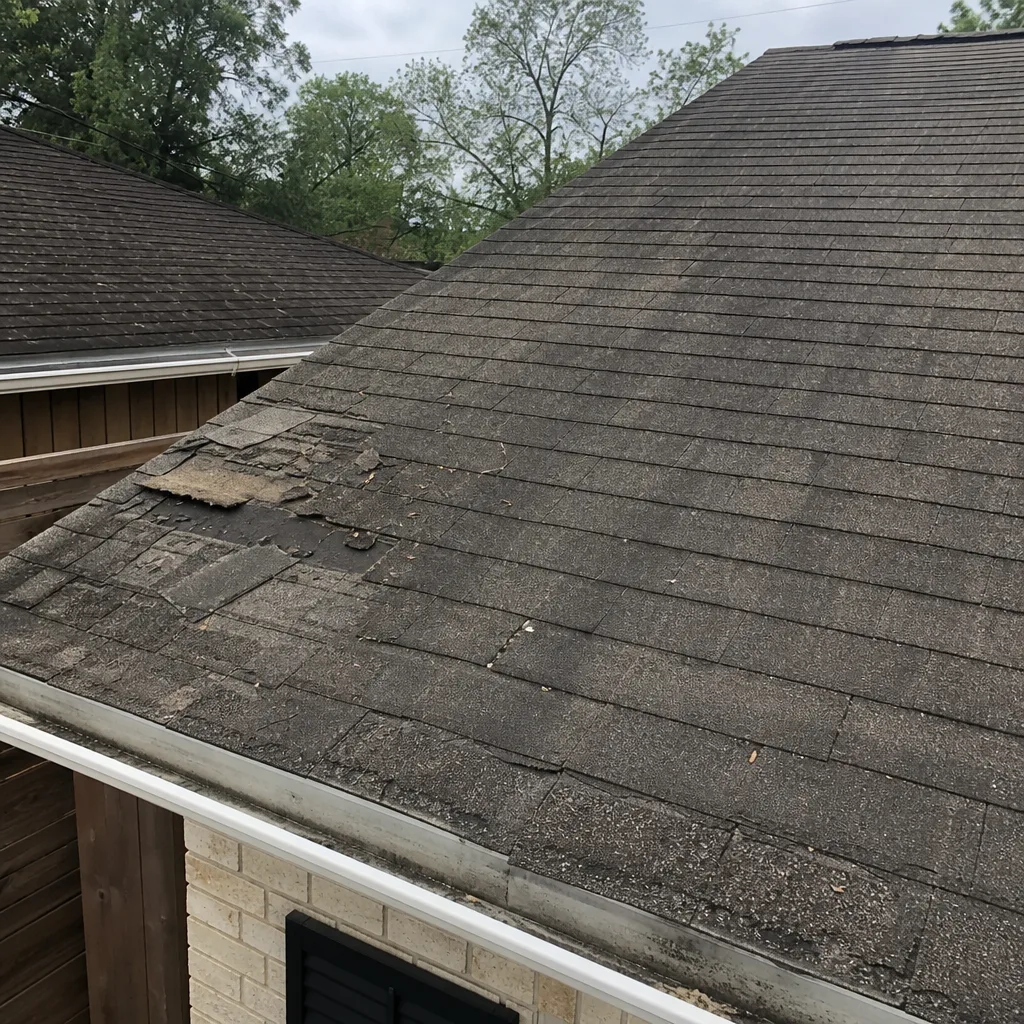 Before
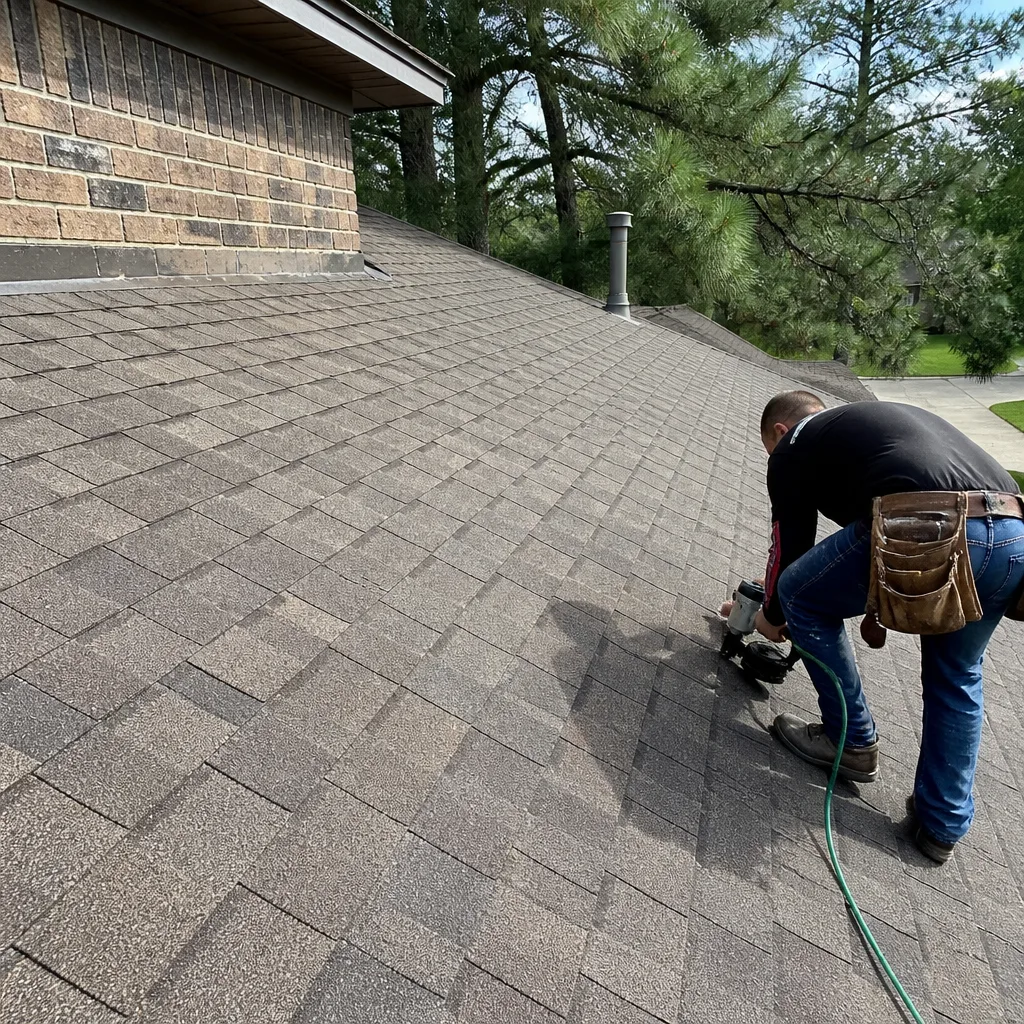 After
After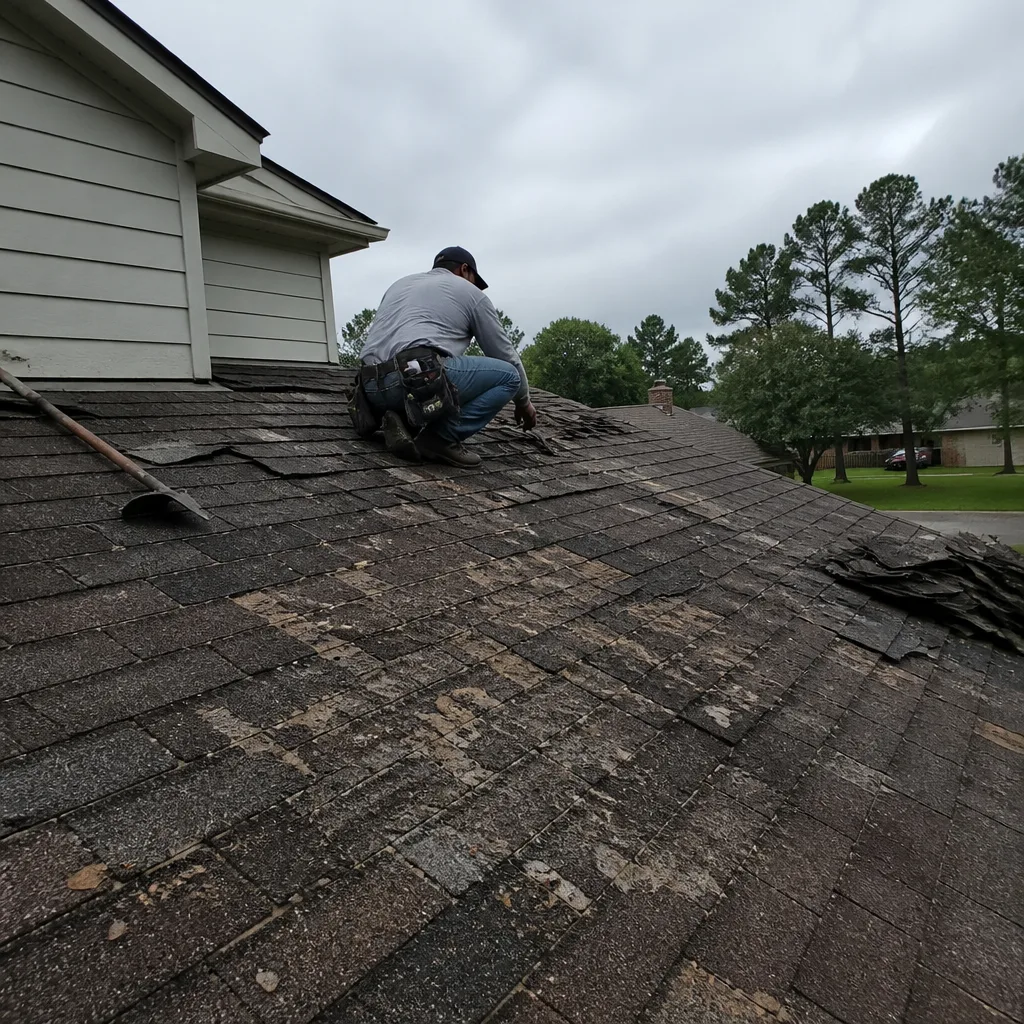 Before
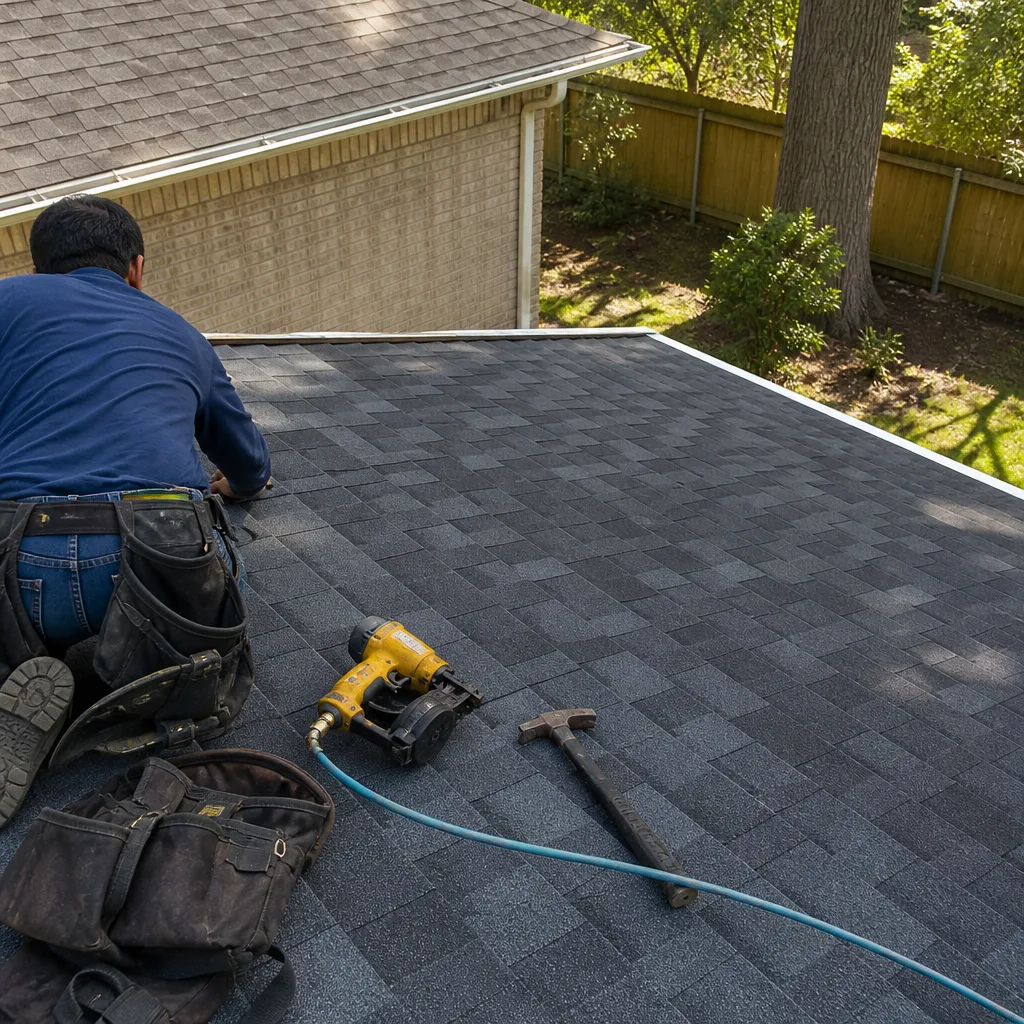 After
After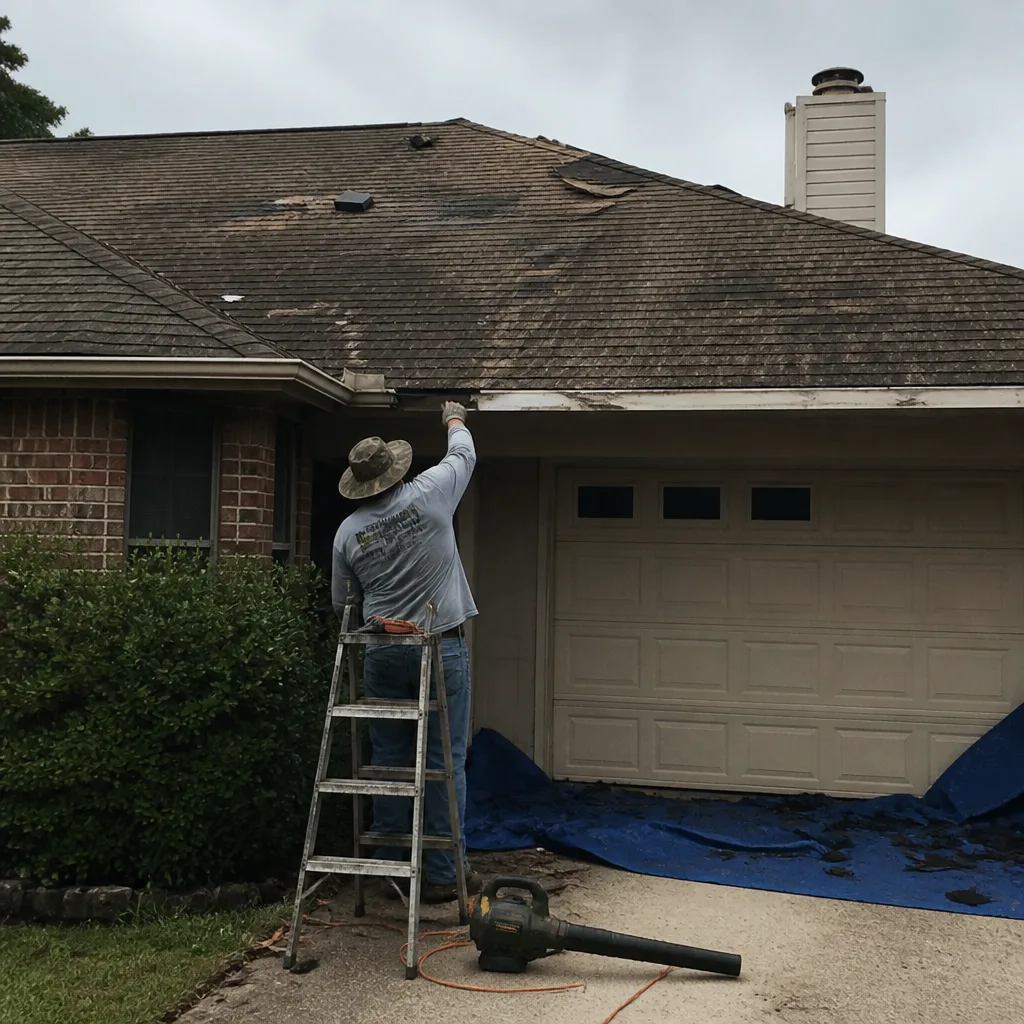 Before
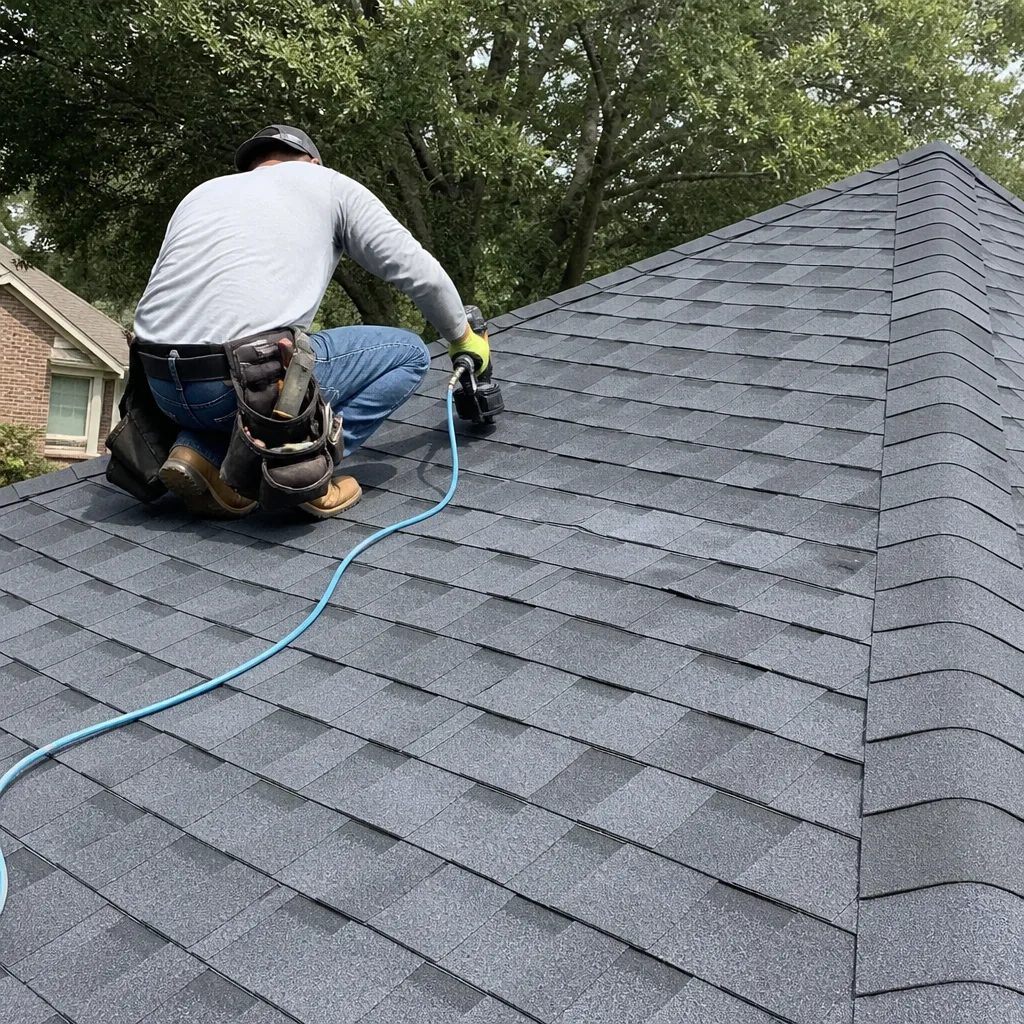 After
AfterQuick Cost Reference: What to Expect in Houston
Roof repair pricing in Houston varies with the scope and the location of the damage, but having a real number in your head before you pick up the phone changes the conversation. These are the ranges we quote most often:
| Repair Type | Typical Range in Houston | What Drives the Cost |
|---|---|---|
| Flashing repair (step, valley, or pipe boot) | $250 – $600 | Access difficulty, number of pieces, sealing scope |
| Shingle replacement (small area, under one square) | $300 – $700 | Roof pitch, height, matching shingle color |
| Decking repair (localized, small section) | $400 – $900 | Square footage, whether replacement wood is needed |
| Fascia and drip edge repair | $500 – $1,400 | Linear footage, rot extent, gutter removal and rehang |
| Full roof replacement (per square, architectural shingle) | $350 – $600 per square | Material choice, decking condition, roof complexity |
These are working numbers from real Houston jobs, not national averages. A $400 flashing repair done early is the difference between a bill and a reroof. Call (254) 566-3573 for an exact quote. Estimates are free, and the price we give you is the price on the contract.
Common Mistakes to Avoid
- Wait until the interior stain appears. By the time water shows up on your ceiling, it’s been traveling through the roof assembly for weeks or months. The damage is always larger than the stain. Houston’s humidity means that damage compounds quickly once water gets into the attic.
- Assume a new-looking roof is a healthy roof. We see houses in Conroe and Tomball with shingles that still have a uniform color but a deck that’s completely rotted at the eaves. New shingles over old problems just hides the problem for a while. The roof’s condition is the whole system: shingles, underlayment, decking, flashing, ventilation.
- Trust a ground-level inspection to catch hail or flashing damage. A roof that looks perfect from the driveway can be bruised over half its surface. Flashing failures are almost never visible from the ground. Anyone who gives you a roof report without getting on the roof is guessing.
- Patch the interior drywall before fixing the roof. It’s tempting: the stain is ugly, and the roofer is booked out. But if you patch and paint before the leak is fixed, the water just finds a new path and a new stain. Fix the roof first, then patch the ceiling.
- Skip the drip edge to save money on an emergency repair. Some contractors will leave the drip edge off a small repair because it’s a detail. The drip edge is not a detail in Houston; it’s the difference between water going into the gutter and water curling under the shingle and into the fascia. Always insist on a proper drip edge.
- Take the lowest bid on a roof replacement without comparing the written scope. A lower price often means thinner underlayment, a cheaper flashing method, or simply a contractor who didn’t plan for the things that go wrong. The written price you get should itemize what’s included. Compare line by line, not just the bottom number.
When to Call a Professional
Some things are worth doing yourself. Walking your roof is not one of them. If you see any of the attic signs, the algae or lichen patterns, the soffit discoloration, or the ceiling stains described in this guide, get a professional inspection. The cost of an inspection is often zero; most reputable Houston roofing contractors quote the inspection as part of the free estimate. Tilehurst Roofing Houston home offers free estimates throughout Houston and the surrounding area. Call (254) 566-3573 and a live person answers, day or night, weekends included. No voicemail queue, no callback in three days. If a roofer doesn’t answer the phone when you call for a quote, they won’t answer when your roof is leaking.
Frequently Asked Questions
Most roof leak repairs in Houston run between $250 and $700, depending on whether the source is a flashing junction, a vent boot, a valley seam, or decking damage. A simple pipe boot replacement is on the low end. A flashing repair with decking work is on the high end. Call (254) 566-3573 for a written line-item quote, free.
You can spot granule accumulation in gutters, soffit discoloration, and some algae and lichen patterns from the ground. You cannot safely assess flashing, hail bruising, decking condition, or valley seams from the ground. Those require a professional on the roof with the right training and safety equipment. In Houston’s summer heat, even a short ladder inspection can be dangerous. Leave it to someone who does it daily.
Twice a year, once in the spring before storm season and once in the fall after the worst heat and before winter. Houston’s climate punishes roofs year-round: summer heat, spring hail, fall hurricane remnants, winter wind. A twice-yearly inspection catches problems at the repair stage and extends the life of the roof by years; see our Seasonal Roofing Care for Houston: Year-Round Homeowner’s Guide for timing details.
Yes. A small flashing gap gets bigger every time it rains and every time the roof expands and contracts in the heat. In Houston, a six-month delay can turn a $300 repair into a $15,000 reroof. Water damage compounds. Fix it when you find it.
Get your roof inspected anyway. As discussed above, a roof can look fine from the ground and have hidden damage from hail or flashing. Neighborhood-wide roofing activity often follows a hailstorm or wind event; the same storm may have hit your block differently. It costs nothing to have a professional check.
Roofing Company in Houston pulls permits when the job requires them and carries full insurance on every crew. Every job starts with a written price and ends with a written guarantee. If a repair fails inside the 365-Day Done Right Promise period, we return and correct it at no charge. That’s the whole point of the Kingswell way of working.
The Bottom Line
The earliest roof warning signs in Houston appear inside the attic, not on the shingles. Learn to read the dark streaks on your decking, the rust on your nail points, and the moisture in your insulation. Learn the difference between black algae, which is cosmetic, and green lichen, which means active moisture. Pay attention to your soffit and fascia, because they tell the story of trapped humidity and poor drainage. After a hailstorm, get a professional inspection even if you can’t see any damage from the street. And when you see the first ceiling stain, trace it uphill, not straight up. Do all of this, and you’ll catch the $400 repair before it becomes the $14,000 replacement. That’s the entire guide, in six sentences.
Written by Greg Holloway, Owner at Tilehurst Roofing Houston, serving Houston since 2000.