

Last updated October 17, 2026
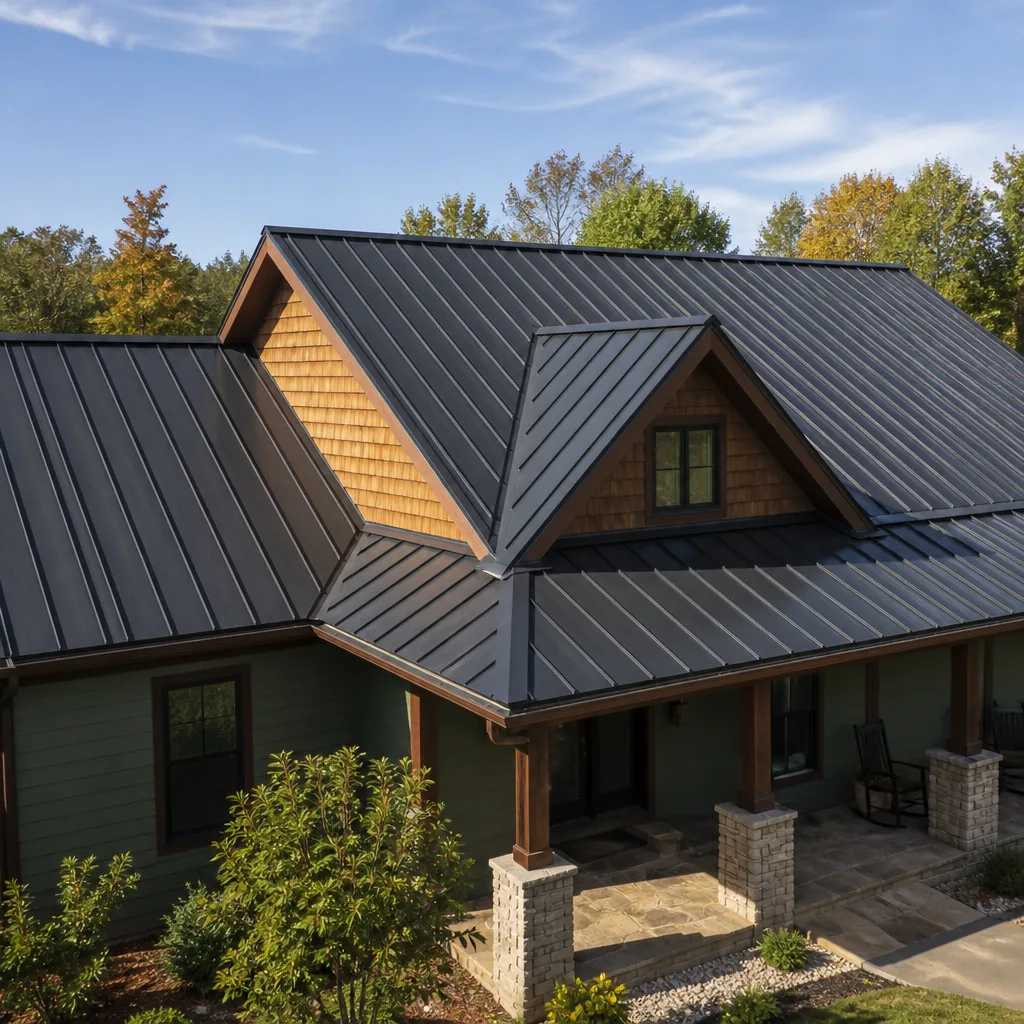 Metal roofing
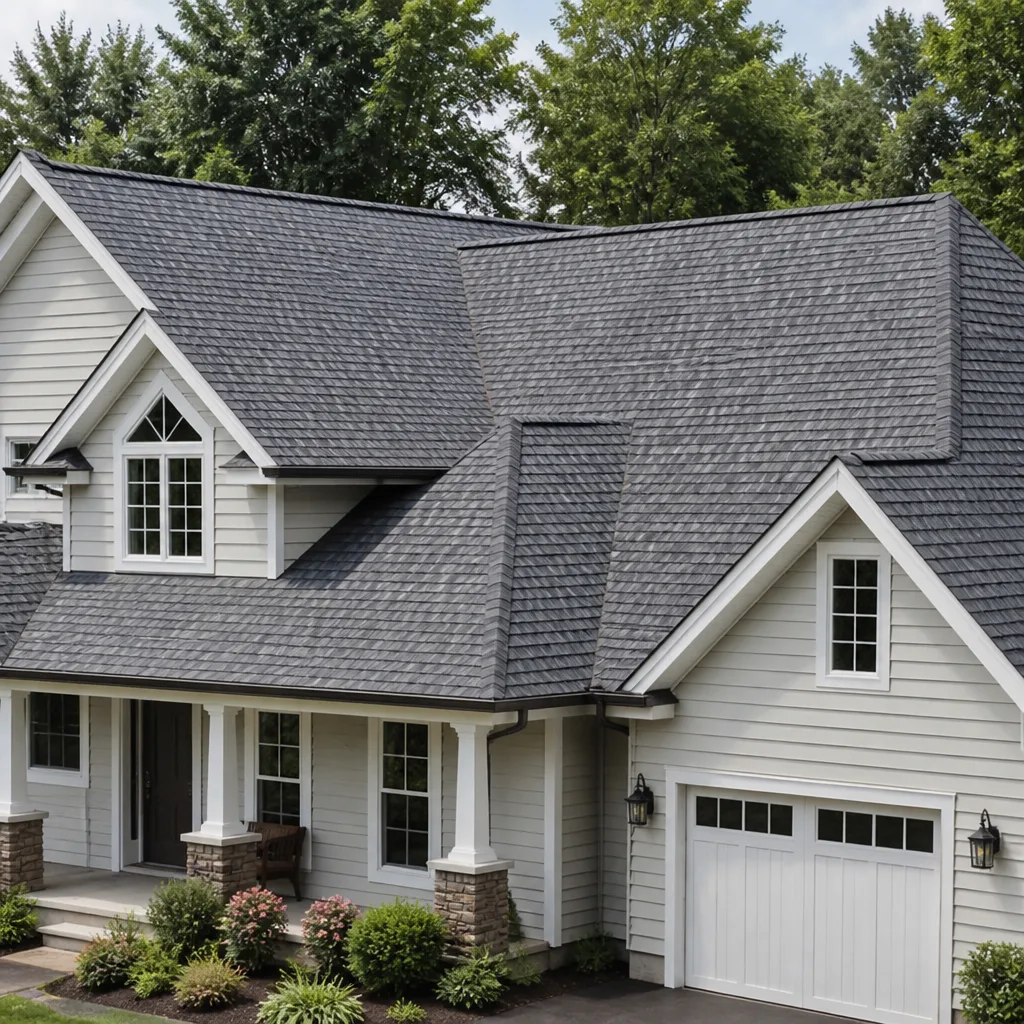 Architectural shingles
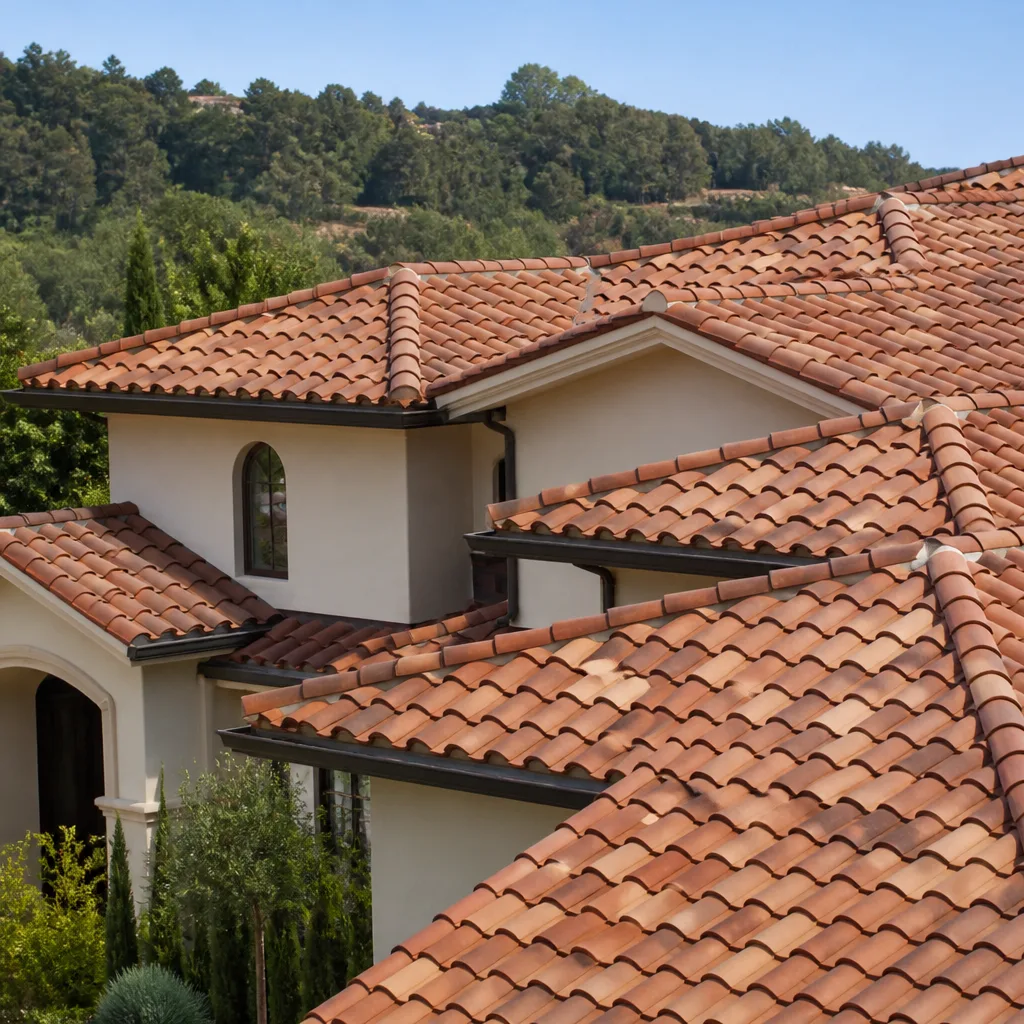 Tile roofing
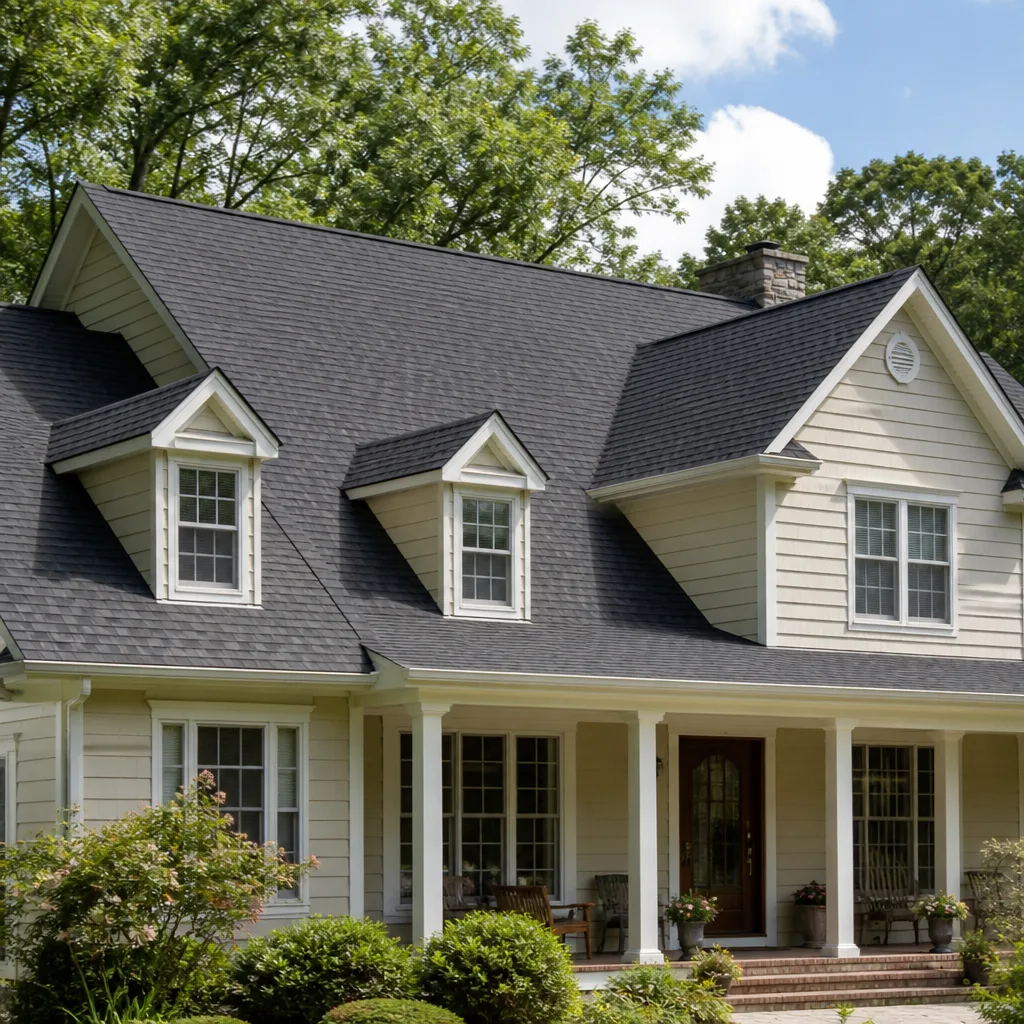 GAF
GAF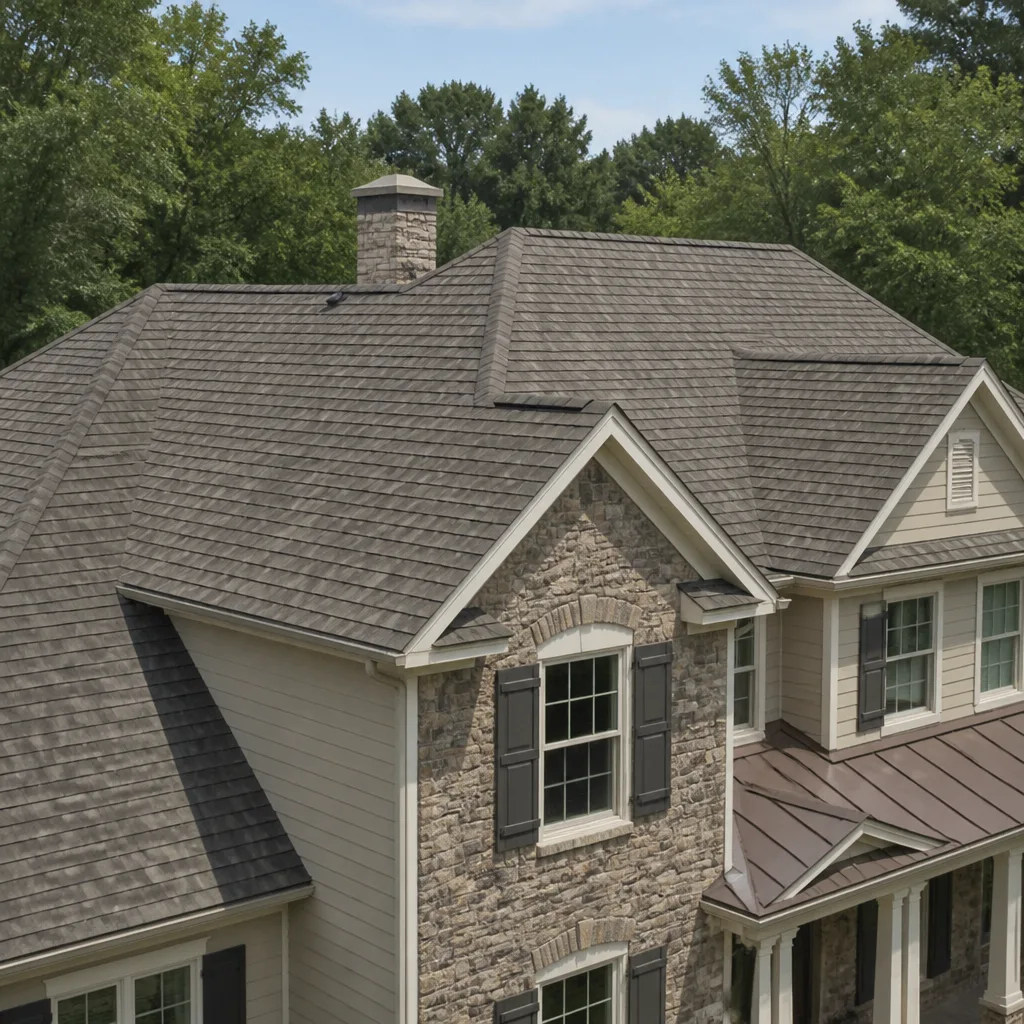 Owens Corning
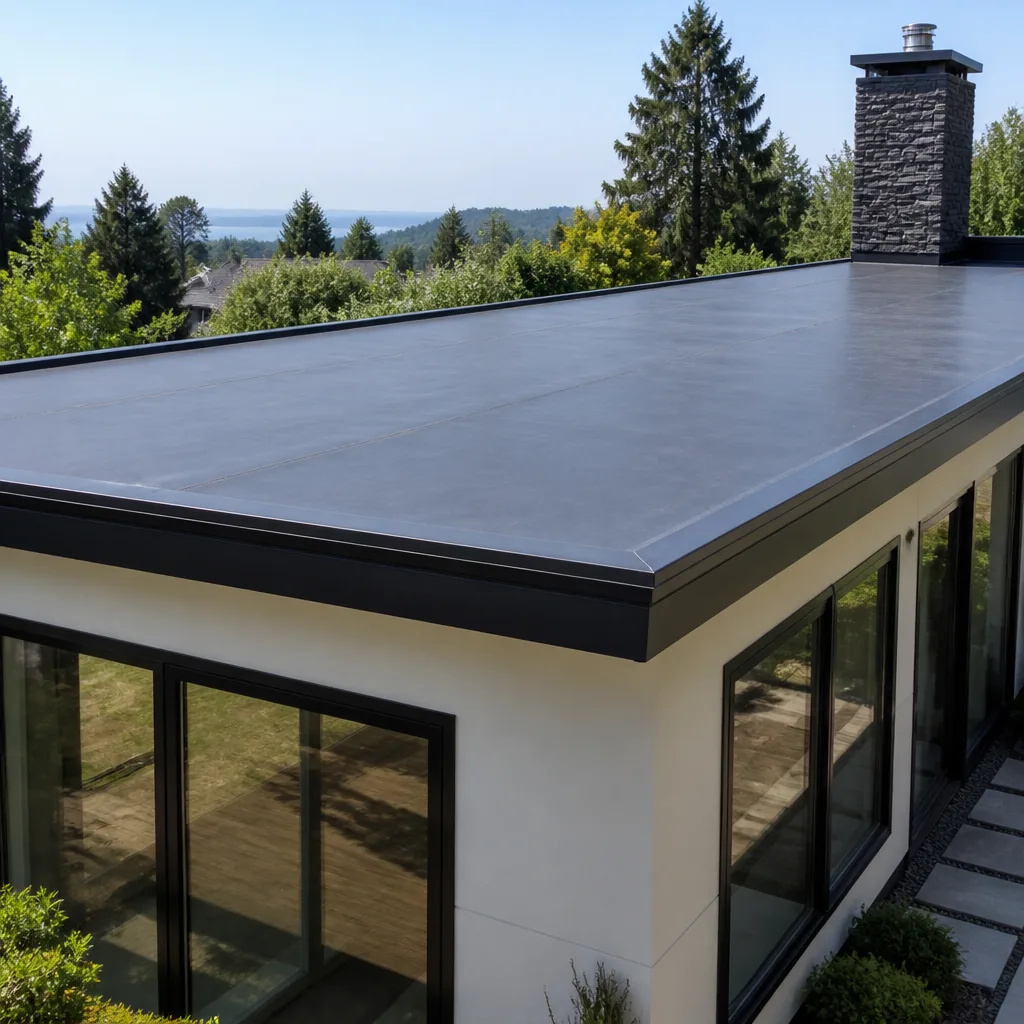 Flat & low-slope
Free roof inspection with deck photos before we talk money - GAF and Owens Corning certified installation
The Complete Guide to Roofing in Houston
Houston files more hail claims per square mile than any other city in the country. That stat gets quoted constantly, and it’s true. But here’s what nobody tells you: the number one roofing mistake Houston homeowners make has nothing to do with hail. It’s choosing a shingle rated for extreme heat, then watching it fail within five years because it can’t handle the standing water left behind by a two-inch-per-hour July downpour. Houston doesn’t have one weather problem. It has four or five that hit simultaneously, and most roofing advice was written for cities that only deal with one. This guide maps every major roofing decision you’ll face to the specific Houston condition that makes it matter, and you can find more guides & resources on our blog.
Quick Answer
Roofing in Houston means choosing materials and installation details that survive four simultaneous threats: intense UV exposure, hurricane-force wind uplift, flash-flood ponding, and underside moisture from humidity and clay soil. Most asphalt shingle roofs in Houston last 12 to 18 years, metal roofs 30 to 50, and tile 40-plus, but material choice matters less than wind-uplift ratings, underlayment quality, and ventilation, which are where Houston roofs actually fail. A full replacement on a typical single-family home runs $9,000 to $18,000 depending on material and square footage.
Styles & brands we work with
Table of Contents
- Understanding Houston’s Roof-Killing Weather Pattern
- Material Comparison Scored for Houston Conditions
- Why Wind Uplift Ratings Matter More Than Impact Resistance in Harris County
- The Underside Threat: Tree Canopy and Clay Soil Moisture
- How Class 4 Impact Ratings Affect Your Texas Insurance Premium
- What a Houston Roof Replacement Actually Involves
- Repair vs. Replacement: Making the Call in Houston
Understanding Houston’s Roof-Killing Weather Pattern
Houston gets hit with what we call “four-season-in-one-month” weather. A roof can see a 35-degree morning, an 88-degree afternoon, a hailstorm, and a tropical downpour all within the same week. That rapid cycling is brutal on roofing materials. Asphalt shingles expand when heated and contract when cooled. In a stable climate, that’s a slow, predictable process manufacturers design for. In Houston, a roof might cycle through a 50-degree temperature swing several times in a single month during spring and fall. That’s more expansion and contraction in a decade than a Chicago roof sees in twenty years.
What breaks first isn’t usually the shingle itself. It’s the sealant strip, the thin adhesive line that bonds each shingle to the one below it. When that sealant fails from repeated thermal cycling, wind gets under the shingle and lifts it. The shingle looks fine from the ground. It’s actually loose, and the next strong thunderstorm tears it off entirely. This is why Houston homeowners so often say “the roof looked fine until one storm took half of it.” The storm didn’t do the damage. The thermal cycling did. The storm just exposed it.
Flash-flood ponding is the second half of Houston’s weather story. Houston’s storms drop rain fast, often two inches per hour or more. Most residential roofs are sloped enough to shed water quickly, but debris from live oaks and pecans clogs valleys and gutters, turning a 30-minute storm into a 4-hour water exposure. Water sits in valleys, works under shingle edges at eaves, and saturates the underlayment. The shingle may be waterproof, but the underlayment is the real moisture barrier, and once it’s compromised, the decking rots.
UV degradation is the third strike. Houston’s latitude means intense, year-round sun. Asphalt shingles lose granules over time as the sun bakes the asphalt binder. That’s normal wear, but in Houston it happens faster. A 30-year shingle in Minnesota might lose 10% of its granules in a decade. The same shingle in Houston can lose 20% or more in the same period, especially on south- and west-facing roof planes. Granule loss accelerates because thermal cycling has already partially broken the asphalt’s bond with the granules.
Material Comparison Scored for Houston Conditions
Every national roofing guide ranks materials the same way: cost per square, lifespan, and aesthetic appeal. Those rankings mean almost nothing in Houston. A material can be the national bestseller and still fail early here because it can’t handle the specific combination of UV, wind, and moisture Houston throws at it. Here’s how the four major material categories perform against Houston failure modes specifically.
Asphalt Shingle
Asphalt remains the right choice for most Houston homes, but only when three details are handled correctly. First, the shingle must be rated for 110+ mph winds. Standard three-tab shingles fail this test. Architectural shingles from GAF, CertainTeed, and Owens Corning all have models rated for 130 mph winds, which matches or exceeds current Harris County code minimums. Second, the underlayment beneath the shingle matters as much as the shingle itself. In Houston, a synthetic underlayment with high tear strength handles the thermal cycling better than traditional felt. Third, ventilation is non-negotiable. Without proper ridge and soffit ventilation, the attic heats to 140 degrees or more in August, cooking the shingles from below and accelerating granule loss on both sides of the deck.
Real-world lifespan in Houston: 12 to 18 years for architectural shingles, often less if ventilation is poor.
Metal
Standing seam metal roofs handle Houston’s heat better than any other material. The metal surface reflects solar radiation instead of absorbing it, which keeps the attic 20 to 30 degrees cooler in summer and reduces the thermal cycling load on the entire roof assembly. Metal also sheds water instantly, which eliminates the ponding problem entirely. The concern in Houston is not the metal itself, it’s the fastening system. Houston’s humidity, combined with salt air near the Ship Channel and Galveston Bay, means fasteners must be stainless steel or galvanized to a higher standard than inland installs. Cheap fasteners fail within a decade, and the panel lifts in the next tropical storm. A properly installed standing seam roof in Houston should last 30 to 50 years, which is why it typically costs two to three times as much as asphalt up front.
Real-world lifespan in Houston: 30 to 50 years with proper fastener specification.
Tile
Concrete and clay tile handle UV better than anything on the market. The sun simply doesn’t degrade fired clay or cured concrete the way it degrades asphalt. Tile roofs in Houston regularly last 40 years and beyond. But tile has two Houston-specific vulnerabilities. First, tile is heavy. A clay tile roof can weigh 600 to 1,000 pounds per square, which requires a structural check before installation. Many 1970s and 1980s Houston homes were never framed to carry that load. Second, tile relies on the underlayment beneath it for waterproofing, not the tile itself. When the underlayment degrades from Houston’s heat and moisture, water gets through and damages the deck while the tile looks perfect from the street. We’ve seen tile roofs in Bellaire and Meyerland where the tile was in excellent shape and the deck underneath had extensive rot.
Real-world lifespan in Houston: 40+ years for tile, 15 to 25 years for the underlayment beneath it.
TPO (Low-Slope Commercial and Flat Roof Sections)
Many Houston homes have flat or low-slope sections over additions, porches, and carports. TPO is the standard membrane for these areas. It’s white, which reflects heat, and it’s welded at the seams rather than overlapped, which creates a continuous waterproof surface. TPO’s Houston failure mode is ponding. If the low-slope section doesn’t have positive drainage, water sits on the membrane, and over time the standing water degrades the TPO surface and eventually finds a seam. Any TPO installation in Houston should include a drainage plan, not just a membrane application. A properly installed TPO roof on a low-slope Houston addition should last 20 to 25 years.
Real-world lifespan in Houston: 20 to 25 years with proper drainage.
Why Wind Uplift Ratings Matter More Than Impact Resistance in Harris County
Most Houston homeowners ask about hail resistance when they’re shopping for a roof. That’s the metric manufacturers market hardest, because hail claims are so common in Texas. But if you’re choosing between two shingles and one has a Class 4 impact rating and the other has a 130 mph wind rating, you should prioritize the wind rating. Here’s why.
Hail damages roofs cosmetically. It dents metal, cracks tile, and knocks granules off shingles. That’s a real cost, and it’s why impact ratings matter for insurance. But wind is what removes roofs entirely. During Hurricane Harvey, thousands of Houston roofs failed not because of water but because of uplift: the force created when wind moves across the roof surface and creates negative pressure above the deck. That negative pressure pulls the roof upward, and if the shingles and decking aren’t fastened to resist it, the roof comes off in large sections.
Harris County’s current building code references the International Residential Code, which requires shingles to meet ASTM D3161 wind-uplift standards for the design wind speed of the area. In practice, most new construction in Houston specifies shingles rated for 110 mph or higher. But the code minimum is a floor, not a target. A tropical storm with 70 mph sustained winds can produce gusts that exceed 110 mph, and those gusts last for hours, not minutes. A roof that meets code minimums may still fail in a sustained tropical storm because the shingles’ sealant strips fatigue under prolonged pressure cycling.
When you’re comparing quotes in Houston, ask the contractor this exact question: “What is the wind rating on this shingle, and what is the underlayment’s tear strength?” If they can’t answer both immediately, keep shopping. The shingle wind rating should be in the product spec sheet, and the underlayment tear strength should be specified in the written estimate. At Tilehurst Roofing Houston, every written estimate specifies the exact product and wind rating, because we’ve seen too many homeowners sign for “architectural shingles” and get whatever was sitting in the warehouse that week.
One more point on wind: the weakest part of any Houston roof is the edge. The drip edge, the metal flashing along the eaves and rakes, is where uplift starts. If the drip edge isn’t fastened through the deck and into the fascia properly, wind gets underneath it and peels the roof edge first, then works inward. A good Houston roofing contractor details the drip edge on the estimate. Ask to see it in writing.
The Underside Threat: Tree Canopy and Clay Soil Moisture
Most roofing guides talk about moisture as something that comes from above: rain, hail, snow. Houston’s most overlooked moisture problem comes from below. Two local conditions combine to create a secondary moisture threat that damages the roof deck from the underside, and neither one shows up on a standard roof inspection unless someone specifically looks for it.
First, Houston’s tree canopy. The city has one of the largest urban forests in the country, and neighborhoods like the Heights, West University, and Memorial are heavily shaded by mature live oaks and pecans. Shade sounds like a good thing for a roof, and it reduces direct UV exposure. But it also reduces airflow across the roof surface after a storm. A shingle roof in full sun dries out in an hour after a rain. A roof under a dense canopy may stay damp for days. That persistent moisture promotes algae and moss growth, which holds water against the shingle surface and accelerates the breakdown of the asphalt binder.
Second, Houston’s clay soil. The clay expands when wet and contracts when dry. This seasonal movement causes foundation settlement in many homes, and that subtle shifting translates to the roof. When a foundation settles unevenly, the roof line shifts, valleys flatten, and areas that once drained well begin to pond. The clay soil is particularly expansive in areas like Katy, Cypress, and Pearland, where the soil has high plasticity. A homeowner who notices a new leak near a valley or a low spot should have someone look at the roof slope and the deck, not just the shingles.
The underside moisture threat is also a ventilation problem. In a properly ventilated attic, air moves from the soffit vents at the eaves to the ridge vent at the peak, carrying moisture out of the attic space. In Houston’s humid climate, that airflow is essential. When tree debris blocks the soffit vents or when a homeowner adds insulation without maintaining the ventilation gap, the attic humidity climbs, and condensation forms on the underside of the deck. Over time, that condensation rots the deck from above, even when the roof itself is intact.
The remedy is an inspection that looks at the attic as well as the roof surface. We check deck condition, ventilation airflow, and moisture readings in the attic on every estimate, not just what the shingles look like from the ground.
How Class 4 Impact Ratings Affect Your Texas Insurance Premium
Class 4 impact resistance is the highest rating in the UL 2218 impact test, which simulates hail strikes by dropping steel balls onto the shingle from a set height. A Class 4 shingle survives a 2-inch steel ball dropped from 20 feet without cracking or losing significant granules. That’s a meaningful test for Texas, where golf-ball-sized hail is common.
What most Houston homeowners don’t realize is that a Class 4 rating changes the insurance conversation. Many Texas insurance carriers offer a premium discount, typically 5% to 20%, for homes with Class 4 rated roofing. Some carriers also waive or reduce the cosmetic damage exclusion on the policy, which is the clause that lets them deny a claim for hail damage that doesn’t affect the roof’s function. In practical terms, a Class 4 roof can mean a lower premium and a smoother claim process after a Texas hailstorm.
But there’s a catch: you have to document it before the adjuster arrives. The insurance company won’t take your word for it after a storm. You need the product spec sheet showing the UL 2218 Class 4 rating, plus a copy of the invoice or estimate that specifies that exact product was installed. If you don’t have that documentation, the insurance company assumes a standard rating, and you lose the discount and the exclusion waiver.
Here’s the step-by-step process for documenting a Class 4 roof in Houston:
- When you sign the contract, request a copy of the product spec sheet for the exact shingle model specified in your estimate. Keep it with your closing documents.
- After installation, request a final invoice that lists the shingle manufacturer, model, color, and the notation “UL 2218 Class 4 impact rated.”
- Take photos of the installed roof, including the manufacturer’s packaging labels showing the model number.
- Send all of that documentation to your insurance agent and ask them to update your policy with the Class 4 rating and any applicable discount.
- Keep the documentation in two places, a physical file and a cloud backup. You’ll need it if you file a claim years later.
One nuance on the Houston market: not every Class 4 shingle performs the same in high heat. Some impact-resistant shingles use a modified asphalt that softens more at Houston’s summer attic temperatures. If you’re choosing a Class 4 shingle, ask for the manufacturer’s heat rating as well as the impact rating. The two specs should be evaluated together. A shingle that is impact-rated but not heat-rated may pass the insurance test and still fail the Houston test.
What a Houston Roof Replacement Actually Involves
A full roof replacement is the largest roofing investment a Houston homeowner makes, and the process should be clear from day one. Here’s what a properly managed replacement looks like, step by step, with the local details that matter.
- Inspection and measurement. Someone walks the roof, measures the square footage, checks the deck from the attic, and identifies every detail: valleys, flashing, pipe boots, skylights, chimneys, and the gutter condition. This is also when they should check the attic ventilation and the structure for signs of deck rot or termite damage.
- Written estimate. You receive a line-item estimate that specifies the shingle manufacturer and model, the underlayment product, the drip edge specification, the ventilation plan, and the total price. No ranges, no “we’ll see once we tear it off.” The price is the price. This is the standard at Tilehurst Roofing Houston, and it should be the standard everywhere.
- Contract signing and permit. In Houston, a roof replacement requires a permit from the City of Houston or the applicable municipal jurisdiction for suburbs like Pasadena, Katy, or Sugar Land. Your contractor should pull the permit and schedule the inspection.
- Tear-off and deck inspection. The old roof comes off down to the deck. This is the moment of truth: if the deck has rot or damage, it needs to be replaced before the new roof goes on. Local building code specifies minimum deck thickness and nailing requirements, and this is where some contractors cut corners. Ask what the contractor does if they find deck damage and confirm that any deck replacement is specified in the contract.
- Underlayment and drip edge installation. The underlayment goes down first, then the drip edge. In Houston, the underlayment should be synthetic with a high tear strength, not 15-pound felt. The drip edge should be metal, not plastic, and it should be fastened to the deck.
- Shingle installation and flashing work. The shingles go on, and all the flashing details are addressed: pipe boots, valley flashing, wall flashing, chimney flashing, and the ridge cap at the peak. These details are where Houston roofs leak, not the open field of shingles.
- Ventilation check. The contractor confirms that the soffit vents are clear and the ridge vent is properly installed. This is often skipped, and it’s one of the main reasons Houston roofs fail early.
- Cleanup and final walkthrough. The crew removes all debris, including nails, from the property. The contractor walks the roof with you, shows you the completed work, and delivers the written guarantee.
- Final inspection. The city inspector signs off, and the permit is closed.
A full replacement on a typical single-family Houston home takes 2 to 5 days depending on the roof size, pitch, and weather. The price range is wide: $9,000 to $18,000 for most architectural shingle jobs, $18,000 to $35,000 for metal, and $25,000 to $45,000 for tile. The material choice drives most of the difference, but so does the condition of the deck and the complexity of the roofline.
Repair vs. Replacement: Making the Call in Houston
The hardest decision for a Houston homeowner is whether to repair or replace. Here’s the framework we use when advising customers, and it’s specific to Houston conditions.
Repair makes sense when the roof is under 10 years old, the damage is localized, and the rest of the roof is in good condition. A punctured shingle from a fallen limb, a flashing failure around a pipe boot, or a small leak near a valley are all repairable. Most asphalt-shingle repairs in Houston run $350 to $800 for a small job, and larger repairs with multiple areas of damage run $800 to $1,800. The roof repair should include a written guarantee, and if the repair fails inside the guarantee period, the contractor should return at no charge.
Replacement makes sense when the roof is over 15 years old, the damage is widespread, or the underlying deck shows signs of rot. Houston’s climate accelerates aging, so a 15-year-old roof in Houston may look like a 25-year-old roof in a cooler climate. If the shingles are losing granules, curling at the edges, or lifting in the wind, replacement is usually the better investment than repeated repairs.
Here’s the repair-vs-replace rule of thumb in dollars: if the cost of repairs over the next five years exceeds 50% of the cost of a new roof, replace. In Houston, that threshold comes faster than most homeowners expect because the climate is so hard on materials.
One more local consideration: if your roof has hail damage and you’re filing an insurance claim, the adjuster’s report matters. A thorough Houston contractor will share their own inspection findings with you before the adjuster arrives so you know what the damage actually is and whether the claim supports a repair or a full replacement. That documentation matters, too.
Common Mistakes to Avoid
- Choosing shingles by national rankings. A shingle that performs well in Ohio or Colorado may not handle Houston’s heat-plus-humidity combination. Choose based on Houston failure modes, not national reviews.
- Skipping the attic inspection. Houston’s clay soil movement and high humidity create underside deck problems that a surface-only inspection misses. If the contractor doesn’t go in the attic, the estimate is incomplete.
- Signing a contract without a specified product. “Architectural shingle” is a category, not a product. Get the manufacturer, model, and wind rating in writing before signing anything.
- Ignoring the drip edge. The drip edge is where uplift starts in Houston’s tropical storms. Make sure it’s specified and properly fastened.
- Blocking attic ventilation. Homeowners who add insulation or install a new roof without addressing ventilation create the conditions for underside deck rot. Ventilation is not optional in Houston.
- Failing to document the roof for insurance. Without the product spec sheet and the installation invoice, you can’t claim a Class 4 discount or file a clean hail claim later.
- Choosing a contractor who won’t put the guarantee in writing. A verbal promise isn’t a guarantee. Every repair and replacement should come with a written guarantee that states exactly what’s covered and for how long.
See the difference
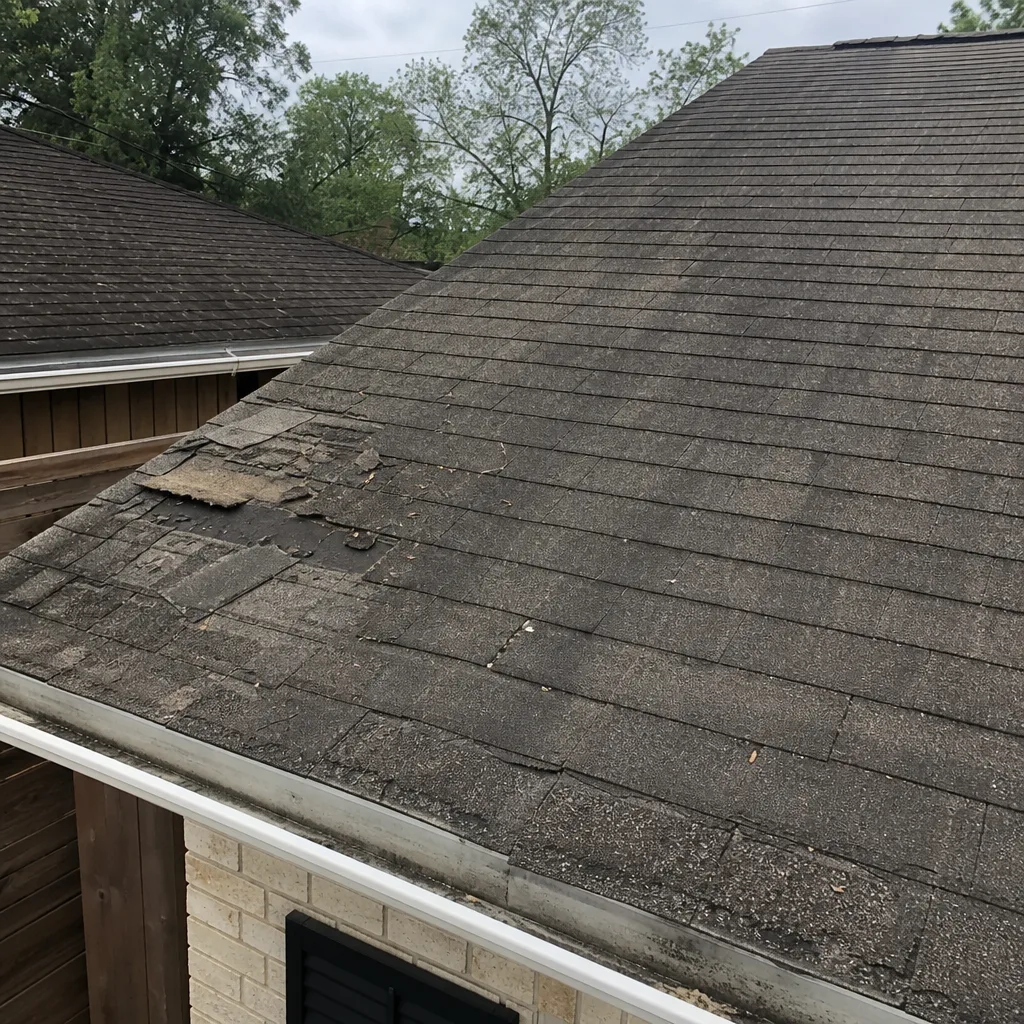 Before
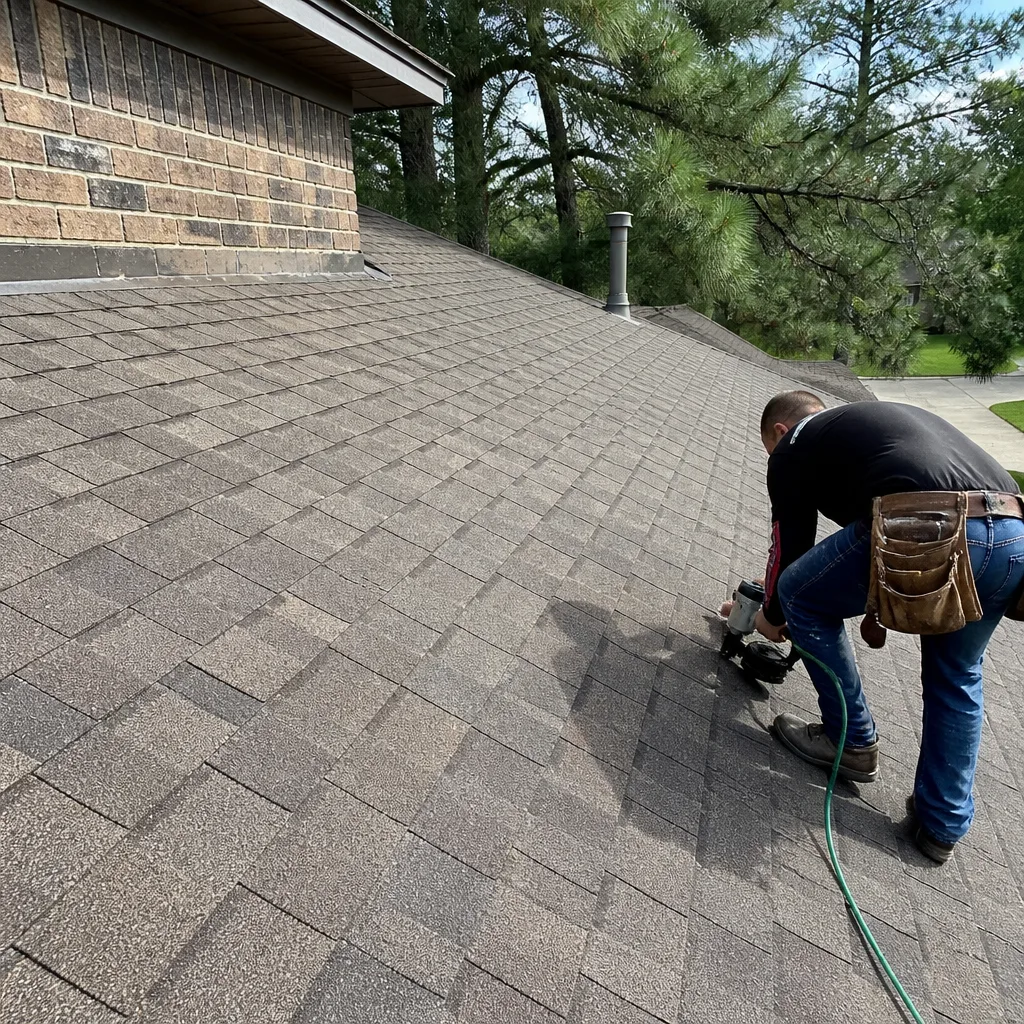 After
After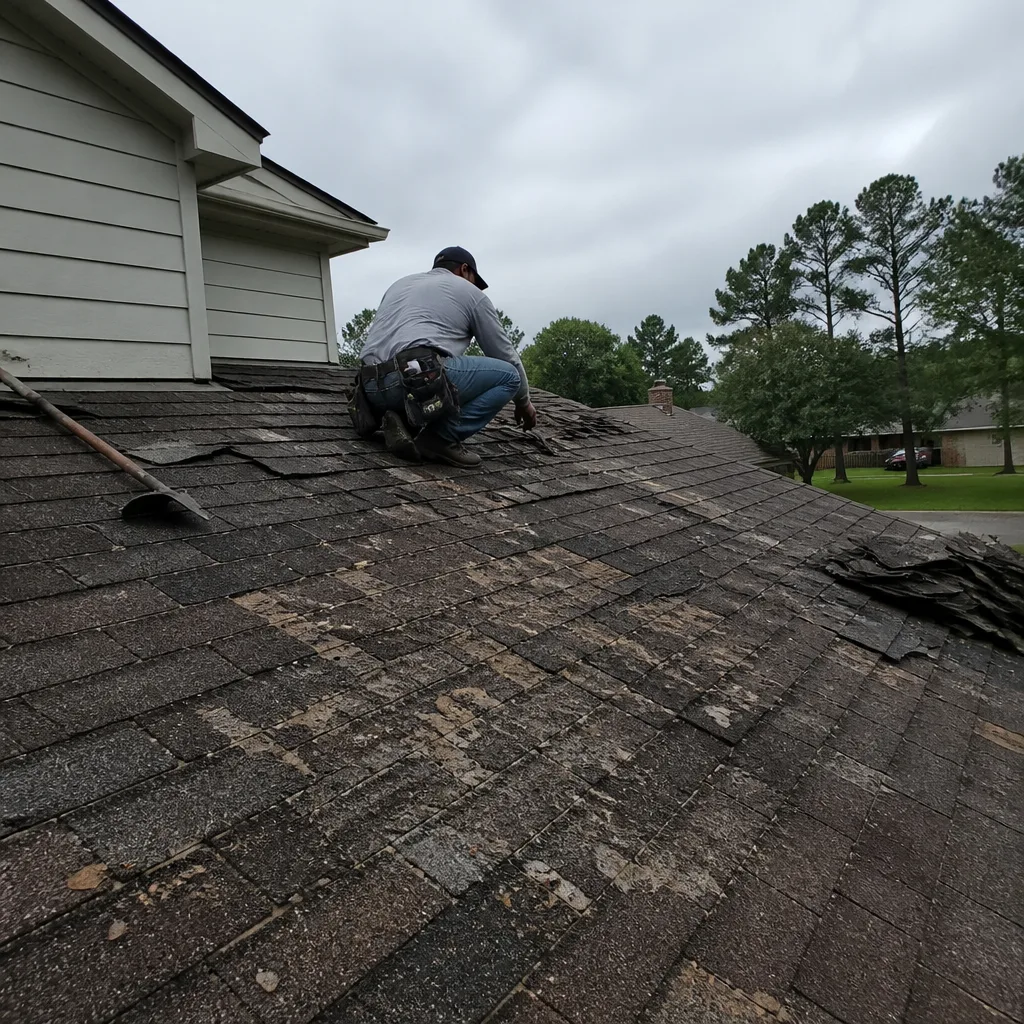 Before
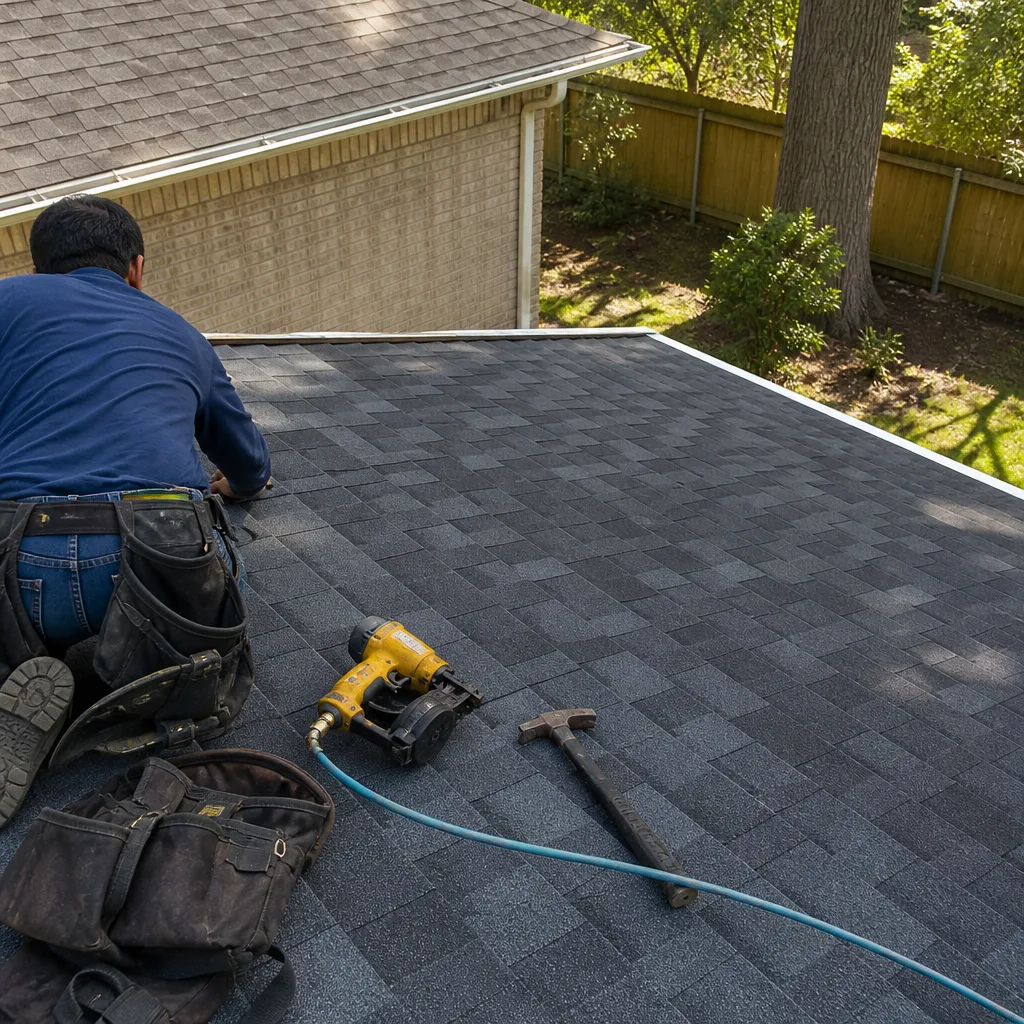 After
After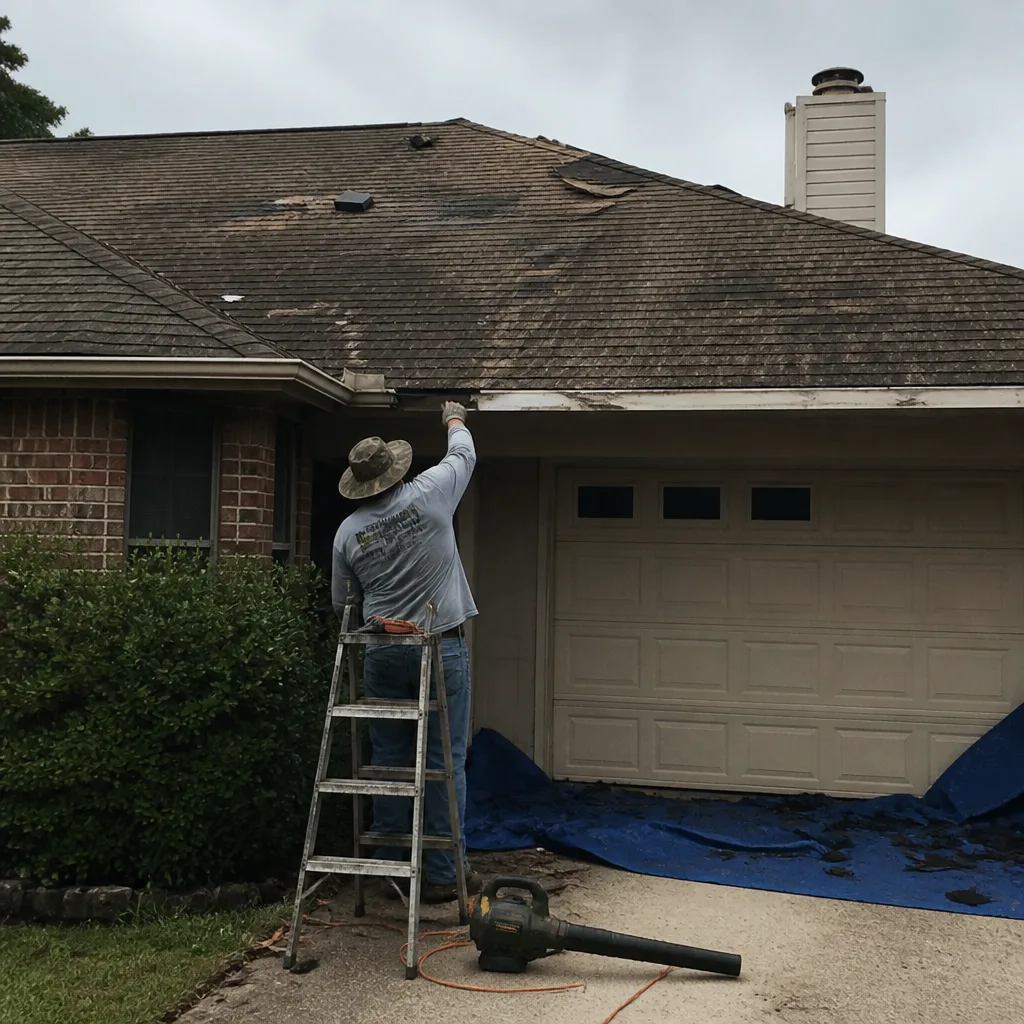 Before
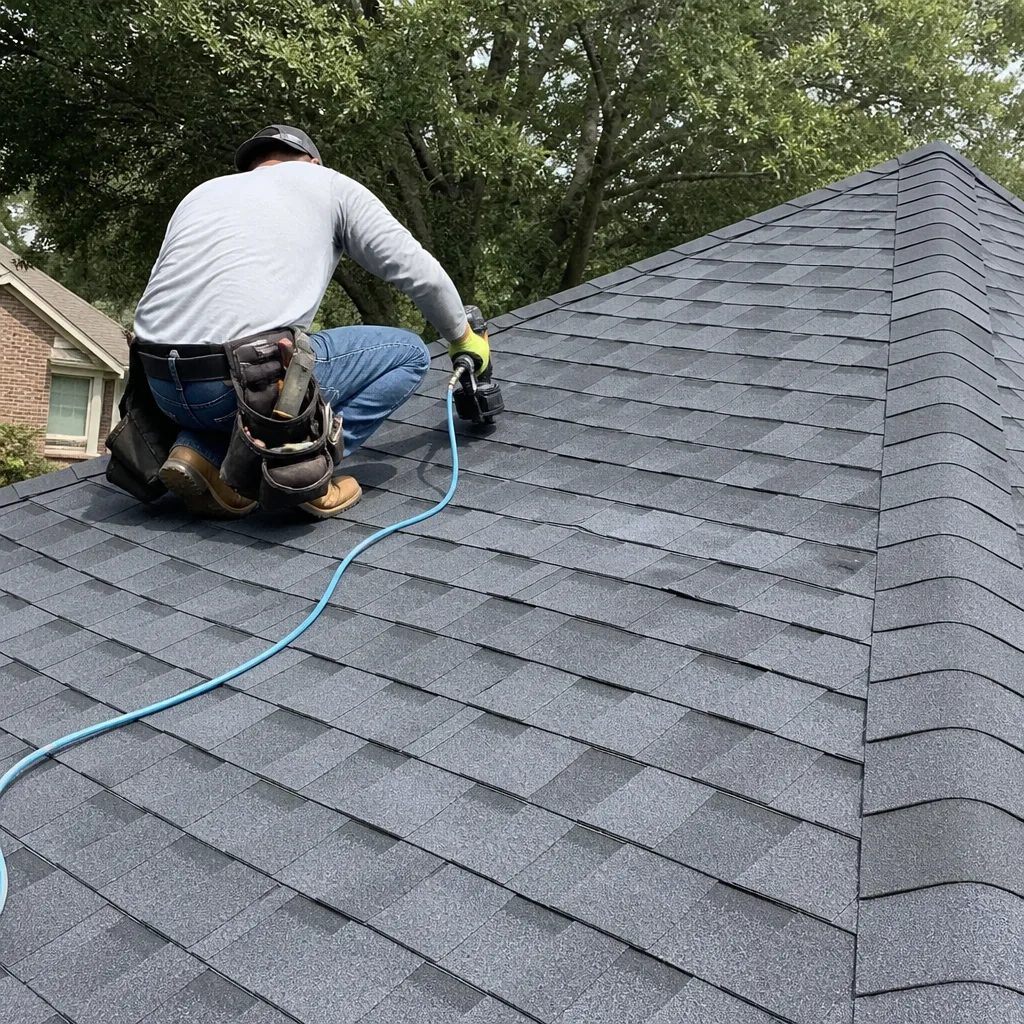 After
AfterWhen to Call a Professional
You should call a roofing professional when you see water stains on the ceiling, curling or missing shingles, granules accumulating in gutters, or daylight visible through the attic deck. You should also call after any storm with hail or winds over 60 mph, even if the roof looks fine from the ground. Damage from uplift often isn’t visible until the next storm. If you’re in Houston and not sure whether your roof needs attention, Tilehurst Roofing Houston offers free estimates, and a live person answers the phone 24/7 including evenings and weekends. Call (254) 566-3573 to schedule yours.
Frequently Asked Questions
Most asphalt shingle roof replacements in Houston run $9,000 to $18,000 for a typical single-family home. Metal roofs run $18,000 to $35,000, and tile roofs $25,000 to $45,000. The wide range reflects roof size, pitch, deck condition, and material choice. Call (254) 566-3573 for an exact quote, estimates are free.
Most architectural asphalt shingle roofs in Houston last 12 to 18 years, compared to the 25 to 30 years the same shingle might last in a cooler climate. Houston’s UV exposure, thermal cycling, and high humidity accelerate aging. Proper ventilation and underlayment extend the life, but the Houston heat always wins eventually.
Yes, a roof replacement in Houston requires a permit from the City of Houston or your local municipal jurisdiction. The permit ensures the work meets current building code, including wind-uplift standards. A reputable contractor pulls the permit and schedules the final inspection.
There’s no single best material for Houston, only the right material for your roof slope, budget, and insurance situation. Asphalt shingles with a 130 mph wind rating and synthetic underlayment work well for most homes. Metal handles heat and ponding better but costs more. Tile handles UV best but requires structural review and proper underlayment. Ask your contractor to explain the Houston-specific tradeoffs before you choose.
Texas insurance policies typically cover hail damage, but the claim outcome depends on the documentation you have. A Class 4 impact-rated roof may qualify for a premium discount and a cosmetic damage exclusion waiver, but you need the product spec sheet and installation invoice to prove it. Share your contractor’s inspection findings with the adjuster to support the claim.
If the roof is under 10 years old and the damage is localized, repair usually makes sense. Most asphalt-shingle repairs in Houston run $350 to $1,800. If the roof is over 15 years old, losing granules, curling at the edges, or lifting in wind, replacement is usually the better investment. Call (254) 566-3573 and we’ll give you an honest assessment either way.
The Bottom Line
Houston roofing is different because Houston weather is different. The heat, the humidity, the wind, the hail, and the clay soil all work against your roof simultaneously, and the materials that perform well elsewhere need Houston-specific installation details to survive here. The right approach is to choose materials by Houston failure modes, not national rankings; to demand wind ratings and ventilation plans in writing; to document everything for your insurance company; and to work with a contractor who puts the price and the guarantee in writing before any work starts. If you’re in Houston and ready for a straight answer about your roof, call (254) 566-3573 for a free estimate.
Written by Greg Holloway, Owner at Tilehurst Roofing Houston, serving Houston since 2000.